
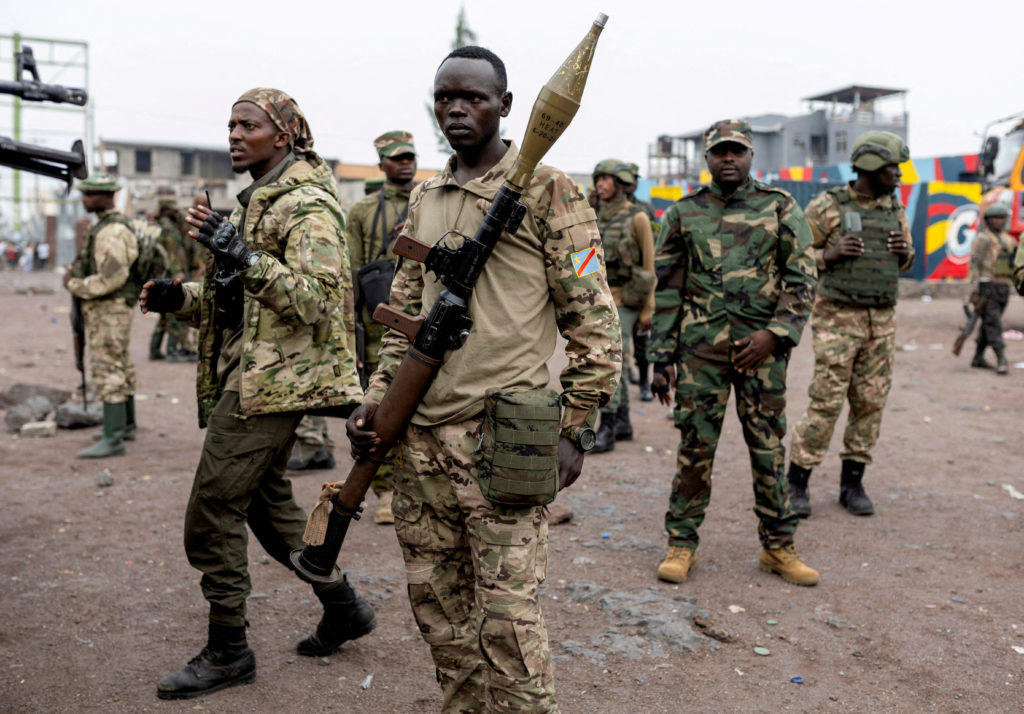
In a significant development in the volatile eastern Democratic Republic of the Congo (DRC), the Rwanda-backed M23 rebel group has announced its intention to withdraw from the strategic border town of Uvira. This decision comes in direct response to pressure from the United States administration, which condemned the town’s seizure as a threat to fragile regional peace processes. The move highlights the complex interplay of local conflict, international diplomacy, and the enduring struggle for control over the resource-rich eastern Congo.
The announcement, made by Corneille Nangaa—leader of the Congo River Alliance, an insurgent coalition that includes M23—frames the withdrawal as a “unilateral trust-building measure.” Nangaa stated the aim is to give the “Doha peace process the maximum chance to succeed.” This statement is crucial for understanding the multi-track diplomacy at play: while the M23 is not a party to the U.S.-mediated Washington Accords between the DRC and Rwandan governments, it is engaged in separate, parallel negotiations with the Congolese government hosted by Qatar.
[[PEAI_MEDIA_X]]
The timing of the initial seizure was particularly provocative. M23 forces entered Uvira, situated on the border with Burundi, less than a week after the presidents of Congo and Rwanda met with U.S. President Donald Trump in Washington. In that meeting, both leaders reaffirmed their commitment to the Washington Accords. The rebels’ subsequent advance was seen as a direct challenge to that U.S.-brokered diplomacy. U.S. Secretary of State Marco Rubio’s sharp rebuke on Saturday, accusing Rwanda of violating the accords and vowing to “take action,” demonstrates the high-level U.S. engagement that precipitated M23’s tactical retreat.
The geopolitical context is defined by persistent denial and accusation. Rwanda consistently denies providing material support and command to the M23, a claim starkly contradicted by a July report from a United Nations group of experts which concluded Rwanda exercises command and control over the rebel group. Rwanda, in turn, blames Congolese and Burundian forces for the renewed fighting. This cycle of denial and blame allows external actors to fuel proxy conflicts while maintaining plausible deniability, a recurring feature of the Great Lakes region’s wars.
According to a rebel source, the proposed withdrawal from Uvira would involve both M23 and Congolese forces pulling back 5 km (3 miles) to establish a buffer zone—a plan M23 had previously proposed. However, the Congolese military’s response suggests de-escalation is far from guaranteed. General Sylvain Ekenge, spokesperson for Congo’s army, told Reuters that Congolese forces remain intent on “reclaiming the city and securing it.” This conflicting stance between the rebels’ declared withdrawal and the national army’s commitment to a military solution underscores the fragility of the situation and the potential for renewed clashes.
[[PEAI_MEDIA_X]]
The local dynamics in Uvira add another layer of complexity. Reports indicate that hundreds of residents participated in a march to thank M23 for driving out Congolese and allied forces. Organiser Freddy Mutupeke spoke of being “liberated after facing enormous harassment and trauma,” a sentiment that reveals the deep-seated grievances and failures of governance that armed groups often exploit for local legitimacy. This civilian response is a stark reminder that the conflict is not merely a geopolitical chess game but a human tragedy with communities caught between multiple armed actors.
This event is a single episode in M23’s broader campaign. The group staged a major offensive in January, seizing eastern Congo’s two largest cities. The fighting has killed thousands and displaced hundreds of thousands more. More ominously, the insurgents have since worked to establish a parallel administration in the east, raising the specter of a de facto partition of the vast Central African country. The withdrawal from Uvira, therefore, may represent a tactical pause or a diplomatic maneuver rather than a strategic retreat, as M23 consolidates control elsewhere and participates in talks from a position of strength.
In conclusion, the announced withdrawal from Uvira is a microcosm of the enduring conflict in eastern DRC. It demonstrates the potent, if inconsistent, influence of international pressure, the fractured nature of peace processes, and the grim reality of a rebel group consolidating territorial control. Whether this move leads to meaningful de-escalation or proves to be a temporary lull will depend on the conflicting commitments of the Congolese army, the continued discipline of M23 forces, and the sustained engagement of international mediators to address the root causes of a conflict that has destabilized the region for decades.


