
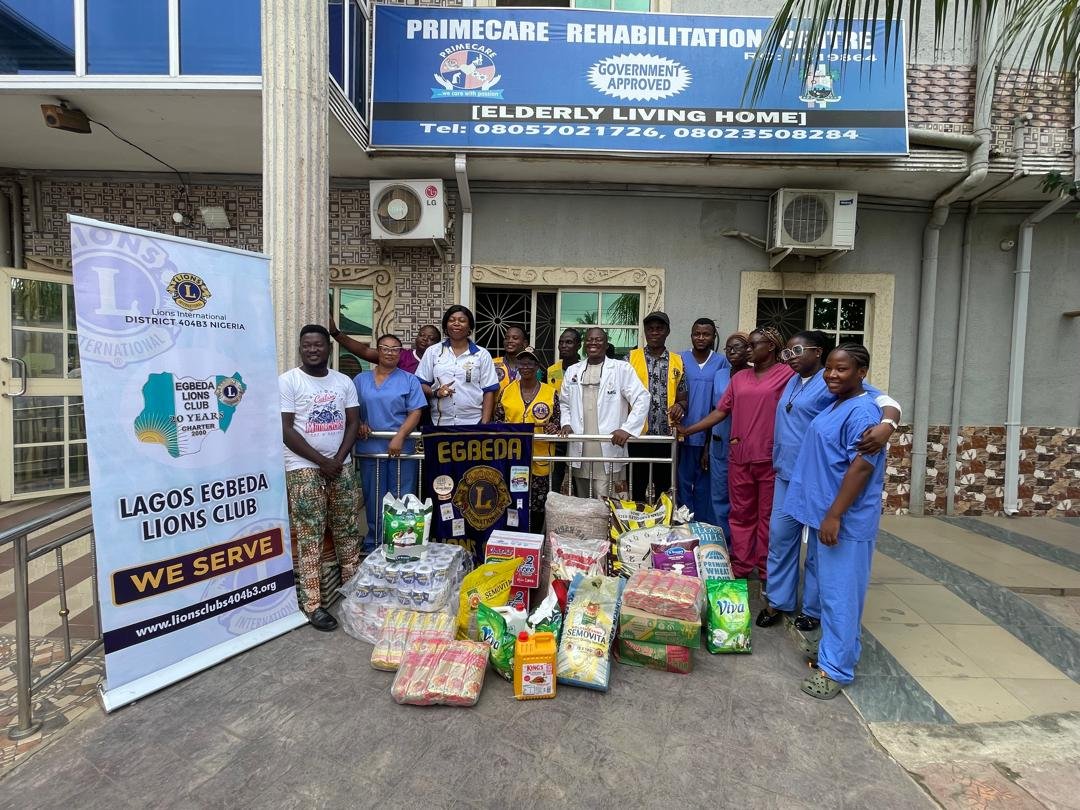
In a heartening display of community service, the Egbeda Lions Club of Lagos State recently delivered more than just essential supplies—they delivered hope and human connection. On Thursday, December 18, 2025, the club visited the Prime Care Rehabilitation and Elderly Care Home in Akowonjo, providing crucial grocery donations and underscoring a vital, yet often overlooked, societal responsibility: caring for our elders.
Beyond Charity: A Mission-Aligned Intervention
Mrs. Ijeoma Udeh, President of the club’s District 404B3, framed the visit within the broader, strategic objectives of Lions Clubs International. “Our donation aligns directly with our global causes, specifically targeting hunger and humanitarian efforts,” she explained. Lions Clubs International focuses on eight key areas: childhood cancer, diabetes, disaster relief, environment, humanitarian work, hunger, vision, and youth. This visit was a targeted action within that framework, demonstrating how global missions manifest in local, tangible support.
Udeh emphasized that the gesture was not a random act of kindness but a needs-based intervention. “Prior to our visit, we conducted a proper needs assessment at the home to understand their most urgent requirements,” she noted. This approach ensures that aid is effective and addresses real gaps, moving beyond symbolic gestures to create meaningful impact.
The Reality of Elderly Care in Challenging Times
The donated items—including bags of rice, beans, spaghetti, noodles, semovita, vegetable oil, toilet tissue, disinfectant, detergent, and dietary supplements—represent a significant lifeline. Dr. Abolade Adedola, Principal Founder of Prime Care, highlighted the acute timing of the donation. “This will greatly support the home, especially at a time of widespread economic hardship,” he said. “It takes people with large hearts to care for old people in this economy.”
His gratitude revealed a sobering reality about the sustainability of such care homes. Dr. Adedola noted that donations are not frequent and primarily come from individuals marking special occasions or from NGOs. This spotlights the precarious existence of many elderly care facilities, which operate on a patchwork of goodwill rather than a stable support system. The home caters to elderly individuals, some abandoned by their families or facing significant health challenges, with maintenance costs heavily subsidized by donations.
A Call for Systemic Change and Shared Responsibility
Both Udeh and Adedola used the occasion to issue a powerful call to action. “The government cannot do everything alone; that is why organizations like ours must support homes like this,” stated Udeh, pinpointing the essential role of civil society in social welfare.
Dr. Adedola’s appeal was broader and more urgent. He called on the public, particularly leaders and well-meaning Nigerians, to show more consistent concern for the elderly. He also urged the government to increase awareness on elderly care and support policies that protect older citizens. Perhaps his most profound advice was for individuals: “Nigerians should start preparing early for old age, as caring for the elderly should be a shared responsibility.” This shifts the narrative from reactive charity to proactive, collective planning for a demographic that is often rendered invisible.
The Ripple Effect: From a Single Visit to Sustained Impact
The Egbeda Lions Club’s visit is a single node in a larger network of care. Udeh announced that the club plans a larger hunger relief outreach in January, aligning with the club’s International Hunger Relief Week, demonstrating a commitment to sustained action. This model shows how a single act—sparked by a needs assessment and aligned with a global mission—can create immediate relief while building momentum for wider community programs.
The story of this visit is more than a feel-good news item. It is a case study in effective humanitarian action and a stark reminder of the vulnerabilities faced by the elderly in our societies. It underscores the critical intersection of NGO initiative, community need, and the pressing call for more robust systemic support for aging populations. The groceries provided essential sustenance, but the smiles exchanged represented something equally vital: the reaffirmation of dignity, connection, and the enduring power of community compassion.
Reported by Lydia Chigozie-Ngwakwe for the News Agency of Nigeria (NAN). Edited by Sandra Umeh.


