By Adepote Arowojobe
Ikorodu (Lagos State), Dec. 18, 2025
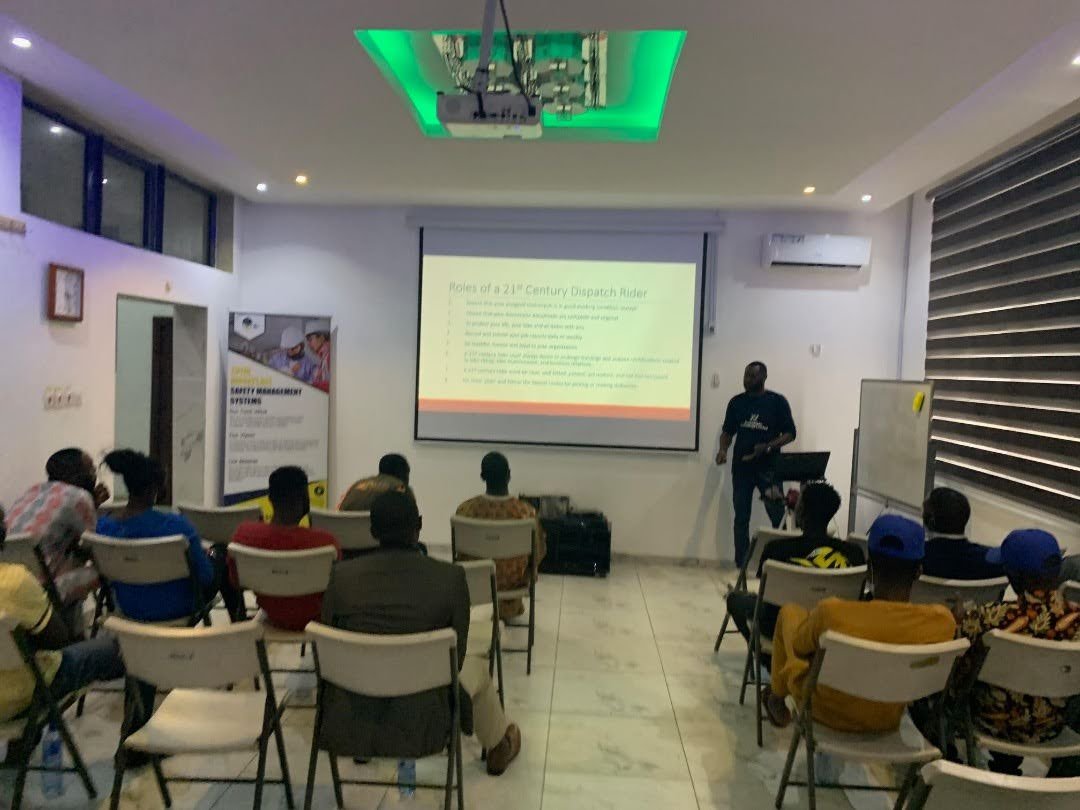
In a compelling call to action, Education Technology (Edtech) expert, Mr. Bayo Jayeola, has urged a strategic overhaul in how Nigeria approaches workforce development. Speaking during a training session in Lagos, Jayeola, the Chief Executive Officer of Push Mobile Technology Nig. Ltd., argued that the key to closing the nation’s pervasive skill gaps lies not in acquiring more technology, but in fundamentally rethinking the delivery of learning through a model known as Learning Management System (LMS) as a Service.
While a Learning Management System (LMS)—a software platform for administering, delivering, and tracking training and educational programs—is not new, Jayeola highlighted a critical failure in execution. “Across Nigeria and much of Africa, the challenge in workforce development is not a lack of training tools, but poor execution,” he stated. “Many institutions already use LMS platforms, yet skill gaps persist due to underutilised systems, fragmented learning content, and inconsistent delivery.”
This diagnosis points to a common pitfall: organizations invest in the platform but lack the expertise, content, or operational framework to make it effective. The result is a digital library of unused courses and no meaningful improvement in skills.
From Platform Ownership to Learning Outcomes: The LMS-as-a-Service Model
Jayeola’s solution shifts the focus from owning a tool to purchasing a complete learning operation. LMS as a Service (LMSaaS) is a managed solution where a provider handles everything: platform hosting, instructional design, content creation and curation, learner enrollment, assessment, certification, and detailed analytics on progress and outcomes.
“LMS as a Service addresses the gap by shifting focus from owning platforms to delivering complete learning operations,” Jayeola explained. This model ensures scalable, consistent, and outcome-driven training that can be uniformly deployed across government ministries, corporate branches, and educational institutions.
Practical Example: Imagine a state government launching a digital skills initiative. Instead of buying an LMS license and struggling to build courses, they partner with an LMSaaS provider. The provider delivers a turnkey portal with locally relevant video tutorials on data analysis, live webinar sessions with experts, automated quizzes, and digital badges for completion. The government’s role becomes oversight and advocacy, not technical management.
Tangible Benefits for Nigeria’s Ecosystem
Jayeola outlined several transformative advantages of this model for the Nigerian context:
- Expanded Access & Affordability: “It enables learners to gain certified skills remotely without the burden and cost of travel,” he said. This is pivotal for reaching populations in underserved regions and for professionals seeking upskilling without leaving their jobs.
- Monetization for Educators: Local subject matter experts, vocational trainers, and universities can package their knowledge into courses hosted and marketed by the service provider, creating new revenue streams without technical overhead.
- Critical for Government & TVET Programs: The model is particularly valuable for large-scale public initiatives like Technical and Vocational Education and Training (TVET). “Scale, consistency, and measurable outcomes are critical,” Jayeola stressed. An LMSaaS can standardize welding certification across all technical colleges in a region, with tracking to prove competency to employers.
A Practical Path Forward
The core of Jayeola’s argument is that Africa’s skills gap is a delivery problem. “The service offers a practical path to closing Africa’s skills gap by ensuring effective delivery of learning, not just platforms deployed digitally,” he emphasized.
In conclusion, the call is for stakeholders—from corporate HR departments to federal education planners—to evaluate their training programs not by the technology purchased, but by the skills certified and the outcomes achieved. By adopting a managed, service-oriented approach to learning, Nigeria can transform its digital training infrastructure from a static repository into a dynamic engine for workforce development and economic growth.
As the chief executive officer explains, “LMS as a Service allows training to reach more people at a lower cost. Learners can gain skills and certification without the burden of travel, while government and educators focus on outcomes, not platforms.”
(NAN)(www.nannews.ng)
ADEX/COF
=============
Edited by Christiana Fadare