OAU Celebrates 43 New Nurses, Charging Them to Be Pillars of a Resilient Health System
By Dorcas Elusogbon
Ile-Ife (Osun), Dec. 18, 2025
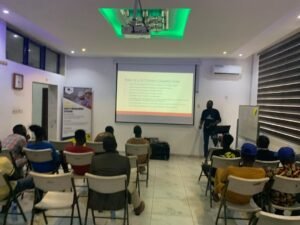
In a ceremony marking their formal entry into the profession, 43 graduate nurses from the Obafemi Awolowo University (OAU) College of Health Sciences were inducted on Thursday, receiving a powerful charge from university leadership to become transformative figures in healthcare.
Represented by the Deputy Vice-Chancellor for Administration, Research, Innovation and Development, Prof. Ibukun Akinyemi, the Vice-Chancellor, Prof. Adebayo Bamire, outlined a holistic vision for the inductees’ careers. He emphasized that technical skill alone is insufficient. “Nigeria has invested greatly in your lives,” he stated, highlighting the nation’s high expectations. The call was for a synthesis of clinical competence, compassionate care, critical thinking, and leadership—a combination essential for addressing the complex challenges within Nigeria’s healthcare landscape.
This advice comes at a critical time. The Nigerian health sector faces a significant brain drain, with many skilled professionals seeking opportunities abroad. The VC’s message underscores the urgent need for highly skilled, ethically grounded, and committed professionals who will innovate and lead within the local system, improving patient outcomes and institutional resilience.
Echoing this sentiment, the Chief Medical Director of the Obafemi Awolowo University Teaching Hospital Complex (OAUTHC), Prof. John Okeniyi, reframed the nurses’ identity for a globalized world. Represented by Prof. Akinwumi Komolafe, he described them as “natives of Nigeria, but citizens of the world.” This powerful phrase acknowledges that their OAU training meets international standards, opening global opportunities. However, it also carries an implicit charge: to leverage world-class knowledge for local impact and to represent the best of Nigerian healthcare wherever they practice.
He further urged them to commit to the OAU triad of competence, character, and courage. In practical terms, this means having the courage to advocate for patients, the character to maintain ethical integrity under pressure, and the competence that inspires trust from colleagues and the community.
Prof. Bernice Adegbehingbe, Provost of the College of Health Sciences, grounded the celebration in the inductees’ proven journey. She highlighted the “resilience, discipline, and determination” demonstrated through rigorous lectures, clinical postings, and community health experiences. Her admonishment connected history to the present moment: as the nurses took the Florence Nightingale Pledge, she reminded them that nursing is a calling, not merely a career.
This distinction is crucial. A career focuses on personal advancement, while a calling centers on service and duty. In the context of nursing, it demands an ongoing commitment to empathy, patience, and lifelong learning—qualities that prevent professional burnout and ensure the “highest standards of care” are not just a slogan but a daily practice.
The induction of these 43 professionals is more than a graduation milestone; it is an infusion of new talent into a system in need. The collective message from OAU’s leadership provides a robust framework for their practice: be globally relevant but locally committed, technically excellent but profoundly human, and view your role not as a job, but as a vital service to humanity.
(NAN) (www.nannews.ng)
EDA/AOS
Edited by Bayo Sekoni