
By Collins Yakubu-Hammer
Abuja, Dec. 18, 2025
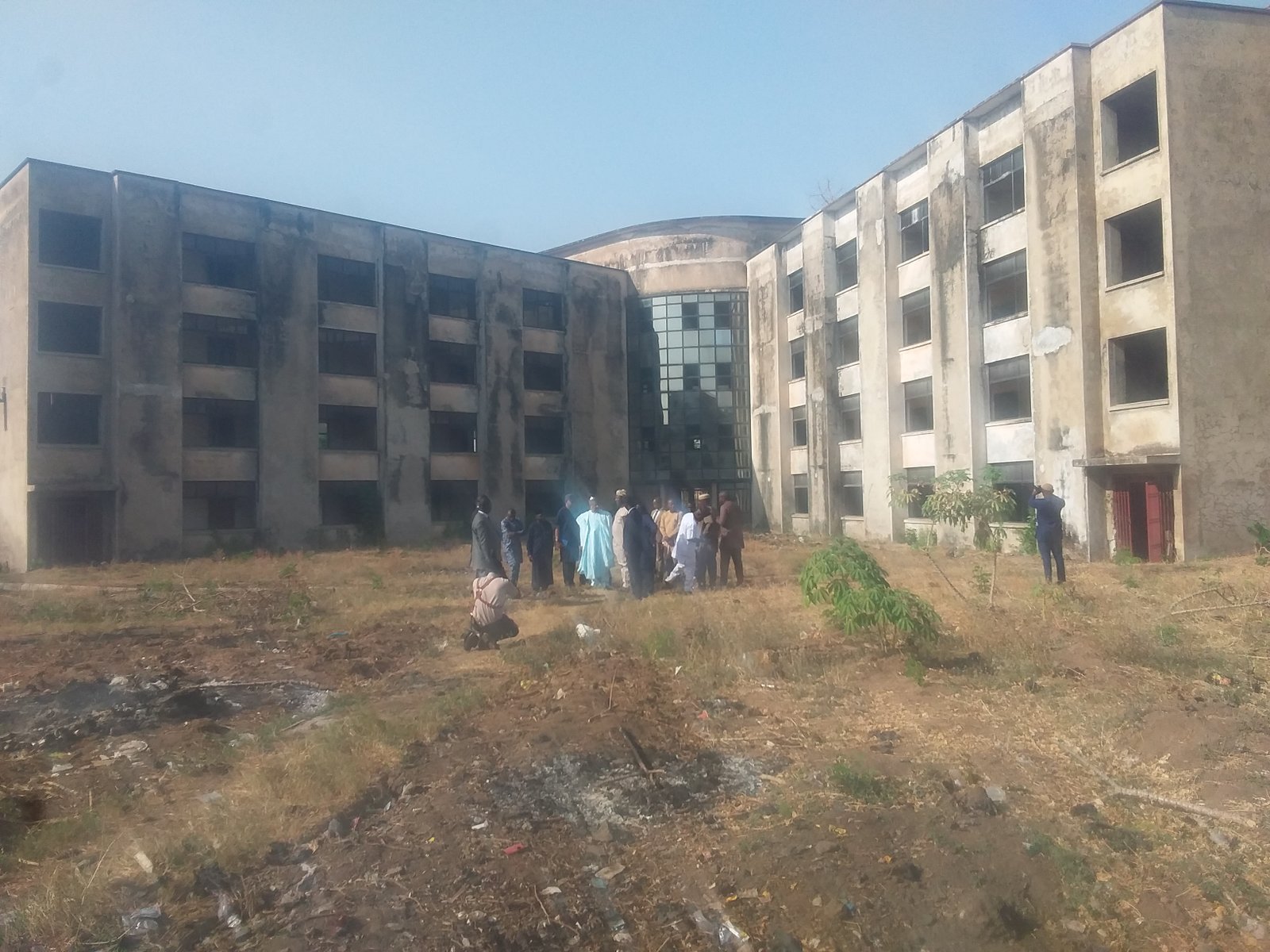
The Minister of Information and National Orientation, Alhaji Mohammed Idris, has issued a stark condemnation of the abandoned Federal Government Printing Press in Asokoro, Abuja, labeling the situation a “heart-wrenching and colossal waste to the nation.” His remarks came after a tour of the derelict facility, revealing a two-decade saga of stalled progress and squandered public funds.
The project’s foundation stone was laid on December 3, 2001, with high-grade printing equipment imported from Germany and India as early as 2007. Astonishingly, Minister Idris reported that much of this machinery remains sealed in its original crates, never installed or operated. “Some of the technology has become really obsolete already,” he noted, underscoring how delay has compounded the financial loss.
The Tangible Cost of Inaction
The minister detailed the direct consequences of this abandonment. The Federal Government Printing Press is the designated official printer for sensitive state documents, including the official gazette. Due to the facility’s non-operational status, this critical work is outsourced at significant and recurring cost to the treasury. Furthermore, a brand new 2000 kva generator, installed in 2011, has lain unused for 14 years—a symbol of the profound inertia.
“It’s billions of Naira wasting here,” Idris stated. He explained that while yearly budget proposals were made to complete the project, the necessary provisions were never allocated, leaving the initial investment—estimated to now require a far larger sum due to inflation—completely fruitless.
A Case Study in Systemic Failure
This project transcends a simple stalled initiative; it serves as a microcosm of broader governance challenges. The minister’s revelation points to critical failures in project continuity, asset management, and fiscal oversight. Successive administrations have overlooked the site, allowing vandalism to occur in 2016 and enabling a state-of-the-art facility to become a relic.
The pressing question Idris’s visit raises is: how many similar “ghost projects” exist across the nation, where capital investments are made but never operationalized, creating drains on public resources rather than assets?
Pathways to Revitalization
Minister Idris indicated that the tour was a fact-finding mission preceding recommendations to President Bola Tinubu. Potential paths forward could include:
- A Comprehensive Audit: Assessing which of the stored equipment remains viable and what modern technologies are now required.
- Public-Private Partnership (PPP): Exploring a concession model to inject private sector capital and management efficiency into the facility.
- Strategic Repurposing: Considering if the edifice could serve a broader function as a government communications or digital media hub, alongside its core printing mandate.
The minister’s forceful critique signals a potential shift from neglect to accountability. “We cannot continue to close our eyes to see this facility wasting further,” he stressed. The revitalization of the FG Printing Press now stands as a test case for the administration’s commitment to halting waste and optimizing existing national assets for public benefit.
The News Agency of Nigeria (NAN) reports that the minister was accompanied by the Permanent Secretary, Mr. Chinasa Ogbodo, directors from the Federal Government Press Department, and other ministry officials.
Edited by Deji Abdulwahab