By Sarafina Christopher | Analysis & Context by Expert Editors
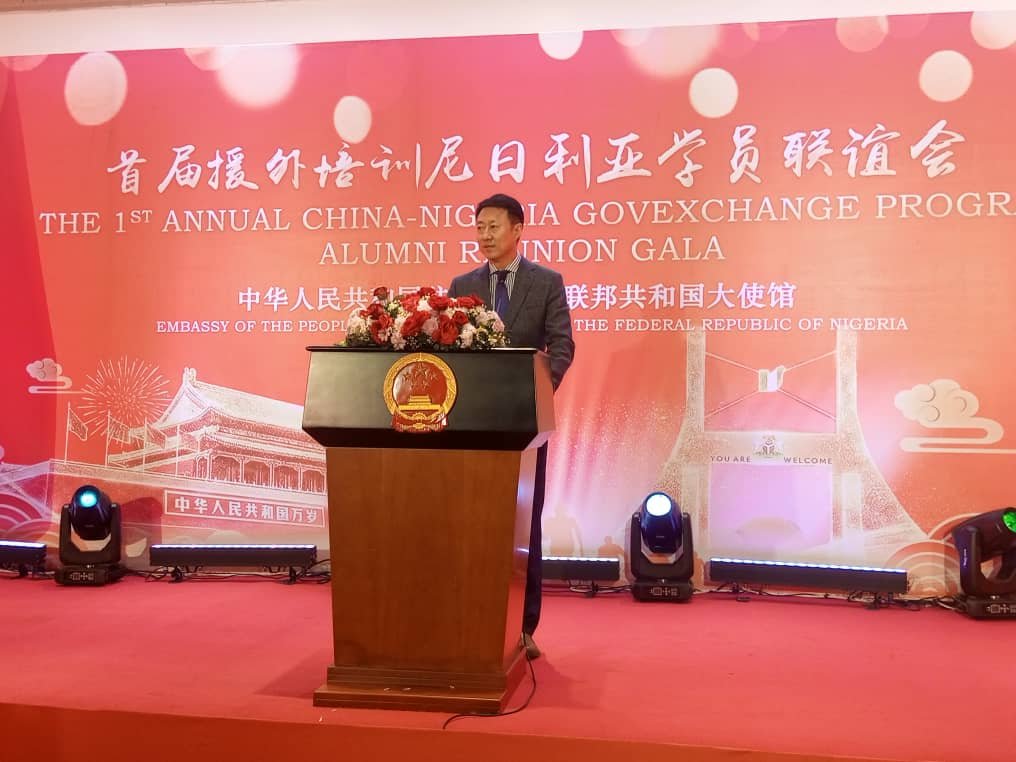
Abuja, Dec. 20, 2025 – The scale and strategic depth of China’s engagement with Nigeria through human capital development were brought into sharp focus as Chinese Ambassador to Nigeria, Yu Dunhai, revealed that over 10,000 Nigerians have now benefited from Chinese government-sponsored exchange and training programmes. This milestone, announced at the first Annual China-Nigeria Government Exchange Programme Alumni Reunion Gala in Abuja, underscores a long-term investment in Nigeria’s institutional and economic fabric that extends far beyond infrastructure projects.
Ambassador Yu’s disclosure moves the conversation from abstract diplomacy to tangible impact. These programmes, he explained, have “strengthened individual capacity, institutional effectiveness, and contributed to Nigeria’s national development.” The event itself was designed as a strategic nexus, aiming to sustain engagement among alumni and create a living network for collaboration and idea-sharing, thereby multiplying the initial investment’s return.
Beyond Numbers: The Strategic Sectors and Real-World Application
The ambassador detailed that training spans critical and future-focused sectors: governance, poverty reduction, manufacturing, agriculture, public health, trade, investment, science, technology, innovation, the blue economy, and the digital economy. This is not a scattergun approach but a targeted capacity-building strategy aligned with both Nigeria’s development goals and China’s economic interests.
Practical Example: A Nigerian agricultural officer trained in China’s hybrid rice technology returns to implement pilot projects in Kaduna. A mid-level tech bureaucrat exposed to Shenzhen’s innovation ecosystem helps draft new digital economy regulations in Abuja. This is the “soft power” transfer at work—disseminating models, standards, and practical know-how.
The alumni’s dispersion across major cities like Abuja, Lagos, Ibadan, and Maiduguri indicates a deliberate effort to build a nationwide network of influence and knowledge dissemination, embedding these Sino-centric perspectives deep within Nigeria’s bureaucratic and professional classes.
The “Natural Partnership”: Diplomacy and Economics Intertwined
Yu framed the relationship as one between “natural partners,” a bond strengthened by mutual support on core interests. He pointedly cited China’s opposition to potential external military threats against Nigeria—a significant diplomatic stance—and its support for Nigeria’s international aspirations, like joining the G20.
This political solidarity is mirrored by robust economic ties. The ambassador revealed striking figures for 2025:
- Bilateral trade surpassed $22 billion.
- China’s direct investment in Nigeria increased by 130%.
- Nigeria’s exports to China rose by over 200%.
Furthermore, the announcement of China’s zero-tariff policy for 100% of products from all 53 African countries presents a major opportunity for Nigerian exporters, though it also raises questions about market readiness and competitive capacity.
Alumni Testimonials: From Theory to Local Implementation
The value of the exchange programmes was echoed by senior Nigerian officials present, who highlighted the practical application of their learnings.
Mrs. Olubunmi Olowookere, Permanent Secretary of the FCT Social Development Secretariat, stated the training “enhanced her social welfare, poverty alleviation, and community development mandates,” exposing her to “practical, people-centred development models.” This suggests a direct influence on policy design and implementation at the sub-national level.
Mr. Muhammad Kalgo, Special Assistant to the Minister of Humanitarian Affairs, described the programme as “eye-opening and humbling,” demonstrating how poverty eradication is achievable through coordinated policy. His remark that “our return is not the end; it is a new beginning” perfectly encapsulates the alumni network’s intended purpose: to create a self-sustaining channel for ongoing influence and collaboration.
Analysis: The Broader Implications of a 10,000-Strong Alumni Network
While the economic and infrastructural elements of China-Nigeria relations are often highlighted, this human capital development strategy may be the most enduring. Training over 10,000 professionals, policymakers, and technicians creates a formidable cohort with firsthand experience of China’s systems, successes, and worldview. These individuals become agents of “China knowledge” within Nigeria’s public and private sectors, potentially shaping policies and partnerships for decades.
The reunion gala institutionalizes this network, ensuring it remains an active, China-engaged community. In the long game of international relations, such people-to-people bonds, carefully cultivated, can be as decisive as trade deals or diplomatic statements. As Ambassador Yu proclaimed, “China’s today is Nigeria’s tomorrow,” positioning China not just as a partner, but as a model and the pathfinder for Nigeria’s development trajectory.
The News Agency of Nigeria (NAN) reports that the event featured vibrant exchanges of unique experiences among participants, solidifying the bonds of this growing transnational network. (NAN)
SAF/YEN
=======
Edited by Mark Longyen | Enhanced and Contextualized by Expert Analysis