In a critical push to transform Nigeria’s agricultural sector, industry experts are issuing a unified call for the widespread adoption of data-driven smart farming practices. This shift is presented not merely as a technological upgrade, but as a foundational strategy to boost domestic production, achieve genuine food security, and decisively reduce the nation’s costly dependence on food imports.
The urgent recommendations, gathered from leaders in agribusiness and agricultural research, highlight a path forward that leverages technology to create a more efficient, sustainable, and resilient food system.
Beyond Intuition: The Data-Driven Core of Smart Farming
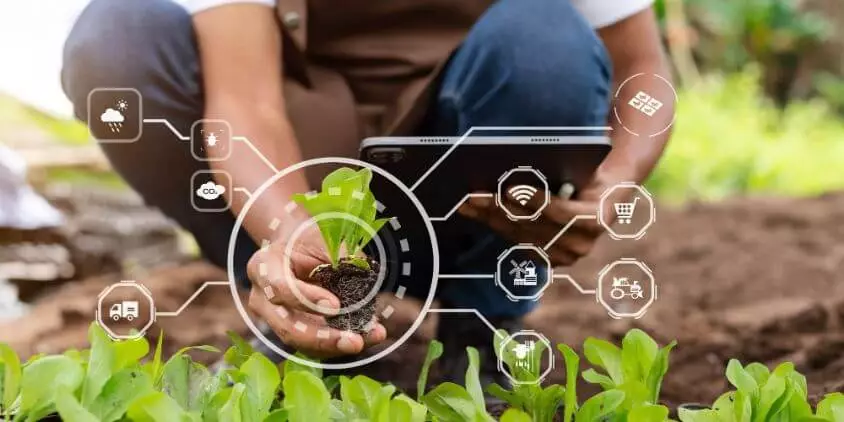
Dr. Tokunbo Ajayi, a Director at GkO Farms, emphasized that smart farming moves agriculture from tradition-based guesswork to precision-based management. “At its heart, smart farming is data-driven,” he explained. “Techniques like precision agriculture utilize sensors, GPS, and satellite imagery to allow farmers to optimize every input—water, fertilizers, and pesticides—with surgical accuracy. This dramatically reduces waste and environmental runoff while directly increasing crop yields and quality.”
He elaborated that this data ecosystem enables predictive analytics. “By analyzing soil conditions, historical yield data, and hyper-local weather patterns, farmers can make informed, strategic decisions about optimal planting times, the most suitable crop varieties for their specific plot, and precise resource allocation. This isn’t just working harder; it’s working smarter, leading to a fundamental improvement in productivity and profitability.”
Building Systemic Resilience and Sustainability
The experts stressed that the benefits extend far beyond the farm gate. Dr. Ajayi noted, “Smart farming promotes regenerative practices that enhance long-term soil health and biodiversity. Healthier soil retains more water and nutrients, creating a buffer against droughts and reducing the need for chemical inputs. This builds a more resilient agricultural system capable of supporting robust local production for generations to come.”
Beatrice Uzochukwu, Principal Researcher at Penfield Technologies, highlighted the critical link to supply chains and market access. “Smart farming’s impact is felt post-harvest,” she said. “Technologies like IoT-enabled storage monitors, blockchain for traceability, and AI-driven logistics platforms can develop more efficient supply chains. This reduces the staggering post-harvest losses Nigeria experiences by ensuring produce is stored correctly and reaches markets faster and in better condition. When local products are fresher and more reliably available, they become inherently more competitive against imported alternatives.”
Empowerment Through Access and Infrastructure
A key theme was democratizing access to information. Dr. Ajayi pointed to mobile technology as a great equalizer. “The introduction of farmer-centric mobile apps and platforms can provide real-time, critical information on dynamic market prices, accurate weather forecasts, and step-by-step best practices for dealing with pests or diseases. This empowers farmers to make timely, informed decisions that protect their livelihoods.”
Ms. Uzochukwu added that adoption necessitates and drives parallel infrastructure development. “The implementation of smart farming often requires improvements in rural connectivity, renewable energy for sensors and equipment, and cold storage facilities. Investing in this infrastructure doesn’t just serve a single technology; it enhances the overall food production and distribution capability of the entire country.”
She concluded with a focus on human capital: “Ultimately, technology is only as good as the people using it. Smart farming initiatives must include comprehensive, hands-on training programs. We must equip farmers with the digital literacy and technical skills necessary to adopt, adapt, and benefit from these new tools. Enhancing overall agricultural literacy in the 21st century is the most important investment we can make.”
The consensus is clear: embracing smart farming is a multi-faceted imperative for Nigeria. It is a synergistic approach that combines precision technology, sustainable practices, supply chain innovation, and farmer education to build a self-sufficient and secure food future.