By Philip Yatai | Port Harcourt, Jan. 1, 2026 (NAN)
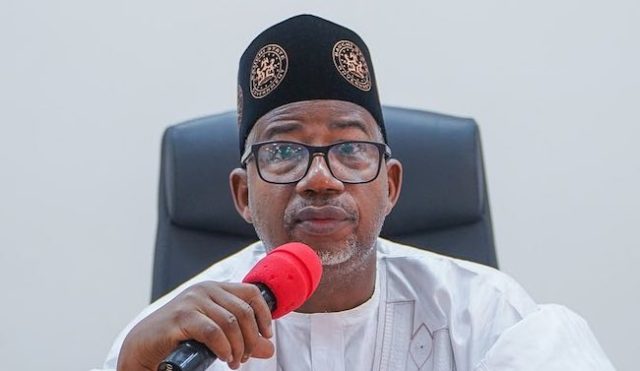
In a fiery public rebuke that lays bare the deepening fractures within Nigeria’s political elite, the Minister of the Federal Capital Territory (FCT), Nyesom Wike, has bluntly told Bauchi State Governor Bala Mohammed to face his own political and administrative crises alone. The exchange, far from a simple war of words, represents a critical flashpoint in the ongoing struggle for influence within the opposition Peoples Democratic Party (PDP) and raises questions about the use of federal power in state-level politics.
The confrontation erupted during Wike’s ‘thank you’ visit to his political stronghold in Abua-Odual Local Government Area of Rivers State on Thursday. This setting was significant—a display of home-ground strength and loyalty amidst a national political storm.
The Core of the Allegations: From “Putting Fire” to Financial Crimes
The catalyst was Governor Mohammed’s earlier accusations, in which he cast Wike as the chief architect of Bauchi’s current political turmoil. Mohammed recalled a specific threat, alleging Wike vowed to “put fire” in his state. He further accused the FCT Minister of weaponizing federal agencies and political networks to destabilize his administration—a serious charge that touches on the sensitive balance of power between federal and state governments in Nigeria’s democracy.
Mohammed’s critique extended beyond Bauchi, faulting Wike’s leadership in Abuja. He labeled the FCT’s spending as “questionable” and identified Wike as a central figure fomenting conflict within the PDP. This paints a picture of a minister wielding influence across multiple spheres: federal administration, party machinery, and interstate political rivalries.
Wike’s Retort: A Lesson in Political Power and Consequences
Wike’s response was characteristically combative and layered with political subtext. He advised Mohammed to cease the “blame game,” framing the governor’s troubles as a failure of political strength. His rhetoric posed a stark, realpolitik challenge: “If you do not have such power, why are you fighting? If you have the power to put out the fire, then go ahead and do it.”
The minister then revealed a historical grievance, accusing Mohammed of previously interfering in Rivers State politics by attempting to “impose a party leader.” Wike claimed he issued a stern warning that is now manifesting: “Today, he does not have a party to produce his successor. That is exactly what I warned him about.” This highlights the long-term, strategic nature of these conflicts, where actions taken years ago are seen as determining present-day political fortunes.
Escalation to Graver Accusations: Terrorism Financing and Legacy
The feud took a more severe turn when Wike directed Mohammed to focus on his “issue with the Economic and Financial Crimes Commission (EFCC) that is chasing his associates for alleged financing of terrorism.” By publicly invoking an investigation into terrorism financing—a matter of national security—Wike significantly raised the stakes, moving the dispute from political squabbling to the realm of alleged criminality.
Wike also turned the tables on Mohammed’s criticism of his FCT tenure. Noting that Mohammed himself was FCT Minister from 2010 to 2015, Wike challenged him to account for his own record: “You sold land everywhere. The contracts you awarded you couldn’t complete them. Now I am the one completing the projects.” This counterattack shifts the narrative from defense to offense, questioning the governor’s moral authority to critique while positioning Wike as the more effective administrator.
Broader Implications: Party, Power, and Federal-State Relations
This exchange is more than a personal spat. It is a symptom of the PDP’s profound internal crisis, with prominent figures like Wike and Mohammed openly clashing instead of presenting a united front. It also illustrates how political battles are fought across multiple levels—local government loyalty visits, state-level instability, federal agency actions, and national party dynamics.
The pledge of “100 per cent loyalty to President Bola Tinubu and Wike” by local officials in Rivers, as reported at the event, further complicates the picture. It underscores Wike’s unique, cross-party influence following his pivotal support for the ruling All Progressives Congress (APC) presidential candidate in the 2023 elections, a move that continues to reverberate through Nigeria’s political landscape.
In essence, Wike’s message, “Leave me alone and go and face your problems,” is a powerful declaration of political demarcation. It signals that in the high-stakes game of Nigerian politics, alliances are fluid, past actions have enduring consequences, and the responsibility for survival rests squarely on the individual player’s acumen and power—not on the sympathy of rivals.
Edited by Muhammad Lawal | Source: NAN News