In a dramatic public denouncement, the Rivers State chapter of the Peoples Democratic Party (PDP) has leveled serious allegations of betrayal against Governor Siminalayi Fubara, accusing him of a calculated deception that culminated in his defection to the ruling All Progressives Congress (APC). The claims, made by a factional leadership of the party, paint a picture of broken political agreements and backroom deals that have profound implications for the state’s governance and democratic mandate.
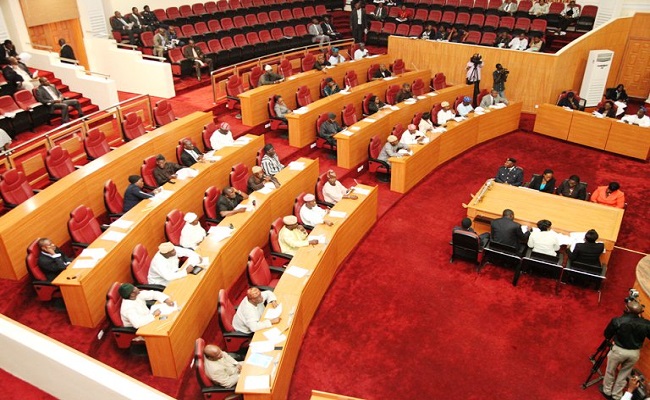
Dr. Nname Ewor, a factional Caretaker Chairman of the Rivers PDP, stated during a news conference in Port Harcourt that Governor Fubara had “betrayed the party and the Rivers people” by abandoning the PDP amid an ongoing political crisis. This crisis, which began barely a year into Fubara’s tenure, pitted the governor against the state House of Assembly and threw Rivers into prolonged political instability.
The Anatomy of a Failed Peace Pact
Ewor provided a detailed, though contested, account of a presidential intervention by President Bola Tinubu. According to the PDP chairman, this intervention led to a multi-point agreement designed to resolve the crisis. The alleged terms, which Fubara is accused of subsequently violating, were significant:
- Term-Limit Commitment: Fubara was to renounce any ambition for a second term in office.
- Traditional Council Reinstatement: The governor was to restore Chief Ohna Awuse as Chairman of the Rivers Traditional Rulers Council.
- Key Staff Dismissals: He was to remove Tammy Danagogo as Secretary to the State Government and Edison Ehie as Chief of Staff.
Ewor alleged that Fubara’s refusal to adhere to these terms led directly to the collapse of the peace deal and prompted President Tinubu’s controversial declaration of a State of Emergency in Rivers State—a move the PDP challenged at the Supreme Court to “protect its mandate.”
The Secret Deal and Defection
The narrative takes a more intricate turn with the claim of a second, undisclosed agreement between Fubara and Tinubu, reached just before the emergency rule was lifted. Ewor posits that this shadow pact was the catalyst for Fubara’s defection to the APC. The PDP chairman further accused Fubara of boasting about the terms of this new alliance, claiming the governor asserted that:
- President Tinubu would compel the resistant State Assembly to pass the 2026 budget.
- The President would force the Minister of the Federal Capital Territory, Nyesom Wike—Fubara’s political godfather turned chief adversary—to support his (now seemingly revived) second-term re-election bid.
This represents a stunning reversal, positioning Tinubu as the new power broker in Rivers politics, capable of overriding both legislative and factional opposition within his own party.
A Call for Transparency and the Stakes of the Mandate
At the heart of the PDP’s grievance is the concept of the public mandate. Ewor emphasized, “The mandate Fubara is holding was given to him by Rivers people.” He argued that by moving this mandate to the APC without public consent, Fubara acted unjustly. The faction is now demanding full disclosure: “It is incumbent on him… to disclose to Rivers people the terms of the peace agreement he entered with Tinubu… This will enable Rivers people to make informed decisions.” This call reframes the issue from an internal party dispute to a fundamental question of democratic accountability and the portability of a voter’s mandate.
Additional Allegations and Alignments
Ewor added further layers to the accusation of deception. He claimed Fubara misled PDP leaders into attending the party’s National Convention in Ibadan, only to deliberately stay away—an act now subject to litigation. In a revealing admission of the PDP’s own fractured state, Ewor disclosed that he has fully aligned himself with the calls by Nyesom Wike for the re-election of President Tinubu in 2027. This alignment underscores the complex, cross-party alliances that now define Nigerian politics, where former foes within one party may find common cause with figures in another against a shared enemy.
Broader Implications: A Case Study in Modern Political Realignment
This saga is more than a local political quarrel; it is a microcosm of the volatile nature of Nigerian politics. It highlights the power of presidential intervention in state-level disputes, the fragility of peace agreements built on personal concessions rather than institutional resolutions, and the increasing frequency of cross-carpeting (defection) as a strategic tool. The incident raises critical questions about party ideology, the personalization of political mandates, and the mechanisms available to citizens when an elected official switches allegiance after being voted into power under a specific party banner. The outcome in Rivers will likely serve as a precedent for how such high-stakes betrayals are perceived and potentially countered in Nigeria’s evolving democracy.
Source: NAN News