By Cecilia Ologunagba
New York, Jan. 3, 2026 – The United Nations has issued a powerful and hopeful declaration: cervical cancer is not an inevitable fate. It is a disease that is both preventable and curable, provided there is equitable access to a proven triad of medical interventions—vaccination, screening, and treatment. This statement, released ahead of the annual January Cancer Awareness campaign, underscores a pivotal moment in global public health where the tools for elimination exist, and the focus must shift to universal delivery.
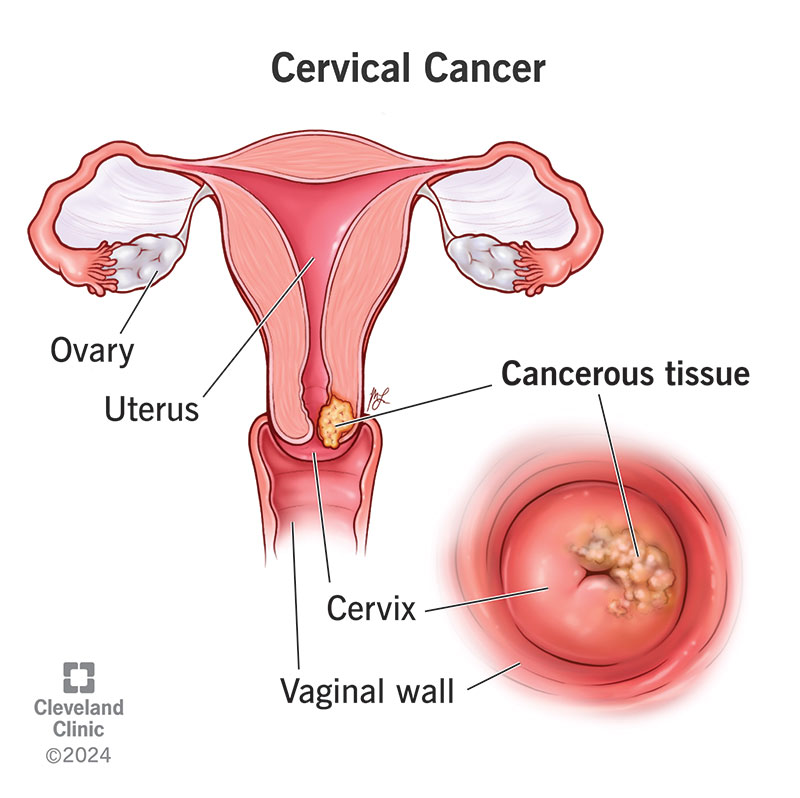
Cervical cancer develops in the cervix, the lower part of the uterus that connects to the vagina. As a reproductive cancer, its impact extends beyond physical health, affecting families and communities. The stark reality, however, is that in 2022 alone, approximately 660,000 women were diagnosed globally, and about 350,000 died from the disease, according to the World Health Organization (WHO). UNICEF frames this tragedy in even starker terms: one woman loses her life to cervical cancer every two minutes.
The primary cause of nearly all cervical cancer cases is persistent infection with high-risk strains of the human papillomavirus (HPV), a common virus transmitted through intimate skin-to-skin contact. It’s crucial to understand that most sexually active individuals will contract HPV at some point, and the immune system typically clears it naturally. The danger arises when certain oncogenic HPV types evade the immune system and cause long-term infection, leading to precancerous cellular changes that can, over years, progress to cancer. This long latency period is what makes screening so effective.
The UN and WHO emphasize a three-pronged approach to turning the tide:
- Primary Prevention: HPV Vaccination
This is the cornerstone of elimination. Vaccination targets the root cause—the virus itself. WHO recommends vaccinating girls aged 9–14, before they become sexually active, to provide protection before potential exposure. The vaccines are highly effective against the HPV strains responsible for the majority of cervical cancers. Expanding vaccination to boys is also beneficial in reducing transmission and protecting against other HPV-related cancers. - Secondary Prevention: Screening and Early Detection
Screening is the safety net. It aims to detect precancerous changes or early-stage cancer when it is most treatable. WHO recommends screening for women starting at age 30 (or 25 for women living with HIV, who are at higher risk) using a “high-performance” test, such as an HPV DNA test. Early detection transforms the prognosis; cervical cancer is one of the most successfully treatable forms of cancer when caught early. - Tertiary Intervention: Timely and Effective Treatment
For women who are diagnosed, access to appropriate treatment is critical. This can range from simple outpatient procedures for precancerous lesions to surgery, radiotherapy, and chemotherapy for invasive cancer. The 90-70-90 targets (explained below) explicitly call for 90% of women diagnosed to receive treatment, closing a fatal gap in the care continuum.
The central challenge is not a lack of medical solutions, but a profound inequality in access. The burden of disease and death is disproportionately borne by women in low- and middle-income countries, particularly in sub-Saharan Africa, Central America, and Southeast Asia. Barriers include cost, lack of healthcare infrastructure, limited awareness, and social stigma.
In response, 194 countries committed to a historic Global Strategy to Eliminate Cervical Cancer in 2020, with November 17 now marked as World Cervical Cancer Elimination Day. The strategy sets ambitious but achievable 2030 targets, known as the 90-70-90 goals:
- 90% of girls fully vaccinated against HPV by age 15.
- 70% of women screened with a high-performance test by ages 35 and 45.
- 90% of women identified with cervical disease receiving appropriate treatment (Note: The original article stated 70%, but the official WHO target is 90%).
Achieving these targets would place the world on a path to elimination, defined as reducing annual cases to fewer than 4 per 100,000 women. The long-term payoff is monumental: WHO estimates that successfully implementing this strategy could avert 74 million new cases and prevent 62 million deaths by the year 2120.
The UN’s message is clear: cervical cancer is a stark injustice of inequality, but it is an injustice we have the power to end. The path forward requires sustained political will, international cooperation, and investment in health systems to ensure that every woman, regardless of where she is born, has access to the life-saving tools that already exist.
Source: NAN News. Edited by Bashir Rabe Mani.