
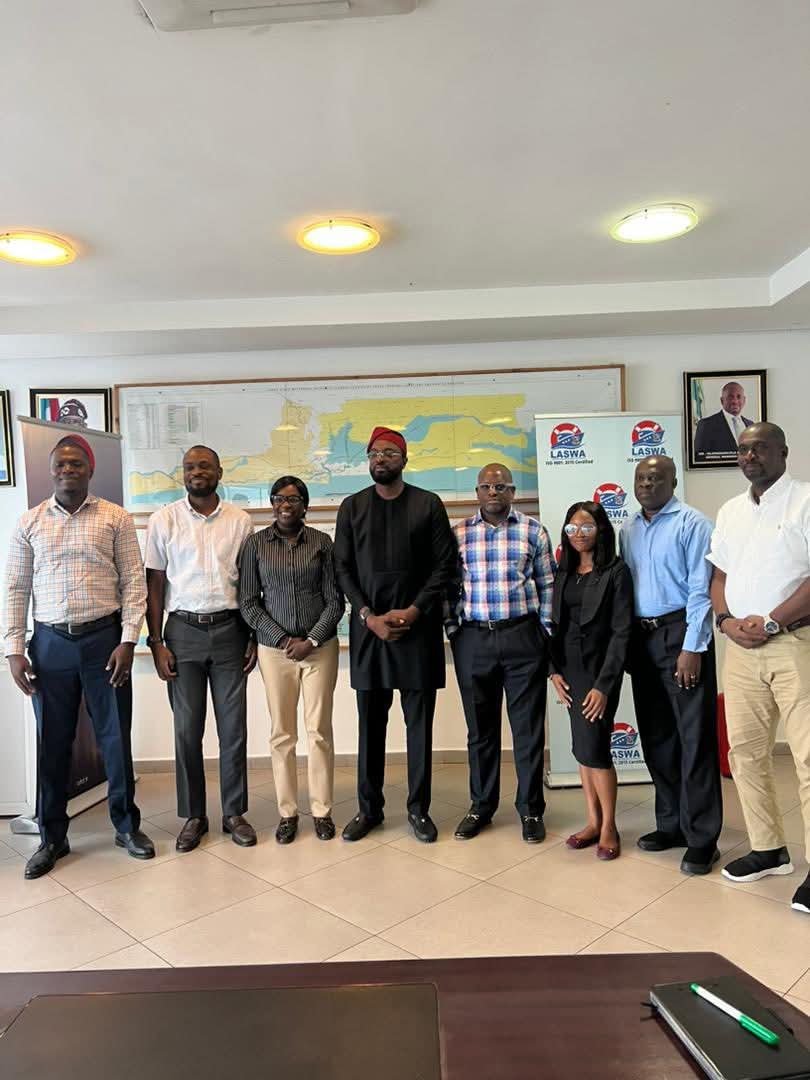
Caption: Lagos State Commissioner for Transportation, Mr. Oluwaseun Osiyemi, engages with management and staff of the Lagos State Waterways Authority (LASWA) during a working visit to discuss the Omi-Eko Project.
By Chiazo Ogbolu
Lagos, Jan. 6, 2026
In a decisive move to accelerate a critical infrastructure initiative, Mr. Oluwaseun Osiyemi, the Lagos State Commissioner for Transportation, has issued a direct appeal to the staff of the Lagos State Waterways Authority (LASWA) for the timely delivery of the landmark Omi-Eko Project.
The commissioner’s call to action came during a strategic working visit to LASWA headquarters, where he engaged with management and staff on operational priorities, service delivery, and the overarching vision for transforming Lagos’s waterways from a neglected alternative into a mainstream, sustainable transportation network.
The Core Appeal: Unity, Safety, and Strategic Execution
During the interactive session, Commissioner Osiyemi framed the Omi-Eko Project not merely as a construction initiative but as a test of institutional capability and collaborative spirit. He emphasized three foundational pillars essential for success:
- Unified Teamwork: Osiyemi urged management and staff to “work as one team,” promoting a culture of unity and mutual respect. This is crucial in a complex, multi-year project involving dredging, civil engineering, electrical systems, and community engagement, where siloed operations could lead to costly delays.
- Uncompromising Safety: Reiterating that “the safety of commuters remains a top priority,” the commissioner charged LASWA to uphold the highest safety standards. This directive extends beyond traditional maritime safety to encompass the new challenges of operating and maintaining a fleet of hybrid-electric ferries and modernized terminals.
- Professionalism and Innovation: The commissioner called for a commitment to professionalism and innovation in service delivery. For Omi-Eko, this means adopting smart technologies for route optimization, ticketing, and fleet management, and fostering a problem-solving mindset to overcome unforeseen obstacles.
“Collective effort and strategic thinking are essential for strengthening water transport operations in the state,” Osiyemi stated, directly linking staff performance to the project’s ambitious goals.
Understanding the Stakes: The Omi-Eko Project in Detail
The commissioner’s urgent appeal is grounded in the transformative scale of the Omi-Eko Project. With a budget of €410 million and a target completion date of 2030, it is one of Lagos’s most significant sustainable mobility investments. Its components are designed to create a fully integrated system:
- Fleet Modernization: The introduction of over 70 hybrid-electric ferries will drastically reduce carbon emissions and noise pollution, offering a cleaner, quieter commute compared to diesel-powered boats.
- Infrastructure Overhaul: The project includes upgrading existing jetties and developing new terminals with modern amenities, waiting areas, and secure boarding systems. This “total journey” approach aims to make water transport as comfortable and reliable as using a modern bus station.
- Waterway Optimization: Dredging new and existing routes is critical for ensuring safe, reliable, and year-round navigation, especially during low tides.
- Inclusive Economic Model: A particularly innovative aspect is the dedicated funding to integrate informal water transport operators into the new system. This prevents the project from displacing livelihoods and fosters a unified, regulated network that enhances safety for all users.
Partners like the French Development Agency (AFD) are involved not just for funding but also for technical expertise in sustainable urban mobility, raising the bar for execution standards.
The Bigger Picture: Why Timeliness is Non-Negotiable
The commissioner’s focus on timely delivery is a response to Lagos’s acute urban challenges. Every month of delay in providing a viable water transport alternative means:
- Continued overwhelming pressure on road networks, exacerbating the city’s infamous traffic congestion.
- Prolonged exposure of commuters to road safety risks and productivity losses from long travel times.
- Missed opportunities to cut transportation-related emissions, a key component of the state’s climate action goals.
In closing his visit, Commissioner Osiyemi commended LASWA staff for their existing dedication and reiterated the ministry’s commitment to fostering a “supportive and performance-driven work environment.” This suggests an understanding that accountability must be matched with the right tools, training, and institutional support.
The Omi-Eko Project represents a bold reimagining of Lagos’s relationship with its abundant waterways. The commissioner’s visit underscores that its success hinges not just on engineering and finance, but fundamentally on the human element—the capacity, cohesion, and commitment of the LASWA team tasked with bringing this vision to life.
Source: NAN News


