By Patricia Amogu
Abuja, Jan. 7, 2026 – The President of the National Cashew Association of Nigeria (NCAN), Dr. Ojo Ajanaku, has outlined an ambitious but achievable vision, stating that Nigeria’s cashew sector could generate a staggering $10 billion in annual revenue. This projection hinges on a fundamental shift from being a mere exporter of raw nuts to becoming a global powerhouse in processing and value addition.
Ajanaku revealed these figures during a press conference ahead of the 4th National Cashew Day, scheduled for January 22-24 in Abuja. The event’s theme, “Unlocking the Full Potential of Nigeria’s Cashew Industry,” directly addresses the current gaps between potential and reality.
The Current Landscape: A Story of Lost Revenue
Ajanaku highlighted a critical issue plaguing the industry: poor export documentation and the weak repatriation of foreign exchange earnings. He stated that a substantial volume of cashew leaves Nigeria without proper export documentation, meaning significant earnings are not returned to the national economy. This represents a major leakage of wealth.
To contextualize the loss, he cited the last export season, where Nigeria shipped over 400,000 tonnes of raw cashew nuts, valued at approximately $700 million. This trade, while substantial, captures only a fraction of the nut’s total value.
The $3 Billion Foundation: Scaling Raw Production
The first pillar of the $10 billion vision is scaling raw production. Ajanaku provided a clear calculation: if Nigeria can ramp up production to 2 million tonnes annually (a goal he deems possible within five years) and sell at an average of $1,500 per tonne, the country would earn about $3 billion yearly from raw nut sales alone. This requires deliberate investment in improved seedlings, farmer support, and aggregation systems.
The $7 Billion Opportunity: The Power of Processing and By-Products
The transformative leap from $3 billion to $10 billion lies in capturing value domestically. Currently, Nigeria exports raw nuts, which are then processed in countries like Vietnam, India, and Brazil. The real profit is in processing the nuts into kernel, but the opportunity extends far beyond.
Ajanaku emphasized the enormous value in by-products that are currently treated as waste in Nigeria:
- Cashew Nut Shell Liquid (CNSL): This viscous liquid, extracted from the honeycomb structure of the shell, is a valuable industrial raw material. It is used in friction linings (brake pads), paints, laminates, and even pharmaceuticals.
- Cashew Cake: The residue after oil extraction from the kernel is a protein-rich animal feed. Ajanaku provided a stark contrast: “In Vietnam, cashew cake alone sells for about 95 cents per kilogram, while in Nigeria processors pay to dispose of it as waste.” This represents a direct, recurring loss of income.
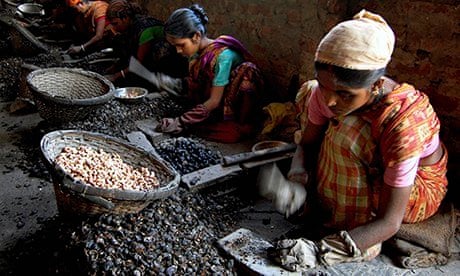
Full local processing, which includes cracking, peeling, grading, and valorizing every part of the nut, is the key to unlocking the remaining $7 billion in potential annual revenue and creating thousands of jobs across rural and urban areas.
Strategic Partnerships and Government Action
To realize this vision, NCAN is pursuing strategic partnerships. Ajanaku disclosed collaborations with key institutions like the Ministry of Finance, the Federal Ministry of Agriculture and Food Security, and NEXIM Bank to improve financing, policy, and export frameworks.
Most notably, he revealed a landmark Memorandum of Understanding (MoU) between Nigeria and Vietnam. This partnership is crucial for technology transfer, as Vietnam possesses the advanced processing machinery and expertise Nigeria needs to leapfrog its industrial capabilities.
Ajanaku also called for targeted regional development, using Kogi State as an example: “Kogi State, which has the highest cashew production in the country, has no factory. A lot of potential can come from Kogi State for the country.” Establishing processing hubs in high-production states is essential for reducing logistics costs and fostering inclusive growth.
A Call for Industrialization
Echoing the President’s sentiment, NCAN National Secretary, Mr. Augustine Edieme, stated that the upcoming National Cashew Day is a platform to attract major investment. He stressed, “We are not just talking about the cashew seeds. We need to crack the fruit shell and discover the value in cashew shells. Industrialization of the cashew industry is key to driving the Nigerian economy.”
Mr. Sunday Ojonugwa, a representative of the Federation of Agricultural Commodity Associations of Nigeria (FACAN), pledged the group’s full support to ensure the sector reaches its promised potential.
With sustained government support, effective regulation to curb export malpractice, and strategic investments in processing infrastructure, Nigeria’s cashew industry is poised to transform from a commodity export sector into a major driver of economic growth, industrial development, and sustainable job creation.
Edited by Tosin Kolade. Source: NAN News.