By Stephen Adeleye
Anyigba, Kogi State – January 7, 2026
In a significant show of political unity and shared development goals, Kogi State Governor, Alhaji Ahmed Usman Ododo, has publicly praised the large-scale empowerment program spearheaded by Senator Isah Jibrin-Echocho, representing Kogi East Senatorial District. The initiative, which saw the distribution of vital economic assets to constituents, underscores a collaborative approach to governance aimed at tackling poverty at its roots.
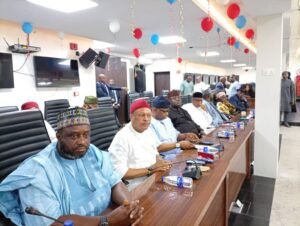
Governor Ododo, represented by his Deputy, Elder Joel Salifu, who inaugurated the event in Anyigba, described the program as a “textbook example of people-oriented leadership.” He emphasized that such direct empowerment is a critical strategy for his administration, serving as a catalyst for poverty reduction, opportunity creation, and sustainable community development.
“When we prioritize the economic empowerment of our citizens, we are investing in the very foundation of our state’s stability and prosperity,” the Governor stated. “It moves support from mere rhetoric to tangible assets that can generate income and improve livelihoods.”
Beyond Praise: The Strategic Importance of Legislative-Executive Synergy
Governor Ododo’s commendation goes beyond courtesy; it highlights a crucial, often underreported aspect of effective governance: the synergy between the executive and legislative arms. He explicitly called the program a “product of effective partnership,” signaling that sustainable development requires alignment between state-level policies and federal constituency projects. This collaboration ensures that initiatives are not duplicated but are complementary, creating a multiplier effect for beneficiaries.
The Governor noted that Senator Jibrin-Echocho’s efforts directly align with his administration’s core pillars: building a government centered on youth engagement, women’s economic inclusion, support for small and medium enterprises (SMEs), and agricultural modernization. This alignment suggests a cohesive development agenda for Kogi State, where federal and state actors pull in the same direction.
Deconstructing the Empowerment: From Assets to Sustainable Livelihoods
The distributed items were not random gifts but carefully selected tools designed to address specific economic gaps within the diverse communities of Kogi East:
- Transport & Mobility (Buses, Tricycles, Motorcycles): These address critical infrastructure deficits in rural and semi-urban areas. They facilitate cheaper movement of people and goods, create direct employment for drivers and riders, and boost commerce by improving market access.
- Productive Tools (Sewing Machines, Grinding Machines): These are classic small-scale enterprise starters. A single sewing machine can train and employ multiple tailors, while grinding machines provide essential food processing services, saving time and generating daily income.
- Agricultural & Aquatic Support (Engine Boats): Particularly vital for riverine communities in Kogi East, these boats enhance fishing and water transportation, directly impacting food security and the local economy.
- Digital Inclusion (Laptops): This points to a forward-thinking component of the empowerment, aiming to bridge the digital divide and equip youths with tools for education, remote work, and modern entrepreneurship.
Senator Jibrin-Echocho explained that the initiative was a direct response to prevailing economic hardships, designed to “reach a wider audience and dispel misinformation” about government efforts. His focus on tangible support seeks to build trust and demonstrate accountability to his constituents.
A Call for Prudent Utilization and Community Impact
While launching the program, Governor Ododo offered crucial advice to the beneficiaries, urging them to use the resources “wisely to improve lives and contribute to their communities.” This highlights the program’s ultimate goal: to create a ripple effect. The success of such an initiative is not measured merely at distribution, but in how these assets are leveraged to create jobs, support families, and stimulate local economic activity over the long term.
The high-profile event, attended by party leaders, government officials, traditional rulers, and beneficiaries from all nine Local Government Areas of Kogi East, underscores its political and social significance. It serves as a community mobilization point and a public demonstration of governance in action.
In conclusion, this empowerment program, as lauded by Governor Ododo, represents more than a distribution exercise. It is a case study in collaborative governance, strategic poverty intervention, and the tangible application of constituency representation. Its true value will be realized in the coming months and years as these tools are put to work, fostering resilience and driving grassroots economic growth across Kogi East.
Edited by Sadiya Hamza
Source: NAN News