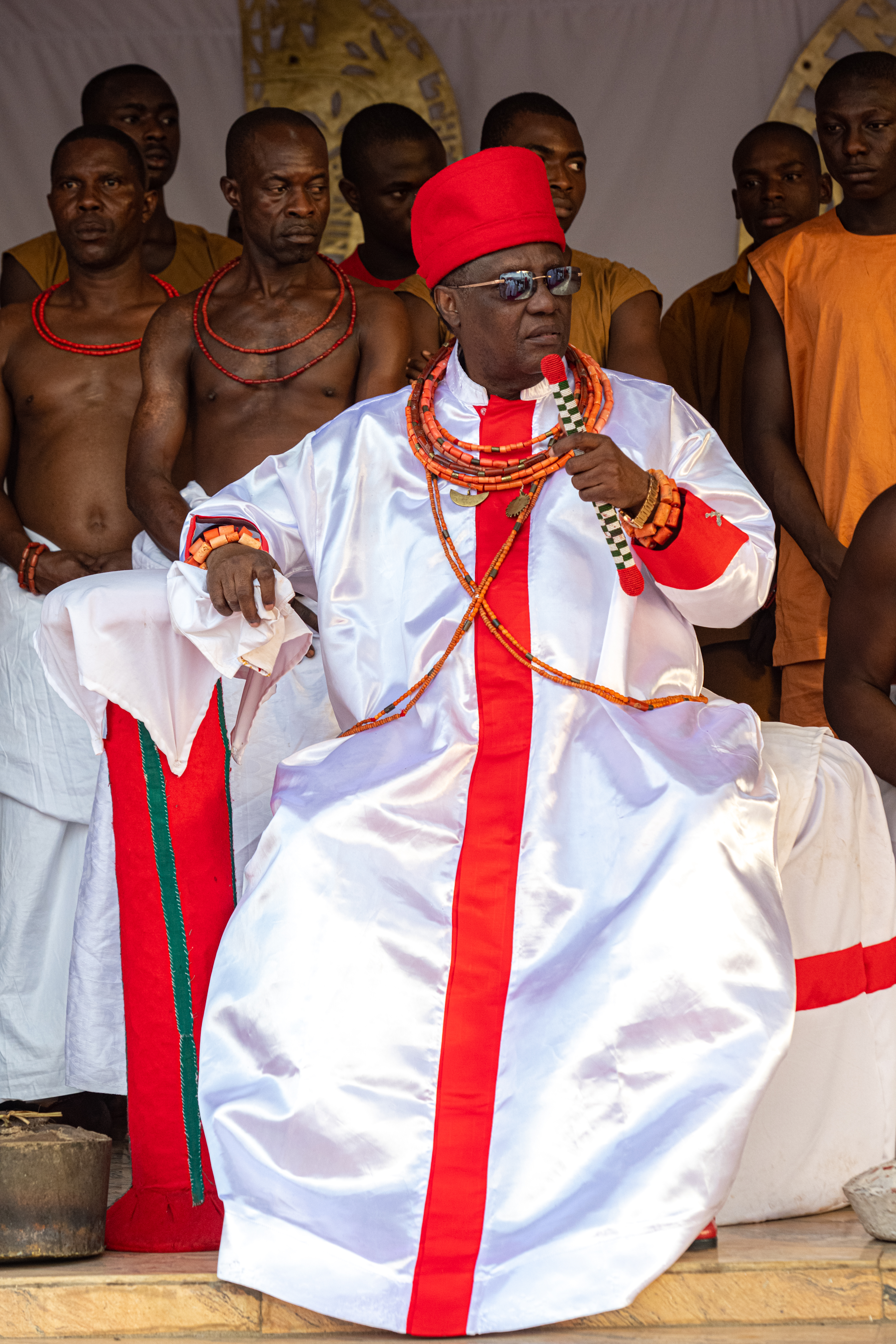
The 2025 Igue Festival, the paramount cultural and spiritual event in the Benin Kingdom, reached a pivotal moment as His Royal Majesty, Omo N’Oba N’Edo, Uku Akpolokpolo, Ewuare II, the Oba of Benin, led a solemn and grand thanksgiving service. The ceremony, held at the historic Holy Aruosa Cathedral in Benin City, served as a powerful testament to the deep, centuries-old intertwining of monarchy, indigenous faith, and communal identity in Edo State.
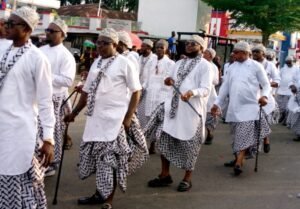
Accompanied by the Palace Chiefs (the Uzama and other titleholders), members of the royal family, Enigie (Dukes), village heads, and representatives of the kingdom’s various guilds and societies, the Oba’s procession into the cathedral was a visual narrative of Benin’s structured traditional hierarchy. The attendance of these key pillars of the kingdom underscores that the Igue Festival is not merely a royal ceremony but a holistic national event that reaffirms the social contract between the throne and all segments of Benin society.
The sermon delivered by the Chief Priest (Ohen-Osa) of Holy Aruosa, Igbinoghodua Edebiri, moved beyond ritualistic pronouncements to address contemporary societal challenges. Lamenting the erosion of family values and the rise in social vices, Edebiri anchored his message in the divine sanctity of the Benin monarchy. His declaration that “God established the Benin throne in accordance with divine ordinance” is a core tenet of Benin cosmology, which views the Oba as a spiritual intermediary between the people and the supernatural realm. This context gives weight to his warning against agents of destabilisation, framing political or social turmoil not just as a civic issue, but as an affront to a divinely-ordained order.
The choice of venue, the Holy Aruosa Cathedral, is itself a profound statement. Often described as the ‘Benin National Church,’ Aruosa represents a unique syncretism that predates European missionary influence. It is a practice of Christianity that evolved independently within the Benin context, incorporating indigenous languages, rituals, and royal symbolism. Holding a major Igue event here highlights the festival’s nature as a spiritual cleansing and renewal for the kingdom, one conducted within a framework that is authentically Benin. The electrifying performances by the Aruosa church choir, which reportedly “left the worshippers and guests visibly enthralled,” demonstrate how music and dance serve as vital, emotive conduits for spiritual expression and cultural continuity in this setting.
Ultimately, this thanksgiving service encapsulates the multifaceted essence of the Igue Festival. It is a moment of spiritual thanksgiving and supplication for the well-being of the kingdom in the coming year; a potent reinforcement of the Oba’s sacred authority and the kingdom’s social structures; and a vibrant celebration of Benin’s resilient cultural heritage. The event signals the climax of the Igue period, which includes private royal rites, and transitions the kingdom from the old year into the new with blessings, introspection, and a reinforced sense of communal purpose.