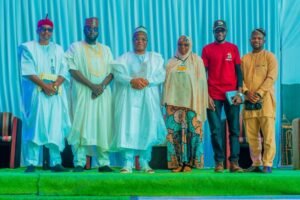
In a decisive move to translate policy into tangible progress, the Federal Government has initiated a nationwide inspection tour of major sugar projects. This hands-on assessment, led by the Minister of State for Industry, Senator John Enoh, signals a critical shift from boardroom discussions to on-the-ground accountability for Nigeria’s sugar sector ambitions.
The tour commenced at the Lafiagi Sugar Company (LASUCO) in Kwara State, a flagship project owned by the BUA Group. This inspection is not a routine visit; it is a direct response to President Bola Tinubu’s mandate to accelerate Nigeria’s journey toward sugar self-sufficiency. The goal is to break the cycle of heavy import dependency, which drains billions in foreign exchange annually, and to unlock the sector’s vast potential for job creation and industrial growth.
At the heart of this push is the Backward Integration Programme (BIP), a policy framework designed to compel sugar refiners to invest in local sugarcane cultivation and processing. Senator Enoh’s presence at LASUCO underscores the government’s intent to hold BIP operators to their commitments. The minister toured the integrated complex, which includes a sugar mill, an ethanol plant, and critical power and irrigation infrastructure supporting over 700 hectares of sugarcane.
The scale of the LASUCO project is monumental. Designed as a 10,000-tonne-per-day cane mill, its full operational capacity promises up to 220,000 metric tonnes of refined sugar annually. This represents a significant portion of Nigeria’s consumption needs. Senator Enoh commended the National Sugar Development Council (NSDC) for its oversight but pinpointed the central challenge: the urgent need to massively expand sugarcane farming to feed these large-scale factories. A state-of-the-art mill is ineffective without a robust, contiguous plantation ecosystem to supply it, highlighting the critical link between agricultural development and industrial manufacturing.
This inspection reveals the multi-layered strategy for sector revitalization. First, it is about enforcing accountability on BIP commitments, moving operators from planning phases to full production. Second, it emphasizes sustained stakeholder engagement with investors, traditional institutions, and host communities, which is crucial for resolving land tenure issues and ensuring social license. Third, the focus on integrated complexes like LASUCO—which produces sugar, ethanol, and power—showcases the model for deepening industrial value chains. Ethanol production, for instance, opens a parallel revenue stream and supports energy diversification.
The broader implications of success are profound. Achieving self-sufficiency would conserve scarce foreign exchange, create hundreds of thousands of rural and industrial jobs, and stimulate ancillary industries from packaging to transportation. The Federal Government’s hands-on inspection approach marks a new chapter of proactive governance. The true test, however, will be in sustaining this momentum, addressing the infrastructural and financing hurdles for sugarcane outgrowers, and ensuring that the reforms translate into affordable sugar for Nigerians and a thriving, inclusive agro-industrial economy.