
Economy
By Rukayat Moisemhe
Lagos, Dec. 18, 2025 (NAN)
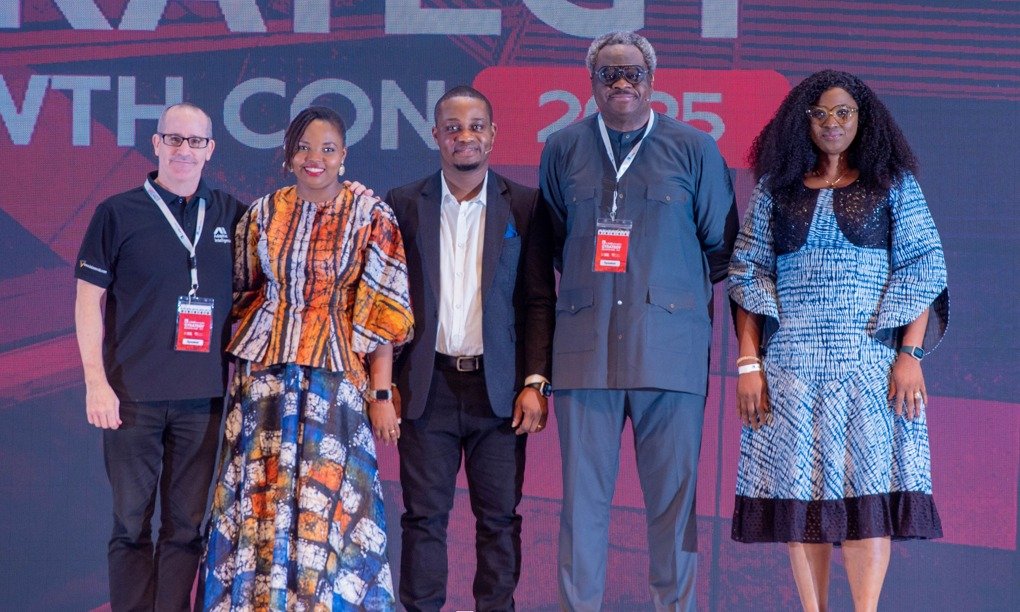
Nigeria’s ambitious target of becoming a $1 trillion economy by 2030 will remain a distant vision without a foundational shift: the creation of a critical mass of globally competitive, resilient businesses. This was the unanimous verdict of business leaders and experts at the two-day LIMBSimple Strategy Growth Convention 2025 in Lagos.
The convener, Mr. Ezekiel Solesi, framed the challenge not as a government-led initiative but as an entrepreneurial imperative. “The trillion-dollar economy is not a government project to be handed down; it is a cumulative outcome of thousands of businesses scaling to compete and win on the world stage,” Solesi stated. He urged a fundamental rethink, moving from traditional, often insular, business models to ones built on strategic collaboration, systematic leadership development, and scalable processes. “Africa’s challenge has been building systems that outlive individual brilliance. We need ecosystems—financial, educational, and regulatory—that consistently nurture entrepreneurs toward sustainable growth, not just survival.”
The experts outlined a multi-pronged blueprint for building such enterprises:
1. Beyond Revenue: The Pillars of Resilient Governance
Dr. Niyi Adesanya, CEO of FifthGear, delivered a crucial correction to a common misconception. “Chasing top-line revenue growth is a sprint; building a resilient enterprise is a marathon,” he explained. True sustainability, he argued, rests on three pillars: a robust leadership pipeline to ensure continuity, operational discipline to maximize efficiency and margins, and proactive risk management to navigate Nigeria’s volatile macroeconomic landscape. Without these, rapid growth can lead to catastrophic collapse.
2. Integrity as a Competitive Advantage
Mr. Kola Adesina, CEO of Sahara Power Group, elevated the discourse from ethics to strategy. “In a global market, integrity is not just moral; it’s a currency,” he asserted. He emphasized disciplined financial governance—the strict separation of personal and business finances—as non-negotiable. This discipline builds trust with international investors, partners, and customers. “An enterprise mired in opaque practices cannot attract the long-term capital required for global competition, and thus cannot meaningfully contribute to the national GDP target.”
3. The Leadership Evolution: From Founder to Strategic Architect
Ms. Ini Abimbola, Founder of ThistlePraxis, addressed the classic growth bottleneck. “The founder who is the chief everything officer becomes the chief constraint officer,” she warned. Scaling requires a deliberate evolution where the entrepreneur transitions from daily operations to strategic leadership—setting vision, building culture, and securing resources—while empowering a competent management team to drive execution. This shift unlocks organizational capacity.
4. Strategic Financing: Fuel for the Right Engine
Dr. Adaeze Udensi, Founder of Orbit Financial Services, provided a practical framework for funding. “Financing must be aligned with your business structure and growth phase,” she advised. Using debt for long-term infrastructure or equity for rapid market expansion without clear governance can be fatal. She cautioned that poorly structured capital becomes a relentless burden, consuming cash flow and stifling the very growth it was meant to fuel.
5. The Art of Persuasion and Strategic Focus
Dr. Onuha Nnachi, GMD of TTL Group, highlighted strategic persuasion as a key leadership skill, sharing how it secured crucial equity during the power sector privatisation. Meanwhile, Mr. Ugochukwu Omeogu, CEO of Merignos Consult, drew a vital distinction: “Are you building a business that creates value, jobs, and innovation, or are you simply accumulating personal wealth? The former transforms economies; the latter merely enriches an individual.”
6. The Entrepreneurial Journey: Resilience in Action
Dr. Moji Davids, GMD of Xtralarge Farms and Resorts, embodied the convention’s themes. Her journey from a modest venture to a diversified agribusiness and hospitality group underscored the necessity of resilience, strategic reinvention, and relentless follow-up. “Global competitiveness demands that you constantly adapt your model to meet evolving market standards and consumer expectations, both locally and internationally,” she recounted.
Conclusion: A Collective Mandate
The consensus from the convention is clear: Nigeria’s $1 trillion economy goal is a direct function of its business competitiveness. It requires moving from informal ventures to formally governed, strategically financed, ethically led, and globally oriented corporations. The call to action is for entrepreneurs to build not just for profit, but for legacy and systemic impact—transforming their businesses into the engines that will power the nation’s economic ascent.
(NAN) (www.nannews.ng)
ARM/AIO
=========
Edited by Oluwafunke Ishola