By Nabilu Balarabe
Damaturu, Dec 18, 2025
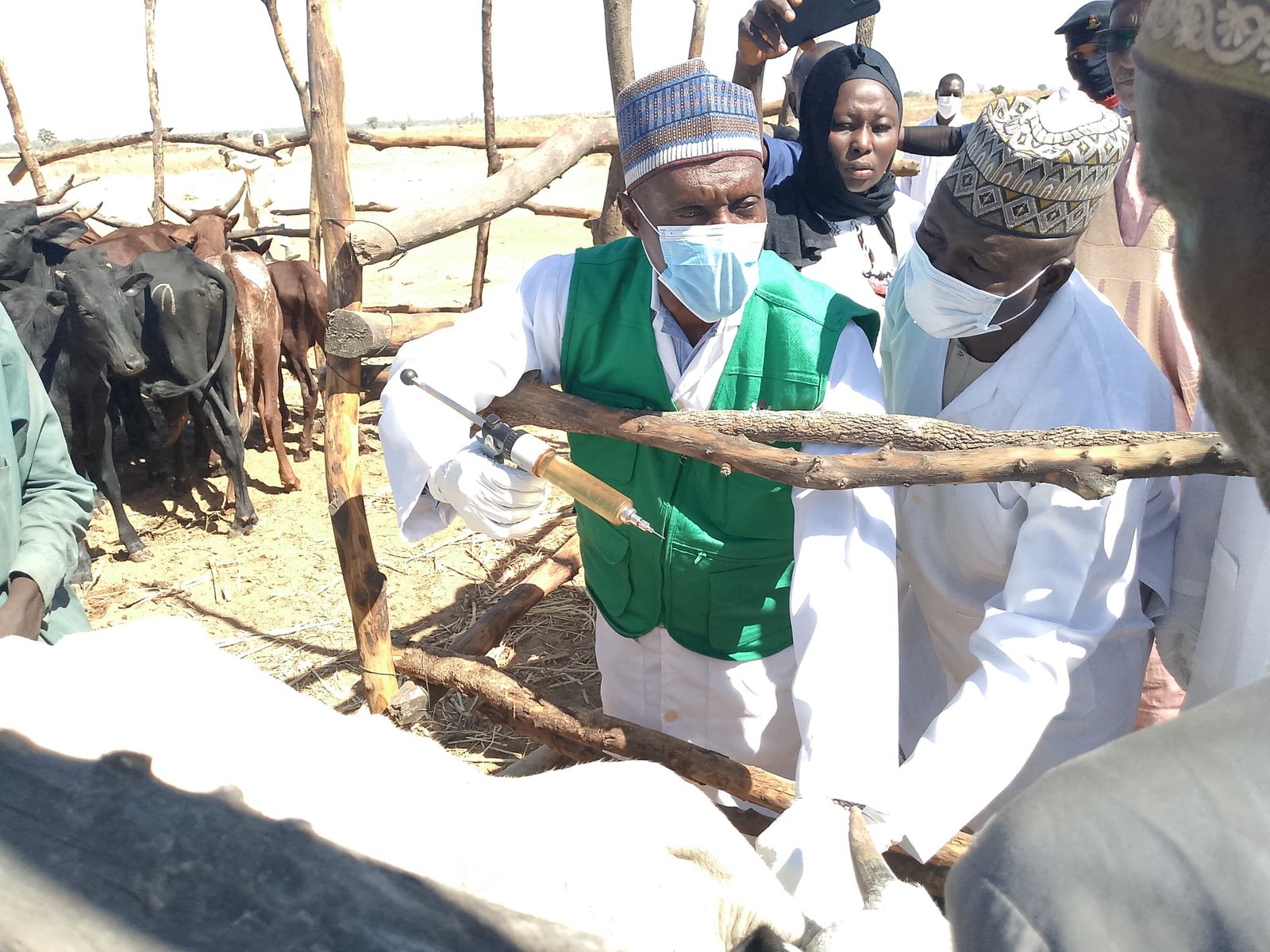
The Federal Ministry of Livestock Development has launched a targeted vaccination campaign, inoculating 2,500 head of cattle in Yobe State against Contagious Bovine Pleuropneumonia (CBPP). This initiative marks a critical step in a broader national strategy to safeguard Nigeria’s livestock sector—a cornerstone of food security and rural economics.
Dr. Mitchell Alao, the ministry’s Director of Animal Health and Reproductive Services, inaugurated the campaign in Damaturu. The programme was facilitated by Messrs Astute Synergy Limited, highlighting a collaborative model between government and private sector expertise.
Understanding the Threat: What is CBPP?
Dr. Alao emphasized that CBPP is not just another animal ailment; it is one of the most economically devastating trans-boundary diseases for cattle. Caused by the bacterium Mycoplasma mycoides, CBPP is a severe respiratory infection. It spreads rapidly through airborne transmission and direct contact, leading to high fever, laboured breathing, and a characteristic stance where animals stand with elbows out. Mortality rates can reach 50% in naive herds, while survivors often suffer from chronic weight loss and reduced milk production, becoming lifelong carriers that perpetuate the cycle of infection.
“For years, the disease has posed a persistent threat to sustainable livestock development and market opportunities for pastoralists and cattle farmers,” Alao stated. “Its impact, marked by reduced productivity, high mortality, and severe economic losses, directly undermines rural livelihoods, national food systems, and the economic prosperity that the Renewed Hope Agenda initiative seeks to deliver.”
Beyond 2,500 Doses: The Strategic National Context
This campaign, while localized, is a tactical component of a larger mandate. The ministry aims to strengthen national animal health systems, expand disease surveillance networks, and promote a modern, resilient livestock sector. Vaccination is a cornerstone of disease control, but its success hinges on what experts call “herd immunity.” Protecting 2,500 cattle creates a buffer zone, slowing transmission and protecting a far greater number of animals in surrounding communities.
“Through this intervention, we are setting the foundation for improved cattle health, increased productivity, and reduced disease burden across our communities,” Alao explained. He commended the state Veterinary Services, livestock associations, development partners, and field veterinarians for their support.
The Critical Role of Field Execution and Community Buy-In
Dr. Alao issued a crucial directive to field teams: strict adherence to vaccination protocols, accurate documentation, and sustained community engagement. This is vital because the success of any vaccination campaign depends on two factors: the biological efficacy of the vaccine and the logistical efficacy of its delivery. Vaccines require proper cold-chain storage and correct administration. Furthermore, pastoralists must understand the value of the intervention and present their animals. This is where the involvement of associations like Miyetti Allah is indispensable.
The State Perspective: A Welcome Step, But a Glimpse of the Need
In his remarks, Dr. Idris Madaki, Permanent Secretary of the Yobe Ministry for Livestock Development, thanked the Federal Government for the vaccines, which will enhance animal production. However, his representative, Dr. Bulama Yaro, provided critical context that underscores the scale of the challenge: Yobe State alone is estimated to have a cattle population of no fewer than 10 million. The 2,500 vaccines, therefore, represent a pilot effort—a proof of concept and a call for significantly scaled-up resources.
Mohammed Ngordi, Chairman of the Miyetti Allah Cattle Breeders Association (MACBAN) in Damaturu, thanked both ministries, illustrating the essential partnership between government and the herders who are the ultimate custodians of the national herd.
Conclusion: A Foundation for a Healthier Herd
The inauguration in Yobe is more than a one-off event. It is a signal of strategic intent to combat a disease that silently drains Nigeria’s agricultural economy. The real test will be in the consistent, scaled-up application of this model, supported by robust surveillance and community partnership, to build a livestock sector resilient enough to support the nation’s food and economic ambitions. (NAN)
NB/IU
========
Edited by Isaac Ukpoju