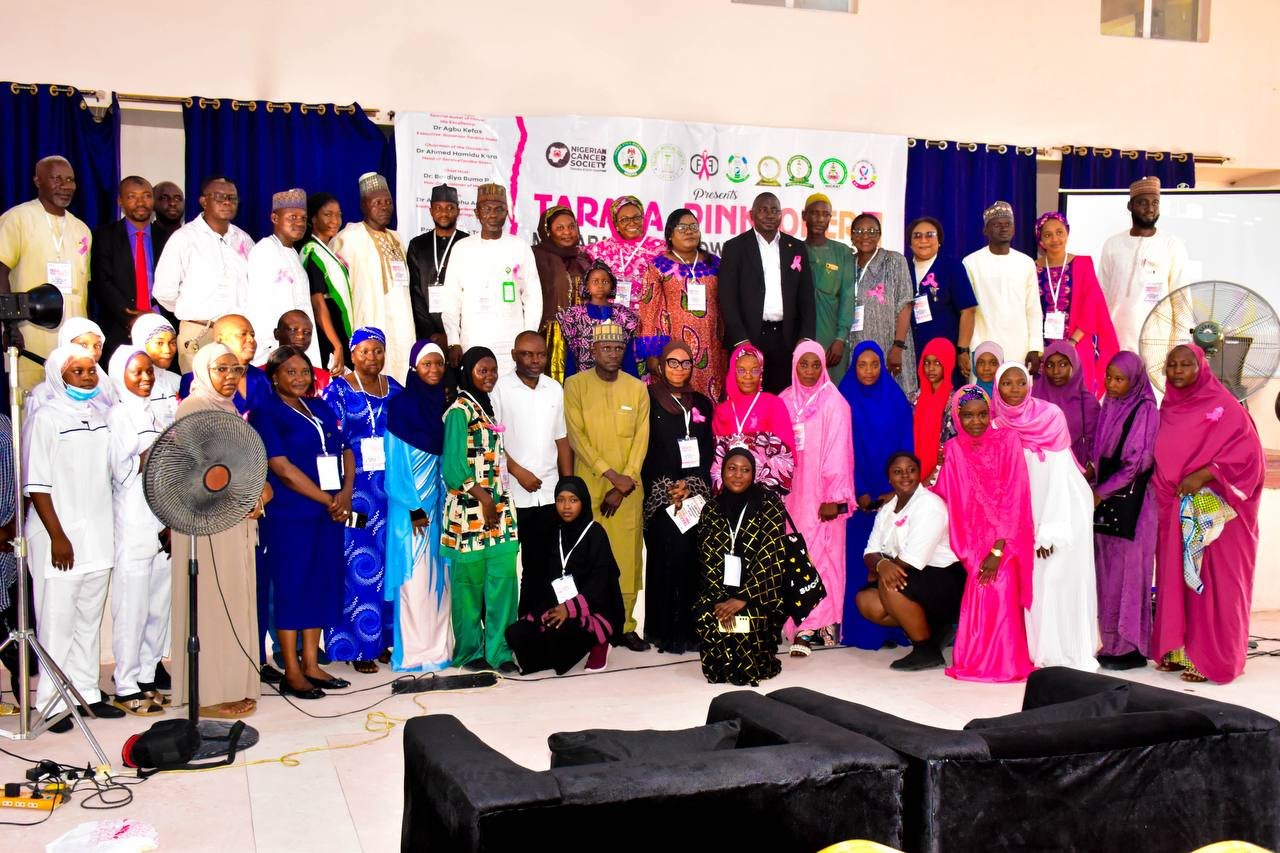
Dr. Hannatu Ayuba with stakeholders at the unveiling of the TeleOncology Hub, a program designed to expand cancer care access in remote communities.
A Digital Lifeline for Underserved Regions
In a significant stride against healthcare inequity, the Cancer Consciousness Initiative (CCI) has officially launched a TeleOncology Hub aimed at transforming cancer care delivery in Northeastern Nigeria. This initiative directly confronts the stark reality where geography often dictates survival rates, offering a technology-powered model that could serve as a blueprint for other low-resource settings globally.
Announced in Abuja, the hub is not merely a video consultation service but a comprehensive “health system strengthening programme,” as described by Dr. Hannatu Ayuba, CEO of CCI and Programme Lead. It integrates three core components: telemedicine consultations for direct patient-specialist contact, virtual Multidisciplinary Team (MDT) meetings where experts collaboratively design treatment plans, and a patient navigation system to guide individuals through the complex cancer care journey.
The Urgent Need: Confronting a Crisis of Late Diagnosis
The program’s focus on the Northeast addresses a critical emergency. Dr. Ayuba highlighted that breast cancer alone constitutes 60% of cases in the region, with the majority diagnosed at advanced stages. This delay is catastrophic, drastically reducing treatment options, increasing costs, and diminishing survival probabilities. The barriers are multifaceted: vast distances to specialist centers, a severe shortage of oncologists, financial hardship, and cultural hesitancy.
“Many patients in underserved communities face obstacles that delay diagnosis and treatment, fundamentally affecting survival,” Dr. Ayuba stated. She emphasized the life-saving power of early detection, advising women to perform regular self-exams and seek immediate medical attention for symptoms like new breast lumps, changes in skin texture or shape, or unusual nipple discharge.
How the Hub Works: A Closer Look at the Model
Since its initial launch in April at the Federal Medical Centre (FMC) Jalingo, the TeleOncology Hub has evolved into a networked ecosystem. The model functions through a hub-and-spoke system:
- The Hub: Specialist oncologists located at central teaching hospitals.
- The Spokes: Local healthcare facilities like FMC Nguru and Yobe State University Teaching Hospital Damaturu, where patients can present.
At a local facility, a general practitioner or nurse conducts an initial assessment. Using secure telemedicine suites, they connect the patient to a remote oncologist for consultation. For complex cases, the patient’s data is presented in a virtual MDT meeting, where surgeons, medical oncologists, radiologists, and pathologists convene digitally to agree on a unified treatment plan. This eliminates the need for the patient to physically travel to multiple specialists across different cities.
Tangible Impact and Integrated Support
The program’s community patient navigation arm, launched in partnership with the Grow Strong Foundation in Borno State, provides the essential human element. Navigators—trained local staff—use digital tools like the PocketPatientMD Electronic Medical Record (EMR) system to track patients, schedule appointments, arrange logistics, and provide emotional support. This integration has yielded impressive early results: over 85% of navigation encounters have led to prompt diagnoses, treatment initiation, or follow-up care among the initial 35+ patients onboarded.
Recognizing that technology alone cannot overcome financial barriers, CCI has forged critical partnerships with pharmaceutical patient assistance programs (PAPs). These collaborations provide free advanced diagnostic testing, such as immunohistochemistry for breast cancer and KRAS/EGFR testing for colorectal and lung cancers, which are often prohibitively expensive. This is crucial for determining eligibility for targeted therapies.
Overcoming Persistent Challenges and Future Vision
Despite progress, deep-rooted challenges persist. Dr. Ayuba noted that only 8.6% of patients at one center had any form of health insurance, underscoring the reliance on out-of-pocket payments. The hub actively provides financial counseling and seeks aid for treatment costs, transportation, and accommodation.
Looking forward, CCI’s vision is expansive. Plans include deploying more HIPAA-compliant telemedicine suites nationwide, broadening training for local healthcare workers in oncology and digital health, integrating novel diagnostics via the African Digital Health Network, and advocating for sustainable government funding and supportive policies to embed tele-oncology into the national health framework.
“Our goal is to unlock access to cancer care for all, regardless of location or financial status,” Dr. Ayuba affirmed. The TeleOncology Hub represents more than a pilot project; it is a scalable demonstration of how strategic technology adoption, human-centric navigation, and cross-sector partnerships can begin to dismantle the deadly disparities in cancer care.
Reported by Justina Auta for the News Agency of Nigeria (NAN).