In a decisive move to safeguard its most vulnerable citizens, the Delta State Government, under Governor Sheriff Oborevwori, has issued a stern warning against illegal charges for maternal and child healthcare. Beginning January 2026, any health officer found collecting money from pregnant women or children under five years old in state facilities will face sanctions. This enforcement aims to solidify a critical public health policy that promises free treatment from antenatal care through delivery—including Caesarean sections—and comprehensive care for children until their fifth birthday.
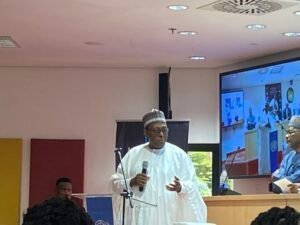
Dr. Isaac Akpoveta, Director-General of the Delta State Contributory Health Commission (DSCHC), delivered this directive at a press conference in Asaba. He framed the action as a necessary crackdown to eliminate predatory practices that have persisted despite the policy’s existence. “We are putting an end to a system where doctors and health officers subject pregnant women and young children to all manner of unofficial payments,” Akpoveta stated. This barrier to access has dire consequences, contributing to preventable maternal and infant mortality.
The policy’s enforcement is backed by a robust, multi-pronged strategy. First, Governor Oborevwori has mandated comprehensive training for all medical doctors and Officers-in-Charge of State Hospitals and Primary Healthcare Centres (PHCs). This training, conducted every three months, is designed to ingrain the ‘no-charge’ protocol and ensure uniform implementation. Second, and more innovatively, the state has deployed a pioneering Information Communication Technology (ICT)-based monitoring system. This platform enables real-time transparency and accountability.
Here’s how the tech-driven system works to protect patients and the scheme: Enrollees are registered using facial identification technology, ensuring that the right person accesses care. All medical bills and prescriptions are transmitted electronically from the facility to the DSCHC immediately after service. The commission then monitors this data from over 530 accredited health insurance units across Delta and other states. This digital footprint makes it exceedingly difficult for officers to demand cash payments without creating a detectable discrepancy in the system.
To further incentivize compliance, the DSCHC has designed a dual carrot-and-stick approach. Facilities that perform creditably will be recognized and rewarded through a dedicated award scheme. Conversely, “erring officers” will face strict sanctions. This structure is funded by a significant investment from the state government, with Governor Oborevwori approving over N3.5 billion for the scheme this year alone.
The results of Delta’s commitment to universal health coverage are already evident. Since the commission’s establishment in 2017, enrolment has skyrocketed from 1.3 million to over 2.7 million citizens as of December 2025. The Delta State Health Insurance Scheme is now ranked number one in Nigeria, with over 350 agents registering new enrollees daily. Dr. Akpoveta credits this model with a drastic reduction in maternal and child mortality rates within the state.
However, the government acknowledges that achieving true universal health coverage requires a collective effort. “Government alone cannot provide the healthcare needs of all citizens,” Akpoveta noted. The commission is actively appealing to wealthy individuals, private organizations, and institutions to support the scheme. For a modest premium of N7,000 per year, these entities can purchase health insurance for vulnerable groups, including the less privileged, needy relatives, or members of their communities, churches, or mosques. This public-private partnership model is crucial for sustainable expansion.
The policy’s impact extends beyond pregnant women and young children. The elderly and physically challenged persons also receive free treatment under the scheme. For all enrollees, the rule is clear: they are not to pay a dime to access treatment in any accredited facility as long as they are covered.
Looking ahead to 2026, the DSCHC’s goals are ambitious. The focus is on securing stable funding to manage the current enrollee base and aggressively reducing the disease burden for covered conditions like typhoid and malaria by up to 80% across the state.
The reception from frontline health workers appears positive. Mr. Ifeoma Ekpo, an Officer-in-Charge of a PHC in Ika North Local Government Area and a participant in the training, expressed commitment to the new directive. “The training has exposed us to the new policy… We pledge to abide by the rules and not to demand payment,” Ekpo stated on behalf of fellow officers.
Delta State’s enforcement of free healthcare for mothers and young children represents more than a policy announcement; it is a systemic overhaul. By combining strict enforcement, continuous training, technological innovation for transparency, and a push for collaborative funding, the state is building a replicable model for healthcare delivery that prioritizes accessibility and accountability, setting a new standard for public health in Nigeria.