
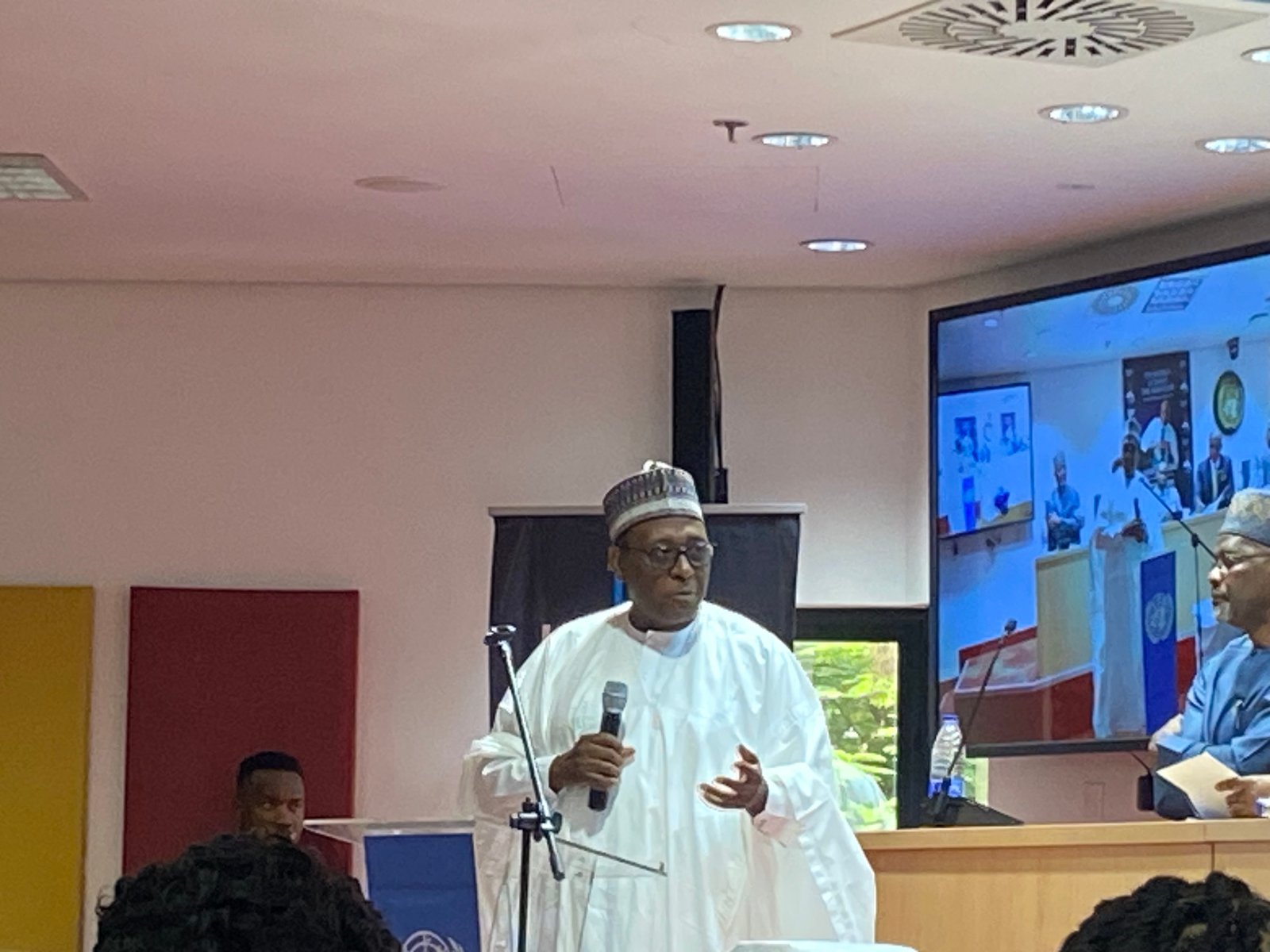
In a comprehensive year-end address, Nigeria’s Coordinating Minister of Health and Social Welfare, Professor Muhammad Pate, has confirmed the execution of one of Africa’s most ambitious mass vaccination campaigns. The figures released go beyond simple statistics, revealing a strategic, multi-front assault on vaccine-preventable diseases that have long burdened the nation’s public health system.
Unpacking the Vaccination Numbers: A Public Health Milestone
Minister Pate, broadcasting via his official X handle, disclosed that the Federal Government has administered over 25 million doses of the measles vaccine and 22 million yellow fever vaccinations. To appreciate the scale, consider that 25 million doses represent vaccinating a population larger than that of Ghana or Cameroon. These campaigns are critical: measles is a highly contagious virus that can cause severe complications, especially in malnourished children, while yellow fever, a hemorrhagic disease, poses a constant threat in endemic regions.
But the government’s strategy extends far beyond these two diseases. The minister highlighted a synergistic approach to immunisation:
- Pentavalent Vaccine: Five million children received this 5-in-1 shot protecting against diphtheria, tetanus, pertussis (whooping cough), Hepatitis B, and Haemophilus influenzae type b (Hib).
- Diphtheria Response: Over 10 million Nigerians were vaccinated with the tetanus-diphtheria (Td) vaccine, a direct counter to recent outbreaks.
- Outbreak Control: More than one million doses from the Gavi-funded global stockpile were deployed to quell meningitis outbreaks in the north, demonstrating improved emergency response capabilities.
- Pioneering Effort: Nigeria also rolled out Africa’s first Mpox vaccine campaign, showcasing leadership in addressing emerging global health threats.
The Historic Leap: Nigeria Introduces its First Malaria Vaccine
Perhaps the most groundbreaking announcement was the official rollout of Nigeria’s first malaria vaccine, the R21 Matrix-M. This marks a paradigm shift in the fight against a disease that defines Nigeria’s health landscape. As the country bearing the world’s highest malaria burden—accounting for an estimated 39.3% of global malaria deaths in children under five—this deployment is a monumental public health milestone.
The rollout is strategic, commencing in Bayelsa and Kebbi states. Kebbi alone aims to reach 179,542 children aged 5-15 months. Nigeria’s initial stock of one million doses, sourced from Gavi and domestic financing, is the first step in a planned national scale-up. This vaccine, used alongside bed nets and antimalarial drugs, offers a powerful new tool to drastically reduce childhood mortality and illness.
From Recipient to Leader: Nigeria’s Evolving Role in Global Health
Minister Pate framed these achievements within a larger narrative of Nigeria’s changing identity in global health. “Nigeria is increasingly being defined not only by its disease burden but also by leadership,” he stated. This is evidenced by a $54 million domestic commitment to the global tuberculosis fight in 2025, making Nigeria the largest African contributor to the Global Fund. This move from aid recipient to significant funder strengthens the country’s voice and influence on the world stage.
Sustaining the Gains: Financing, HPV, and System-Wide Reforms
The minister linked these vaccination successes to deeper systemic reforms:
- Financing: Formal approval of an additional ₦68 billion for vaccine financing, lodged with the National Primary Health Care Development Agency (NPHCDA), provides crucial future security.
- Cervical Cancer Elimination: The HPV vaccination programme, launched in October 2023, has already achieved over 90% coverage, vaccinating more than 14 million girls aged 9-14 against the virus that causes cervical cancer.
- Coordinated Approach: These gains are attributed to the “Sector Wide Approach” (SWAp), which aligns federal, state, and local governments with development partners and NGOs, reducing duplication and improving efficiency.
The Ultimate Metric: A Surge in Healthcare Utilization
The most compelling evidence of success may be in citizen behaviour. Minister Pate revealed a staggering increase in health facility visits: from approximately 10 million in Q2 2024 to over 45 million in Q2 2025—a more than fourfold increase. This explosion in utilization suggests that efforts to combat misinformation, rebuild trust in the health system, and improve access are working. A youthful population is now increasingly seeking out essential, life-saving services, particularly immunisation.
In conclusion, these vaccination figures represent more than a logistical triumph. They signal a deliberate and funded shift under the Renewed Hope Agenda towards preventive healthcare, domestic investment in health security, and a commitment to ensuring that “preventable illness and avoidable death no longer constrain the capacity of Nigerians to live healthy, productive and dignified lives.” The challenge now is to maintain this momentum, ensure equitable access across all states, and institutionalise these practices for the long term.
Edited by Sandra Umeh


