Defining the Twin Evils: More Than Just Harmful Practices
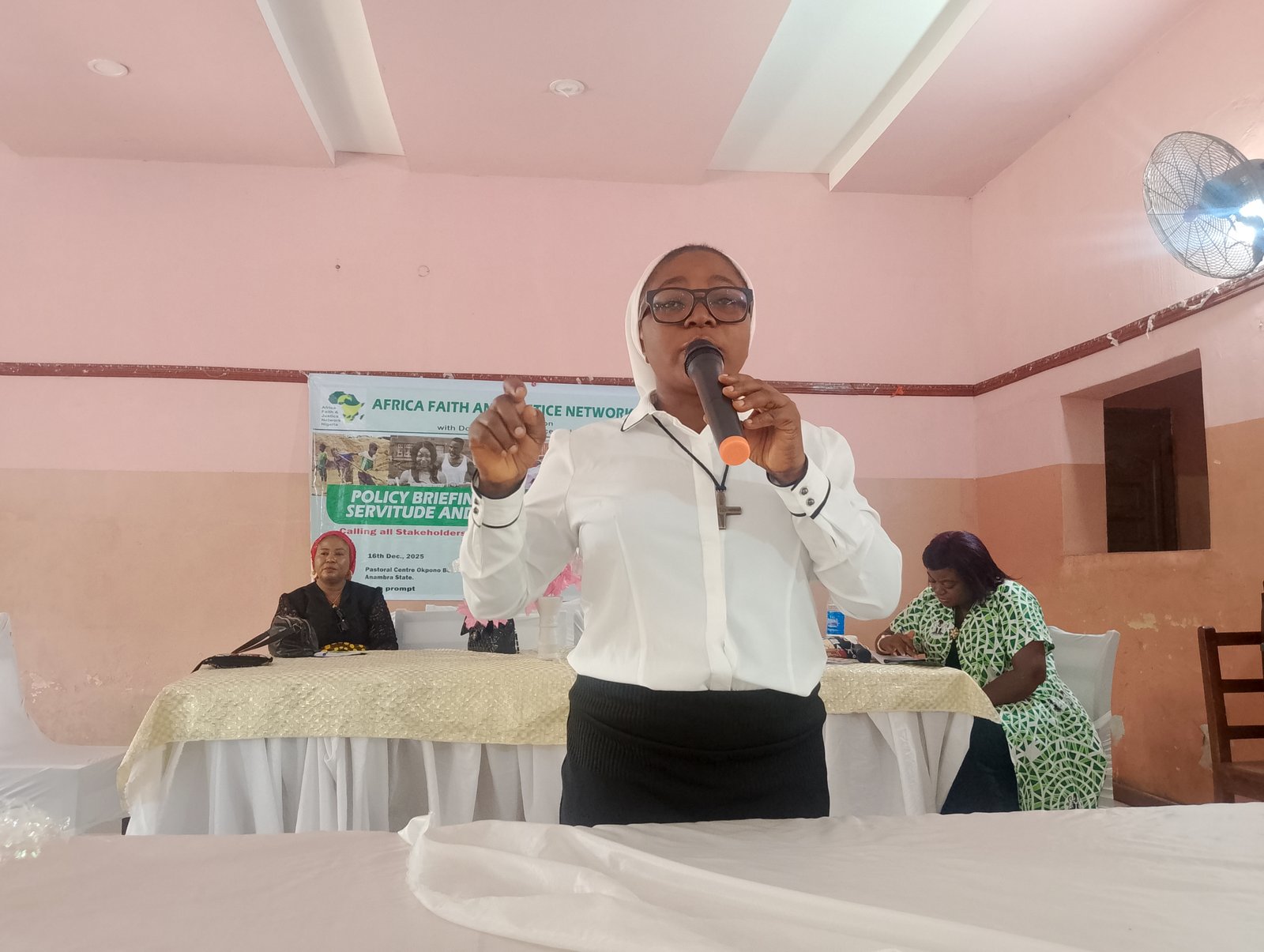
Rev. Sister Teresa Anyabuike of AFJN provided crucial definitions that frame these issues as severe human rights violations. Early and Forced Child Marriage, she clarified, is not merely a cultural tradition but the practice of marrying girls, and sometimes boys, before the age of 18, fundamentally stripping them of consent and autonomy. Domestic Servitude was defined as the exploitative use of children for household labor, characterized by excessive hours, negligible or no pay, and severe restrictions on movement—a form of modern slavery often hidden in plain sight within private homes.
The Enforcement Gap and the Community’s Role
A key insight from the dialogue was the identification of a critical enforcement gap. Inspector Onyekachi Onuoha of the Nigerian Police Force presented a sobering reality: “The police cannot enforce child rights laws in the vacuum of a silent community. These crimes thrive in secrecy and social complicity. Our efforts to rescue children and prosecute perpetrators are often hamstrung by families unwilling to report or communities that normalize abuse.” Her call to action was clear: “Silence is complicity. We must collectively challenge the norms that allow these menaces to fester.”
Unmasking the Deception: From Promise to Exploitation
The discussion provided chilling, concrete examples of how exploitation operates. Legal practitioner Mrs. Nnenna Anozie and FIDA Chairperson Mrs. Amara Muojeke detailed the common, deceptive narrative: a relative or agent approaches a struggling family in a rural area, promising a child (often a girl) education, care, and opportunity in the city. “The reality,” Anozie stated, “is a life of unending drudgery. These children become domestic slaves—cooking, cleaning, and caring for other children from dawn until late night, denied schooling, adequate food, or rest. Their freedom is vanished; their dignity is obliterated. Some are physically beaten, others sexually molested, and tragically, some lose their lives.”
A Blueprint for a Protective Ecosystem
The workshop transcended problem-identification to outline a multi-pronged blueprint for change, championed by figures like Mrs. Eucharia Anekwe of the Child Protection Network:
- Strengthened Legislation & Policy: Advocating for the full implementation and, where necessary, strengthening of existing child rights laws, with clear protocols for intervention.
- Community-Led Sensitization: Participants pledged to become ambassadors in their communities, using faith institutions, town unions, and local gatherings to reframe these practices not as tradition but as abuse.
- Inter-Agency Collaboration: The presence of Ministries of Health, Women Affairs, Social Development, and Justice points to a planned, coordinated response linking social services, healthcare for survivors, legal aid, and law enforcement.
- Economic Empowerment: Implicit in the dialogue was the need to address the root economic desperation that forces families to send children away, advocating for poverty-alleviation programs.
======
Edited by Vivian Ihechu