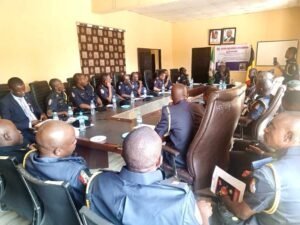
In a critical move to bolster regional stability, the West Africa Network for Peacebuilding (WANEP-Nigeria) has issued a compelling call to action for all community stakeholders in Sokoto State. The organization emphasizes that passive observation is no longer sufficient; active, pre-emptive participation in peace-building and conflict management is now a necessity. This urgent appeal was made during a three-day capacity-building workshop in Sokoto, designed to forge a more resilient front against the complex threats of violent extremism and communal strife.
The workshop, a key component of the Research and Action for Peace (RECAP) project, represents a powerful consortium of expertise. It is implemented in partnership with the globally recognized Stockholm International Peace Research Institute (SIPRI) and the humanitarian-focused Danish Refugee Council (DRC), with funding from the European Union (EU). This collaboration underscores the international dimension of local peacebuilding and the shared responsibility in countering forces that destabilize communities.
Dr. Bridget Osakwe, National Coordinator of WANEP-Nigeria, articulated the core mission. Represented by Mr. Manji Danjuma, she stressed that the initiative seeks to fundamentally strengthen the role of civil society and research as early warning systems and response mechanisms. “The goal is to strengthen the peacebuilding capacity of organizations and practitioners, enabling them to actively engage in preventing violent conflicts in the country,” Osakwe stated. This shifts the paradigm from reactive crisis management to proactive conflict prevention—a more sustainable and less costly approach.
Beyond Theory: The Practical Skills for Proactive Peacebuilding
The workshop moved beyond abstract discussions, focusing on equipping participants with tangible skills. A central objective was training stakeholders to monitor and interpret early indicators of extremism and radicalization. This could involve tracking changes in local rhetoric, identifying vulnerable youth cohorts, or noticing the emergence of divisive ideologies before they manifest in violence. Participants, drawn from community-based groups, traditional institutions, government, and the media, were trained to become frontline sensors in their own communities.
Dr. Osakwe highlighted the critical need for “increased synergy and proactive measures.” In practice, this means breaking down silos between traditional rulers, local government officials, women’s groups, and security agencies. For example, a community leader noticing a land dispute escalating can proactively engage local CSOs trained in mediation, rather than waiting for violence to erupt. This collaborative framework ensures that intelligence is shared, responses are coordinated, and peace initiatives have broad-based legitimacy.
The call for “more strategies to mitigate conflicts and promote peaceful resolution mechanisms” acknowledges that traditional approaches may be insufficient for modern, hybrid threats. The workshop likely explored context-specific tools such as community dialogue platforms, restorative justice practices for low-level offenses, and counter-narrative campaigns to undermine extremist propaganda. The inclusion of the media is particularly strategic, as responsible reporting can de-escalate tensions, while sensationalism can inflame them.
The Sokoto Context: Why Proactivity is Non-Negotiable
Sokoto State, as a historical and religious center in Northwest Nigeria, faces unique security challenges, including farmer-herder conflicts, banditry, and the latent threat of extremist infiltration. In this fragile environment, a proactive stance is not merely beneficial—it is imperative. Building the capacity of local actors ensures that solutions are culturally attuned and community-owned, which is far more effective than externally imposed interventions.
The participation of traditional rulers is a masterstroke, leveraging their immense moral authority and deep understanding of local dynamics. When religious and traditional leaders champion peacebuilding from within the community, their message carries a weight that external actors cannot replicate.
In conclusion, WANEP’s workshop in Sokoto represents a vital investment in human security. By transforming stakeholders from bystanders into equipped, proactive agents of peace, the RECAP project lays the groundwork for a more resilient social fabric. The ultimate success of this initiative will be measured not by the absence of conflict, but by the presence of strong, local systems capable of identifying, managing, and resolving disputes before they turn violent. As the participants return to their communities, the real work—of vigilant observation, trusted collaboration, and courageous dialogue—begins. (NAN)
Edited by Bashir Rabe Mani