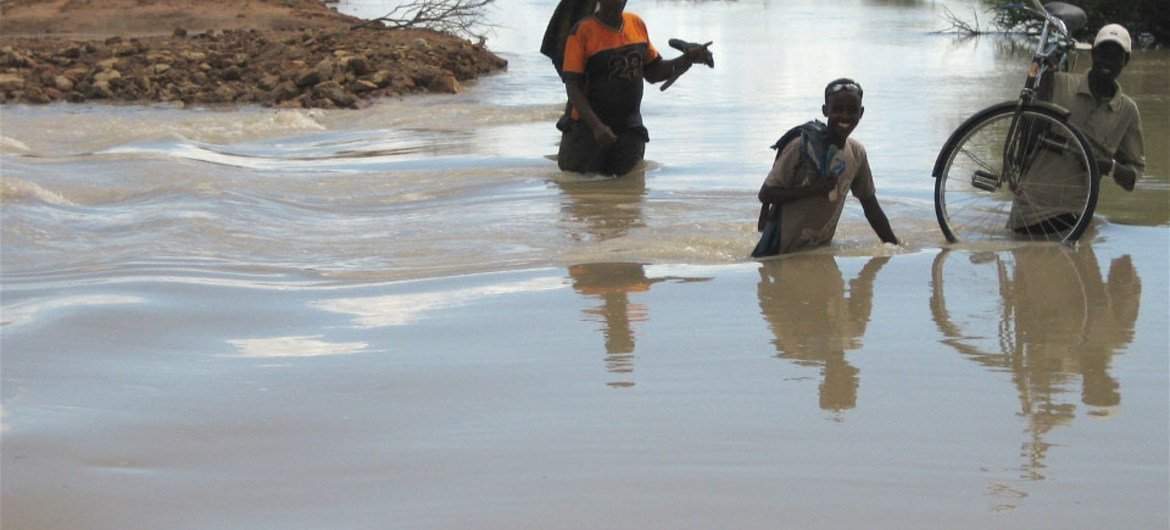
An in-depth analysis of disaster response, community impact, and the critical path from relief to resilience in Nigeria’s most flood-prone state.
By Rita Iliya
Minna, Dec. 19, 2025
In the wake of the devastating 2025 floods, affected communities in Niger State have publicly expressed gratitude for the federal government’s emergency response, while simultaneously issuing a powerful plea for sustainable action against a perennial threat. This dual narrative of appreciation and urgent appeal emerged during a monitoring visit by the National Emergency Management Agency (NEMA), highlighting the complex reality of disaster management in Nigeria.
Beneficiaries from across the state’s worst-hit Local Government Areas—including Rafi, Mokwa, and Lavun—unanimously commended President Bola Tinubu and NEMA for their timely provision of relief materials. However, their commendations were consistently coupled with appeals for “sustained assistance and long-term solutions” to break the cycle of annual flooding. This underscores a crucial shift in community expectation: from gratitude for stop-gap aid to a demand for systemic, preventative governance.
Voices from the Ground: Relief Amidst Ruin
The human impact of the intervention was vividly captured by survivors. Malam Muntari Abdulbaki from Rafi LGA stated the relief “helped to reduce hardship and restored hope.” For Alhaji Musa Abubakar of Mokwa, where over 200 lives were lost, NEMA’s immediate search, rescue, and provision of clean water were lifesaving. “They rescued people and provided drinking water. This intervention saved lives,” he affirmed.
For women like Mrs. Zainab Mohammed of Lavun, whose home was submerged, the distribution of rice, mats, and blankets provided a basic safety net. Her appeal, however, pointed to the ongoing vulnerability of specific groups: “I appeal for additional support, especially for widows and vulnerable persons.” Mrs. Rabiatu Sadiq, displaced from a riverine community, highlighted the need for infrastructural defense, calling for “the construction of embankments to protect riverine communities from annual flooding.”
Behind the Response: NEMA’s 2025 Strategy in Niger State
Mr. Husseini Isah, Head of NEMA’s Minna Operations Office, detailed a multi-layered strategy predicated on coordination and early warning. He clarified NEMA’s core mandate as a coordinator of stakeholders—from state agencies (NSEMA) and federal ministries to security services—rather than a sole responder.
The 2025 effort was proactive, driven by forecasts from NiMet and the Nigeria Hydrological Services Agency (NHSA) that identified Niger State as “highly vulnerable” due to the Rivers Niger and Kaduna. This led to pre-season stakeholders’ meetings, the development of mitigation strategies, and urgent advisories to state governments to clear waterways and enhance community sensitization.
Isah outlined a comprehensive response toolkit:
Preparedness: Downscaling climate-risk programs, training communities on evacuation, and conducting advocacy visits.
Response: Deploying Mobile Intensive Evacuation Units, water treatment machines, and search-and-rescue teams.
Relief: Distributing a wide range of food and non-food items, including tents for displacement camps.
The State Partnership: Collaboration and Its Challenges
Alhaji Abdullah Baba-Arah, Director-General of the Niger State Emergency Management Agency (NSEMA), described the inter-agency collaboration as “cordial and robust,” with joint operations during critical incidents like the Mokwa flood. He acknowledged NEMA’s support with materials and farm inputs, which significantly complemented state efforts.
However, he pointed to a significant procedural friction, noting that “some NEMA interventions were channelled through members of the National Assembly rather than directly through the state agency.” This remark touches on a perennial issue in Nigerian federalism—the tension between direct federal constituency projects and coordinated state-level implementation—which can sometimes affect the efficiency and perception of aid distribution.
Analysis: From Acute Response to Chronic Solution
The 2025 Niger flood response presents a microcosm of effective crisis management meeting the limits of temporary aid. The beneficiaries’ gratitude is genuine; the provision of essentials like food, water, and shelter in the immediate aftermath is non-negotiable and was executed with notable coordination.
Yet, the repeated appeals from victims for “long-term solutions,” “embankments,” and “rebuilding livelihoods” point to the unfinished work. Effective disaster management is a cycle: Mitigation → Preparedness → Response → Recovery. The commendations largely address the Response phase. The appeals are a demand to complete the cycle by investing in Mitigation (infrastructure like embankments, urban planning) and Recovery (livelihood support, permanent housing).
The success of NEMA’s early warning systems must now be leveraged to drive actionable, funded mitigation projects at the state and local government levels. The call for translating warnings into local dialects is vital, but it must be followed by empowered community-led evacuation plans and resilient infrastructure.
Conclusion: The 2025 intervention in Niger State demonstrates that Nigeria’s disaster management apparatus can deliver timely, life-saving aid. The heartfelt commendations from victims validate these efforts. However, the true measure of progress will be how the system evolves to address the deeper, recurrent vulnerabilities so clearly voiced by the very people it serves. The path forward lies in transforming effective emergency response into enduring community resilience, ensuring that gratitude in future years stems from safety and stability, not just survival.
(Edited by Isaac Ukpoju)