By Hajara Leman
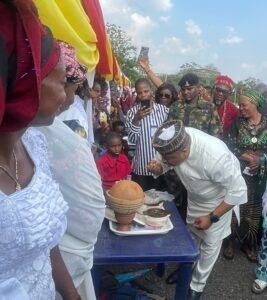
Cham, Gombe State – In a significant move blending national recognition with grassroots development, the Nigerian Navy has commissioned critical infrastructure projects in the Dungaje community of Balanga Local Government Area, Gombe State. The inauguration, held on Friday, December 19, 2025, marks a strategic intervention aimed at honoring service while tangibly improving lives.
The projects—a 600-litre capacity solar-powered water system and a modern school complex—were executed under the Chief of Naval Staff’s Special Intervention Quick Impact Project (QIP). This initiative is designed to deliver high-value, community-focused developments swiftly, bridging gaps in essential services and fostering goodwill.
Honoring Service with Sustainable Development
The gesture serves a dual purpose. Primarily, it is a formal recognition of the outstanding service of Rear Admiral Ayuba Chuguli (rtd) to the nation and the Nigerian Navy. However, it transcends mere ceremony by channeling that honor into lasting community assets. Representing the Chief of Naval Staff, Vice Admiral Idi Abbas, was the project’s facilitator, Rear Admiral Chuguli himself—a poignant link between the honoree and the beneficiaries.
“The inauguration of this project is not only to honour Rear Admiral Chuguli’s meritorious service but also to support the health and daily needs of Dungaje, Kwarge, and Jublan communities,” stated the representative. This approach reframes military-civilian relations, positioning the Navy as a partner in human security and socio-economic development.
Project Scope: Beyond the Headlines
The delivered infrastructure provides a comprehensive solution to two foundational challenges:
- Water Security: The project includes three solar-powered boreholes with a combined capacity of 600 litres. This solar design is crucial, eliminating fuel costs and ensuring reliability in a region with abundant sunlight. For the communities in Mona Ward, this directly tackles the daily burden of water fetching—a task that predominantly falls on women and children—and reduces the risk of waterborne diseases.
- Educational Infrastructure: The intervention constructed three blocks of classrooms (totaling nine classrooms), staff quarters, and facilities for primary and junior secondary schools. This expansion is vital in a region where overcrowded and dilapidated classrooms are a major barrier to learning. Quality staff quarters help attract and retain teachers in remote areas, directly impacting educational outcomes.
A Call for Community Ownership and Sustainability
During the ceremony, Gombe State Deputy Governor, Dr. Manassah Jatau, underscored a critical success factor often overlooked in development projects: community ownership. He urged residents to see the facilities as their own, a mindset essential for long-term sustainability.
“When communities see projects as their own, they are more likely to safeguard them against vandalism, misuse, and neglect,” Jatau emphasized. He called on youths and traditional leaders to form maintenance committees, a practical step to ensure the boreholes and school buildings remain functional for generations. This highlights a shift from a donor-recipient model to a collaborative partnership.
Local Impact and a Model for Others
The Paramount Ruler of Cham, Dr. James Chachis, lauded the Navy’s “timely and impactful” intervention. He noted the immediate relief it would bring, particularly to women and children who bear the brunt of water scarcity. His call for other public-spirited individuals to emulate this model points to its potential as a catalyst for further local development.
This project exemplifies how military Quick Impact Projects can serve as effective tools for civil-military cooperation. By addressing the UN Sustainable Development Goals (SDGs) for clean water (SDG 6) and quality education (SDG 4), the Nigerian Navy has demonstrated that national security is inextricably linked to community wellbeing and development. The true measure of success will be seen in the sustained use and care of these facilities by the empowered communities of Dungaje, Kwarge, and Jublan.
Edited by Rabiu Sani-Ali