In a major push to drive economic recovery and foster self-reliance, Borno State Governor, Professor Babagana Zulum, has officially launched a comprehensive N1 billion youth empowerment scheme. The ambitious program, unveiled in Maiduguri on Friday, December 19, 2025, is strategically designed to equip 5,000 young people with vital skills and seed capital, marking a significant investment in the state’s human capital and future stability.
Governor Zulum framed the initiative not as a temporary palliative but as a foundational investment in sustainable economic growth. “The true wealth of any society lies in the skills, creativity, and determination of its people,” he stated, emphasizing that the scheme is a core part of his administration’s strategy to restore dignity, renew hope, and strengthen the economic base of a state rebuilding after over a decade of conflict.
Beyond Handouts: A Multi-Tiered Model of Skills and Startup Capital
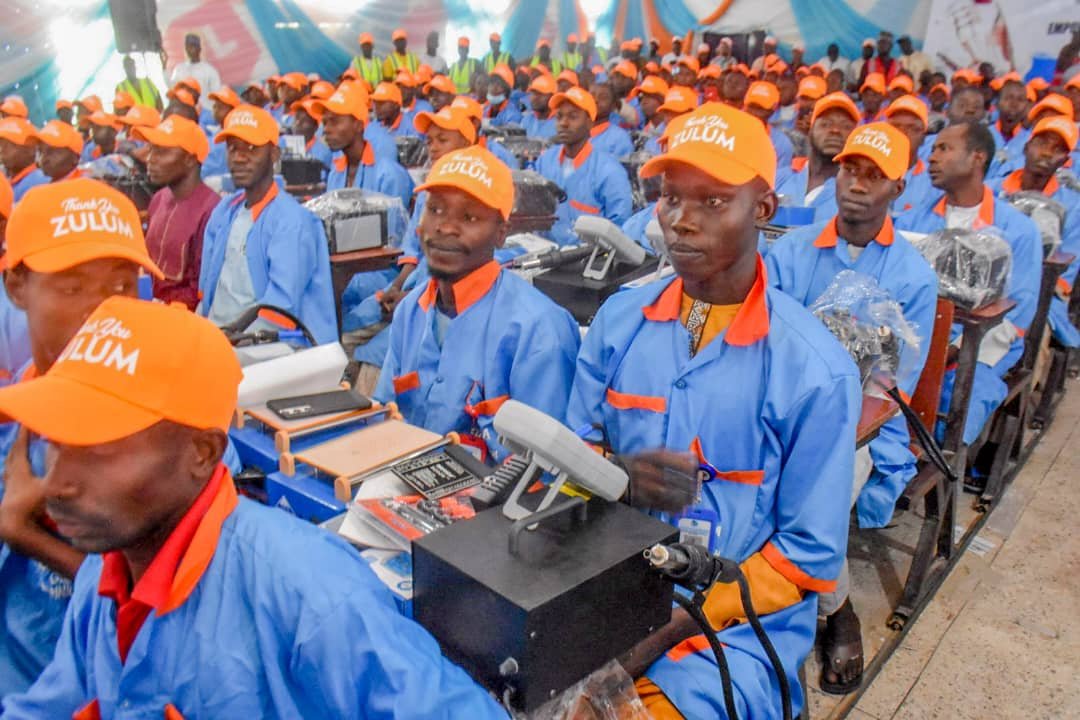
The scheme distinguishes itself through a structured, multi-tiered approach that combines vocational training with graduated financial support. The first batch of 1,050 youths is already undergoing training as phone repair technicians—a high-demand skill in a digital age—and will each receive a digital microscope for mobile phones, a critical professional tool, alongside cash grants.
The financial disbursement structure is meticulously tailored to different business scales:
- Batch A (28 beneficiaries): N1 million each for establishing medium-scale enterprises.
- Batch B (189 beneficiaries): N300,000 each for small business expansion or startup.
- Batch C (835 beneficiaries): N100,000 each for micro-enterprises or artisanal tools.
- Apprentices (3,500 individuals): N100,000 each to support skill acquisition phases.
Governor Zulum was unequivocal about the program’s ethos: “This is an investment, not a handout.” He charged beneficiaries to utilize the funds responsibly and to pay it forward by serving as mentors and pillars within their communities, thereby creating a multiplier effect for local development.
Strategic Context: Holistic Human Capital Development
This N1 billion scheme is not an isolated project but a key component of Zulum’s broader human capital development portfolio. The governor highlighted parallel investments, including sponsoring youths to study aircraft piloting and aeronautical engineering, and supporting over 400 postgraduates in overseas studies. This reveals a dual-track strategy: creating immediate, tangible livelihoods through vocational schemes while simultaneously building a pipeline of high-level technical expertise for the state’s long-term economic diversification.
The governor also announced plans to extend similar structured support to critical informal sector groups like the National Union of Road Transport Workers (NURTW) and Tricycle operators, indicating a comprehensive vision for grassroots economic revitalization.
Logistics, Oversight, and Immediate Impact
To ensure effectiveness, a significant portion of the fund (N451.9 million) is allocated for equipment, with an additional N31.86 million dedicated to logistics and resource packages. Commissioner for Sports and Youth Development, Mr. Sainna Buba, confirmed that beneficiaries were selected from all 27 Local Government Areas, ensuring geographic inclusivity. The governor directed that disbursements commence immediately, signaling a commitment to swift implementation and tangible results.
This initiative represents a critical test case for post-conflict economic reconstruction. By directly linking skills training in high-opportunity fields (like digital repair) with tiered capital infusion and a strong emphasis on mentorship and responsibility, the scheme aims to transform beneficiaries from aid recipients into active economic actors and job creators. Its success will be measured not just by the 5,000 youths directly impacted, but by the resilience and enterprise it sparks across Borno’s communities.