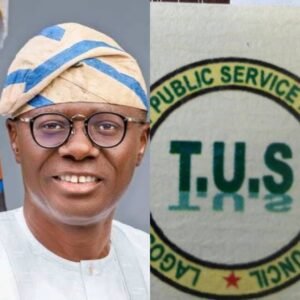

In a significant move to bolster public sector morale and productivity, the Lagos State Joint Public Service Negotiating Council (JNC) has formally commended Governor Babajide Sanwo-Olu for a dual-pronged incentive package for state workers. The commendation centers on the approval of a 100% end-of-year bonus and the presentation of five new cars to outstanding officers, actions the council describes as “landmark milestones.”
This development is more than a seasonal gesture; it represents a strategic investment in the civil service machinery that drives Africa’s fifth-largest economy. The Lagos State public service, a critical engine for governance and development in Nigeria’s commercial nerve center, often operates under immense pressure. These incentives directly address core pillars of organizational health: financial welfare and recognition for merit.
Deconstructing the 100% Bonus: A Tactical Financial Relief
The bonus structure itself reveals thoughtful economic consideration. Rather than a lump sum, it will be paid in two equal tranches of 50%—the first with the December 2025 salary and the second with the January 2026 salary. According to JNC Chairman Mr. Domingo Adeleke, this design is “a thoughtful response to current economic realities.”
This phased approach serves multiple purposes. It provides immediate financial relief during the expensive festive period while also offering a cushion to start the new year, mitigating the common “January financial strain.” In a context of national inflation and economic tightening, such structured support can significantly impact workers’ disposable income and financial planning, translating directly into reduced stress and potentially higher focus and productivity at work.
Beyond Cash: The Symbolic Power of the Car Awards
While the bonus is broad-based, the car gifts target exceptional performance. Adeleke framed this as “a strategic incentive to reward merit, deepen innovation, and reinforce a culture of excellence, accountability, and service delivery.” The award of tangible, high-value assets like cars sends a powerful message that excellence is visibly recognized and tangibly rewarded.
This move can foster healthy competition and ambition within Ministries, Departments, and Agencies (MDAs). It shifts the narrative from mere employment to a career path where outstanding contributions lead to extraordinary recognition. Such programs are crucial for retaining top talent within the public sector, which often competes with the private sector for skilled professionals.
The Bigger Picture: Industrial Harmony and Social Dialogue
Chairman Adeleke emphasized that these interventions “go beyond routine administrative decisions.” He positioned them as “morale-boosting measures capable of strengthening industrial harmony, loyalty, and performance.” This highlights a critical, often overlooked, aspect of public administration: a motivated workforce is a more cooperative and productive one.
The council explicitly linked this positive outcome to “the value of constructive engagement and sustained social dialogue” between the state government and organized labour. In an era where government-labour relations can be contentious, Lagos State’s approach presents a case study in proactive, collaborative engagement. The JNC’s pledge of “continued partnership” suggests this is viewed not as a one-off gift, but as part of an ongoing dialogue about worker welfare and service improvement.
A Call for Reciprocity and a Model for Governance
The statement concluded with a call to action for the beneficiaries. Adeleke urged all public servants to “reciprocate the governor’s gestures with renewed professionalism, commitment, and dedication.” This establishes a clear social contract: the government invests in welfare and recognition, and workers reciprocate with enhanced service delivery to the people of Lagos.
Ultimately, this package from the Sanwo-Olu administration, as applauded by the workers’ council, can be seen as a strategic governance model. It ties financial welfare and recognition directly to the goals of productivity, innovation, and harmonious industrial relations. The true test will be in its execution and the measurable impact on service delivery across Lagos State in the coming year. For now, it stands as a notable example of using incentive structures to align the interests of the government, its workforce, and the public they serve.
FON/UNS
=========
Edited by Sandra Umeh