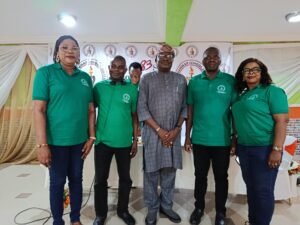
The residents of Enugwu-Nanka Village in Orumba North Local Government Area of Anambra State are facing an existential environmental crisis, issuing a desperate plea for government intervention to halt a rapidly advancing gully erosion that has already displaced over 200 families and destroyed property worth billions of naira. This call extends beyond local authorities to include the World Bank and global environmental stakeholders, highlighting the scale of a disaster that threatens to erase entire sections of the community.
The Scale of the Crisis: More Than Just Landslides
Chief Emmanuel Osele, Chairman of the Enugwu-Nanka Erosion and Flood Control Committee, presented a grim assessment to newsmen. The erosion is not merely a geological event but a socio-economic catastrophe. Beyond the collapsed homes, the disaster has severed critical access roads linking Enugwu-Nanka with neighbouring Amakor and Ubahu communities, effectively cutting off vital trade, social, and emergency routes. Farmlands—the primary source of livelihood for many—have been swallowed, compounding food insecurity and economic devastation.
This situation exemplifies the broader challenge in Southeastern Nigeria, where the region’s geology—soft, sandy soils combined with heavy rainfall—creates a perfect storm for severe gully erosion. The community’s plight is a microcosm of a national issue; Nigeria is estimated to have some of the worst gully erosion sites in the world, with the Southeast being the epicenter.
A Legacy of Loss and Community Resilience
The emotional and cultural toll is profound. Nze Joshua Obinwa, an octogenarian whose home is now on the precipice, lamented that the problem has “lingered for decades,” displacing elders from their ancestral homes and severing generational ties to the land. Another resident, Mr. Alexander Nwafete, quantified the land loss at over 1,000 plots, a staggering figure that underscores the erosion’s relentless consumption of territory.
Faced with government inaction, the community has not been passive. As Chief Osele noted, they have undertaken commendable self-help mitigation measures: tree planting to stabilize soil, construction of drainages and catchment pits to control water flow, and community warnings against deforestation in vulnerable areas. However, these local efforts are akin to using a bucket to bail out a flooding ship; they are overwhelmed by the systemic scale of the problem, which requires engineered solutions and significant funding.
The Ripple Effect and a Plea for Systemic Intervention
The crisis is spreading. Nze James Ezeilo, Vice Chairman of neighbouring Ubahu Village, raised alarms about new erosion sites emerging around the Uhuabor axis. This highlights a critical point: erosion is often a transboundary problem within watersheds. Runoff from one community can trigger collapse in another, meaning piecemeal interventions are ineffective. A comprehensive, watershed management approach is essential.
The community’s call to the Federal Government, Anambra State Government, and the World Bank is a recognition of this complexity. Projects like the World Bank-funded Nigeria Erosion and Watershed Management Project (NEWMAP) have tackled similar gullies in the state, suggesting that proven frameworks for intervention exist. The urgent appeal from Enugwu-Nanka is a test of whether these frameworks can be mobilized before more homes vanish and more communities are fractured.
The story of Enugwu-Nanka is a powerful reminder that environmental degradation is not an abstract concept but a direct threat to human security, heritage, and survival. Their plea is for more than just soil conservation; it is a call to preserve a community’s very foundation.
Source: NAN News, edited and expanded with contextual analysis.