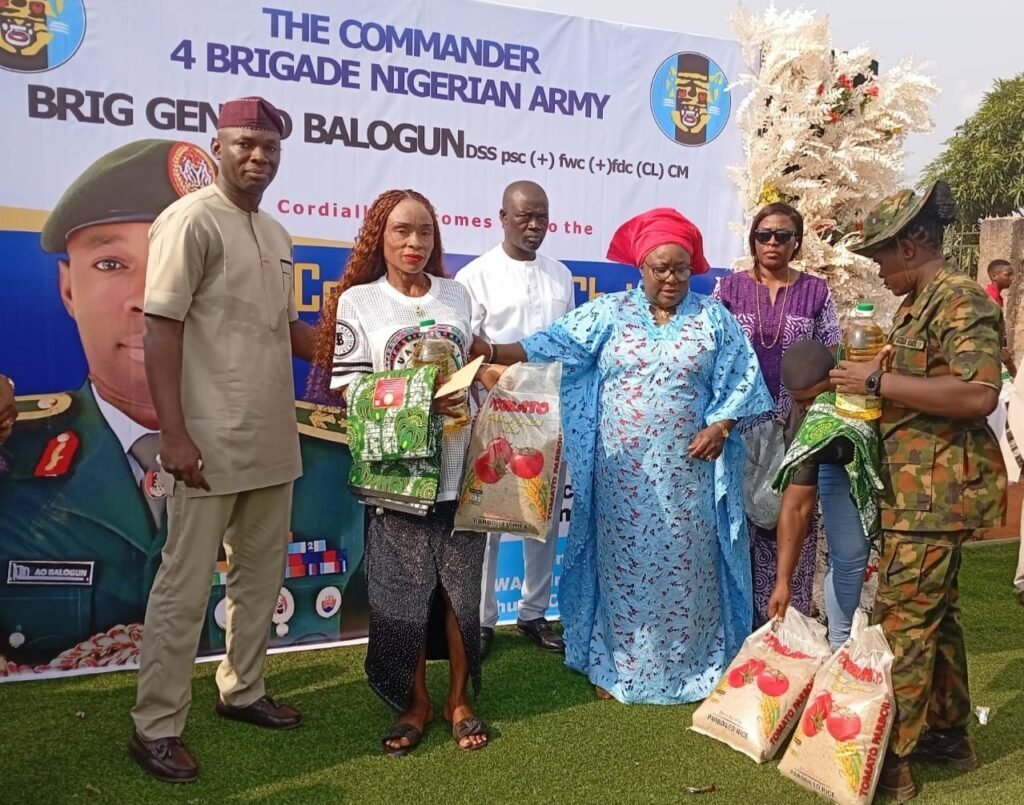
In a poignant ceremony that blended seasonal celebration with solemn remembrance, the Nigerian Army’s 4 Brigade in Benin demonstrated that the bonds of service extend beyond a soldier’s lifetime. Brigadier-General Ahmed Balogun, the Brigade Commander, emphasized that a Christmas luncheon and gift distribution for widows and children of fallen heroes was a profound act of gratitude—a vital reminder that the nation’s debt of honor is perpetual.
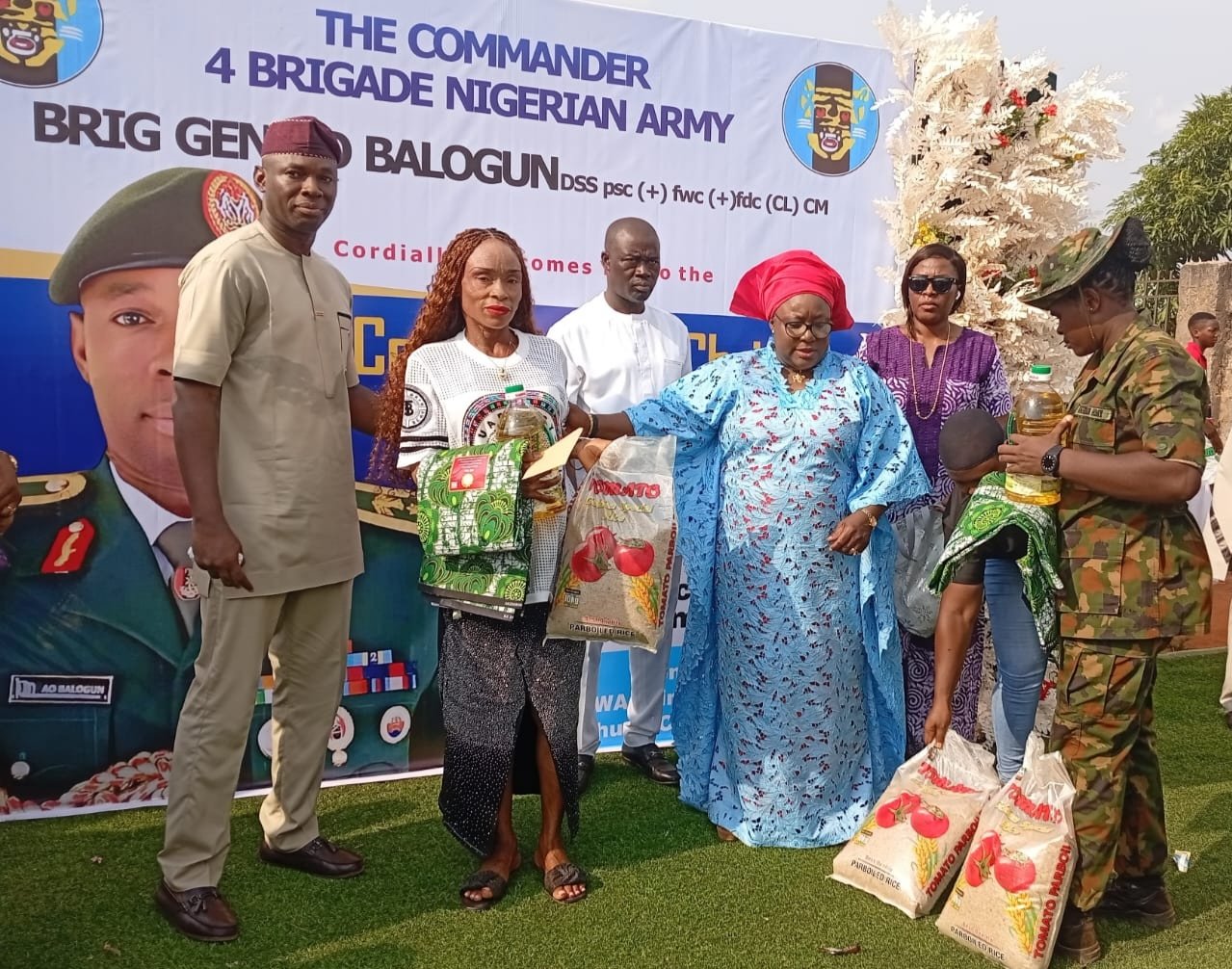
The event, which brought together 50 widows and six Magajiyas (leaders of soldiers’ wives), served a purpose far deeper than seasonal charity. Brig.-Gen. Balogun articulated a critical philosophy of military culture: that caring for the families of those who made the ultimate sacrifice is a non-negotiable pillar of operational morale and national integrity. “While others are celebrating and making merry,” he stated, “we recognise that some of us here paid the supreme price through their husbands. Though they are no longer with us, the Army is here with you.” This sentiment transforms the outreach from a simple gift-giving exercise into a powerful reaffirmation of identity and belonging for the families.
The initiative is strategically aligned with the “Personnel Welfare” philosophy of the Chief of Army Staff, Lt.-Gen. Waidi Shaibu. By prioritizing the well-being of soldiers’ families—especially those of the fallen—the Army directly addresses a fundamental concern for every serving officer: What will happen to my loved ones if I don’t return? This assurance is a cornerstone of troop morale. The presence of Brig.-Gen. Paulina Aburime, Chief Medical Director of the Military Hospital in Benin, further underscored the holistic nature of this support, symbolizing the Army’s commitment to the families’ long-term health and welfare.
Brig.-Gen. Balogun’s assurance that the program will be sustained and extended to other festive periods, including Ramadan and Sallah, is a significant development. It institutionalizes the support, moving it from an ad-hoc act of kindness to a predictable, enduring policy. This consistency is crucial for families navigating long-term grief and financial instability. As noted by one widow, Mrs. Queen Obazuwa, the appeal was for “sustained assistance,” highlighting that the loss is permanent, and so too must be the support network.
The gesture also serves a unifying national function. As Brig.-Gen. Aburime pointed out, the Nigerian Army’s recognition of both Christian and Muslim festivals through such outreach fosters a powerful sense of unity and shared patriotism that transcends religious and ethnic lines. In a diverse nation, the common ground of sacrifice and remembrance becomes a potent force for cohesion.
Ultimately, this Christmas outreach is a masterclass in the psychology of military leadership and national gratitude. It recognizes that the true cost of conflict is borne long after the battle ends, by families who must rebuild their lives. By materially supporting and emotionally honoring these families, the Nigerian Army does more than express thanks—it actively upholds the social contract of service, ensuring that the legacy of every fallen soldier is one of enduring honor, not forgotten sacrifice. It fosters a gratitude that is active, ongoing, and essential to the very fabric of a nation that relies on the bravery of its defenders.