Lagos, Dec. 30, 2025 – The Federal Ministry of Works has issued a renewed and urgent appeal to the public, framing the persistent vandalism of critical bridge infrastructure in Lagos State as a collective security and economic threat that demands a community-wide response. This call to action comes despite the implementation of reinforced countermeasures, highlighting the escalating and brazen nature of the problem.
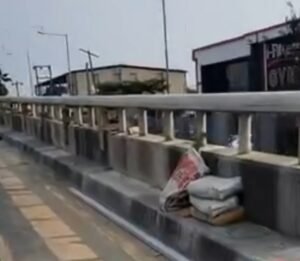
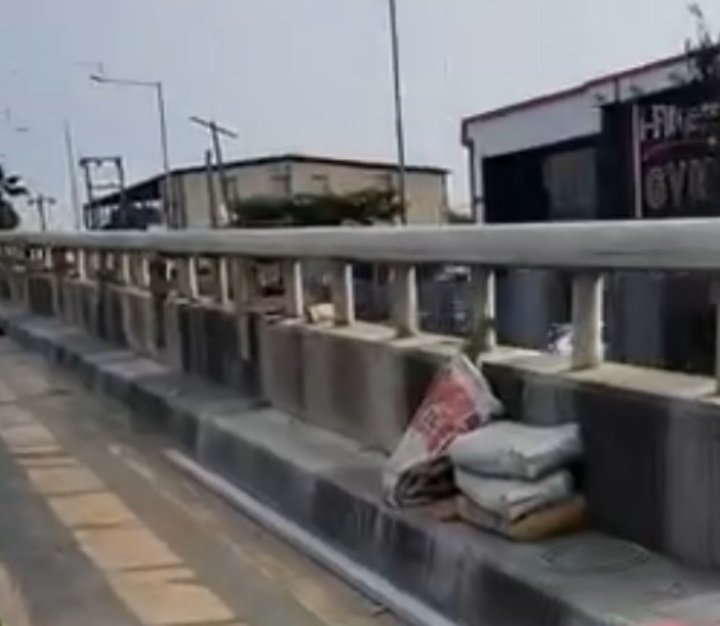
In an exclusive interview with the News Agency of Nigeria (NAN), the Federal Controller of Works in Lagos State, Mr. Olufemi Dare, expressed profound concern over the sophisticated methods now employed by vandals. “We have already taken steps to fortify these public assets by casting the iron bridge rails in concrete,” Dare explained. “Yet, we are seeing hoodlums systematically breaking through that concrete shell to extract the embedded iron rods. This is no longer petty theft; it’s a coordinated assault on public safety and treasury.”
The implications of this vandalism extend far beyond the cost of replacement. Compromised bridge rails pose a direct and immediate danger to motorists and pedestrians, potentially leading to catastrophic accidents. Furthermore, each act of vandalism diverts significant public funds—often running into tens of millions of Naira per incident—away from new developmental projects and into repetitive repairs, stifling the state’s progress.
A Multi-Agency and Public Partnership Strategy
To combat this menace, the Ministry is escalating its institutional response. “We will be writing again to the Economic and Financial Crimes Commission (EFCC), the Nigeria Police Force, and other relevant security agencies to intensify surveillance and patrols on all bridges across the state,” Dare stated. He cited a recent collaborative success: “The EFCC has already made arrests and recovered stolen materials, which they brought to the ministry. This inter-agency cooperation is vital.”
However, Dare emphasized that government action alone is insufficient. He drew a powerful analogy for public responsibility: “Citizens must protect public infrastructure with the same vigilance they protect their personal homes and property. These bridges are not abstract ‘government property’; they are the very arteries of our daily commute, our commerce, and our safety. Their degradation hurts every single resident.”
He urged residents to become active guardians: “Take ownership. Report anyone you see tampering with bridge components, road signs, or any public utility immediately to the security agencies.” He coupled this appeal with a critical warning: “Do not attempt to confront these individuals yourselves. Your role is to observe and report—leave the apprehension to trained professionals.”
Formalizing the Scrap Metal Sector: A Proposed Solution
Echoing the need for a systemic approach, Mr. Friday Oku, President of the Association of Scrap and Waste Pickers of Lagos, condemned the vandalism while proposing a structural solution. “Our legitimate members are also victims, as this criminal activity tarnishes our entire profession,” Oku said.
He called on the government to formalize the scrap metal sector, a move experts believe could significantly disrupt the market for stolen public infrastructure. “We urge the government to create an official database of all operators and issue standardized, verifiable identity cards to genuine, registered members,” Oku elaborated. The association has already begun a pilot in-house registration system to demonstrate feasibility.
This formalization would serve a dual purpose: it would protect legitimate businesses and provide law enforcement with a critical tool. “If every scrap dealer is registered and every transaction requires identification, it becomes exponentially harder for vandals to sell stolen bridge rails, manhole covers, or cable wires,” Oku noted. “A documented sector is a transparent sector, and it is the most effective way to isolate and eliminate the criminal elements masquerading as waste pickers.”
The Path Forward: Vigilance, Reporting, and Regulation
The consensus from both government and industry leaders is clear: defeating bridge vandalism requires a three-pronged strategy. First, enhanced security and surveillance by agencies like the EFCC to deter and apprehend perpetrators. Second, an engaged and vigilant public serving as the “eyes and ears” on the ground, safely reporting suspicious activity. Third, the formalization and regulation of the scrap metal industry to kill the demand for stolen public materials.
The Ministry’s message is a stark reminder that safeguarding the infrastructure that supports millions of Lagosians is not a spectator sport—it is a civic duty and a necessary partnership for the city’s sustainable future.
By Lydia Chigozie-Ngwakwe
Edited by Sandra Umeh
(NAN)(www.nannews.ng)