By Deborah Akpede
Lagos, Jan. 4, 2026
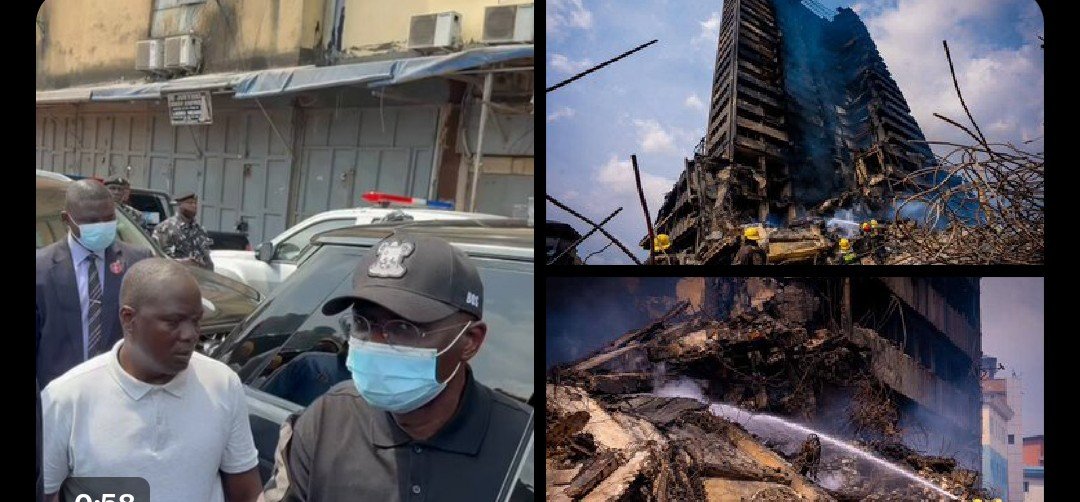
The Lagos State Fire and Rescue Service has confirmed eight fatalities from the catastrophic fire that engulfed the 25-storey Great Nigeria Insurance House on Lagos Island on December 24. The grim update, provided by Controller General Mrs. Margaret Adeseye, comes as the state government initiates a high-stakes, controlled demolition of the structurally compromised high-rise—a process that experts warn could take weeks or months to complete safely.
This tragedy has escalated from an emergency response to a complex recovery and demolition operation, exposing systemic fire safety failures common in many of Nigeria’s urban commercial centers.
A Delicate and Dangerous Demolition Operation
Governor Babajide Sanwo-Olu, following a second on-site assessment, has approved the formation of a Technical Recovery and Demolition Committee. Chaired by the Commissioner for Special Duties, this committee is tasked with a critical mission: to develop and execute a demolition plan that prioritizes the safety of both the public and emergency responders above all else.
“The site remains highly sensitive and volatile,” Adeseye cautioned. “Substantial rubble is still in place, and we are combating intermittent pockets of fire burning within the debris.” She explained that these persistent fires are fueled by combustible materials like textiles and clothing stockpiled inside, not the building’s structure. This detail is crucial—it points to the building’s use as an improvised warehouse, a common but deadly practice in densely populated markets.
The demolition is not a simple matter of knocking down a damaged building. The foundation has been severely compromised by the intense heat, rendering the entire structure unstable. Paradoxically, some of the collapsed rubble may be providing unintended support. “Any rushed or uncoordinated removal could trigger a catastrophic secondary collapse,” Adeseye stated, emphasizing that operations are adhering to global disaster response protocols where rescuer safety is paramount. She drew a sobering comparison to the World Trade Center recovery, which lasted months, to contextualize the scale and patience required.
Root Causes: A Catalogue of Preventable Violations
Preliminary observations by investigators have revealed a shocking list of fire safety violations that created a perfect storm for disaster:
- Extreme Overstocking: Combustible materials were piled from floor to ceiling with little to no ventilation, creating a massive fuel load.
- Absence of Safety Infrastructure: The building lacked basic fire safety systems, such as sprinklers, adequate fire exits, and alarms.
- Hazardous Market Practices: These included the use of generators inside the building and the construction of shops around transformers—practices that can lead to heat buildup and spontaneous ignition.
“Such conditions could lead to a fire even without an external trigger,” Adeseye warned, highlighting a systemic issue that extends far beyond this single address. This incident serves as a stark case study in the dangers of converting commercial high-rises into unregulated storage facilities without regard for basic safety codes.
Human Toll and Ongoing Response
The human cost is now quantified, though the pain is immeasurable. Of the eight confirmed fatalities, five victims have been identified, while three remain unknown. Thirteen individuals were successfully rescued in the immediate aftermath. Search operations continue in safer sections of the debris, but the structural instability severely limits what is possible.
An information center has been established at the site to address enquiries from grieving families and concerned stakeholders. The affected market and surrounding areas remain under a strict cordon, accessible only to authorized first responders—a necessary measure to prevent further loss of life.
Broader Implications and a Call for Action
This inferno is more than a tragic accident; it is a symptom of a larger urban planning and regulatory crisis. It raises urgent questions about building code enforcement, the licensing of commercial premises, and the need for mandatory fire safety audits in Nigeria’s bustling market districts.
Adeseye concluded by thanking Lagos residents for their patience and cooperation, reiterating a fundamental principle of disaster management: “A safe rescuer ensures a safe rescue.” The path forward involves not only the careful demolition of a ruined building but also a critical examination of the practices that led to its ruin. The legacy of this disaster must be a concerted push for reform to prevent history from repeating itself in the heart of Lagos.
Edited by Kevin Okunzuwa