The grieving family of three brothers killed in the Great Nigeria Insurance House fire has issued a searing condemnation of the emergency response, framing the tragedy not as an unavoidable accident but as a failure of preparedness and resource allocation that cost lives.
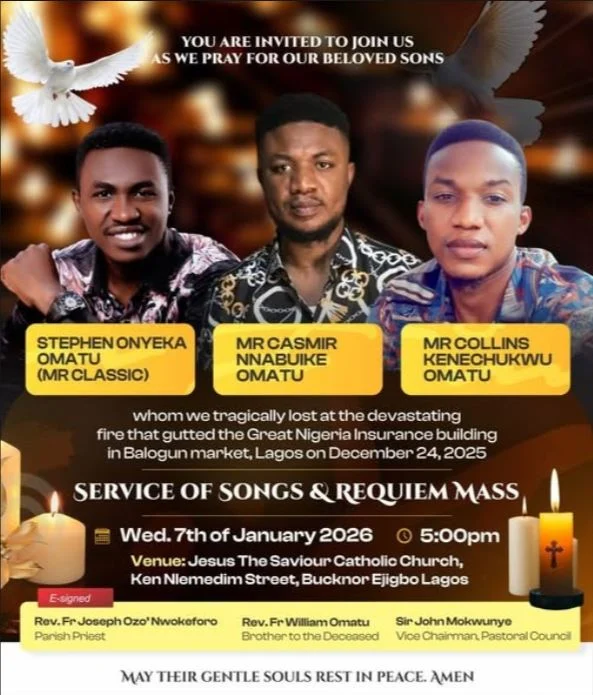
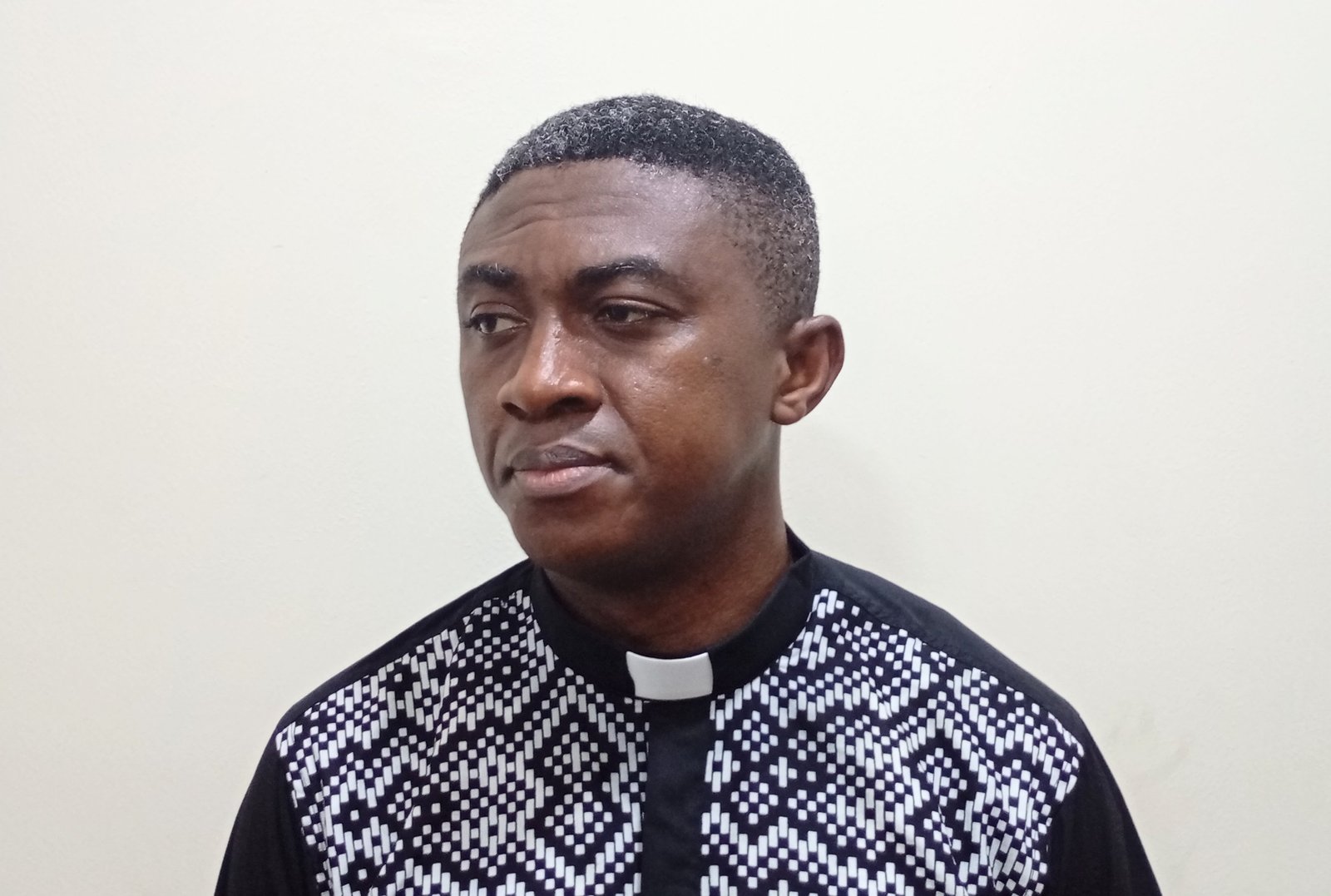
At a Service of Songs and Requiem Mass held at Jesus The Saviour Catholic Church in Ejigbo, Rev. Fr. William Omatu delivered a raw and emotional account of the final hours of his brothers—Stephen (40), Casmir (39), and Collins (37). His testimony paints a picture of systemic breakdown during the multi-day inferno that began on Christmas Eve, December 24.
Omatu’s central allegation is one of catastrophic resource failure: firefighters arrived at the 22-storey high-rise without an adequate water supply and were unable to sustain firefighting operations. This critical shortage, a known challenge in many dense urban centers like Lagos Island, rendered initial rescue efforts ineffective. This point underscores a broader issue beyond mere delay—it speaks to a fundamental lack of operational readiness for high-rise fires, where sustained water pressure is non-negotiable.
He described the agonizing scene where family members pleaded with responders at the scene as their loved ones were trapped, only to witness a response that seemed paralyzed by logistical failures. “The firefighters arrived with limited water and were unable to sustain operations, leaving trapped victims without meaningful assistance,” Omatu stated, highlighting the chasm between the presence of personnel and the possession of functional capacity.
The fire, which preliminary reports indicate originated on the 4th floor and rapidly spread upward, escalated into an inferno that also damaged adjacent structures, including a mosque and parts of Oluwole Plaza. The incident stretched over days, amplifying the families’ frustration with what they perceived as insufficient and slow intervention from the deployed teams, which included LASEMA, the Lagos State Fire & Rescue Service, the Federal Fire Service, and the Red Cross.
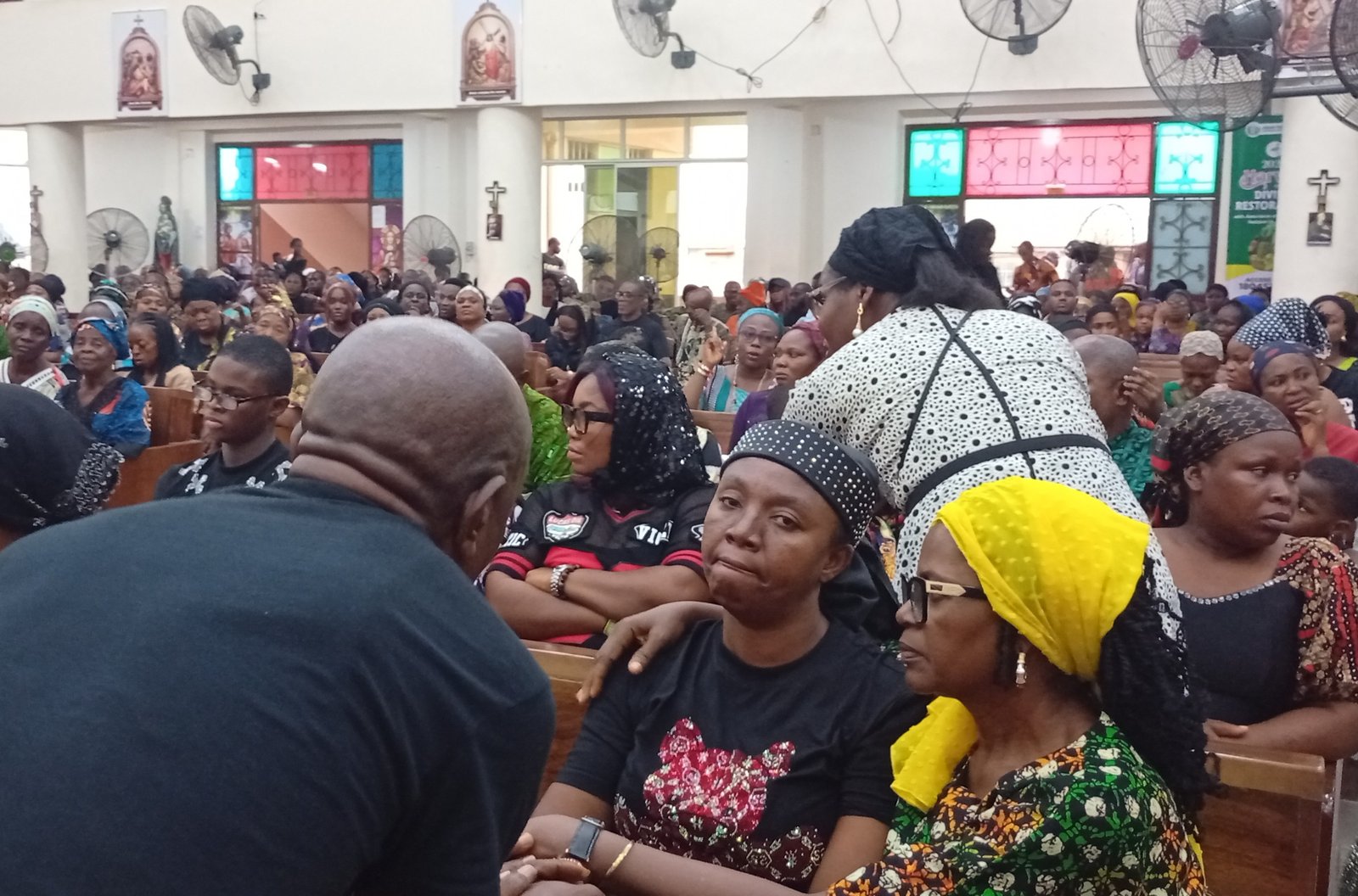
Echoing the call for accountability beyond the emergency phase, another cleric at the service, Rev. Fr. Steve-Greg Chekwube, shifted focus to prevention. He issued a direct appeal to architects, builders, and landlords, urging mandatory inclusion of emergency exits and modern safety features in building designs. “Life remains more precious than property or structures,” he declared, touching on a critical tension in rapidly developing cities where commercial and residential density often outpaces safety regulations and enforcement. His remarks point to the need for retrofitting older structures like the Great Nigeria Insurance House, which may lack the fire suppression systems and clear egress paths of newer builds.
While offering spiritual solace—reminding mourners that death is an “inevitable reality” and a “passage to eternal life” for Christians—Fr. Chekwube framed the brothers’ painful loss as a catalyst for strengthened faith and, implicitly, for public advocacy. The collective prayer was for both the repose of the deceased and for such incidents “not to reoccur,” a wish that demands practical, systemic change.
The tragedy claimed eight lives in total. The Omatu brothers are scheduled for burial on January 14. A surviving twin, Camillus Omatu, narrowly escaped, a stark reminder of the thin line between survival and loss in such disasters. This family’s public decry of the response transforms a news report into a powerful appeal for audit and action—scrutiny of emergency service resourcing, enforcement of building codes, and a societal reaffirmation that infrastructure must protect human life above all.
Edited by Vivian Ihechu