By Chiazo Ogbolu | Lagos, Dec. 25, 2025
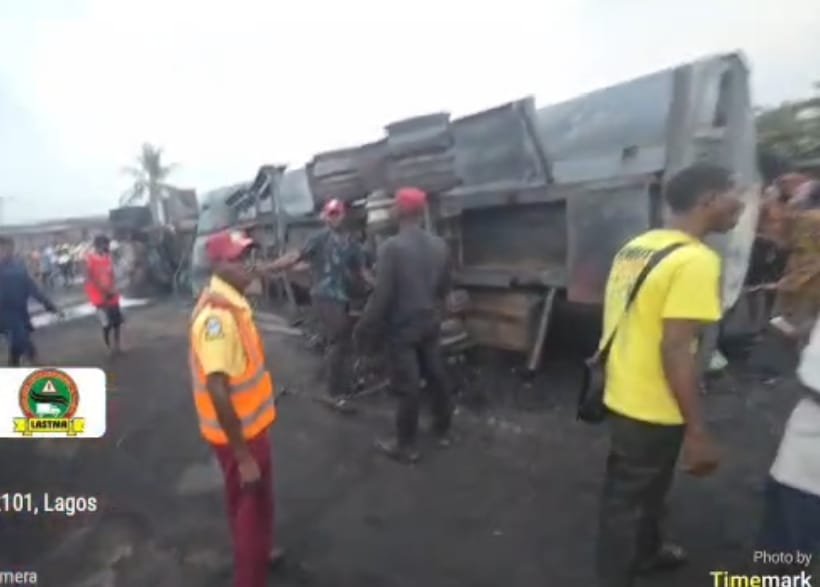
A festive season tragedy unfolded on the Lagos-Badagry Expressway early Thursday morning, as a diesel tanker explosion claimed two lives and underscored the persistent dangers of reckless driving on Nigeria’s busy roadways. The Lagos State Traffic Management Authority (LASTMA) confirmed the fatalities, which occurred in the Oto-Ijanikin axis near the Lagos State University of Education (LASUED).
Mr. Olalekan Bakare-Oki, General Manager of LASTMA, detailed the sequence of events in an official statement. Preliminary investigations point to excessive speed as the primary cause. The driver of a Mack Truck, laden with diesel, reportedly lost control while attempting an overtaking maneuver. The resulting crash led to a catastrophic fuel spill and an immediate, raging inferno that trapped and killed both the driver and an adult female occupant.
Beyond the Headlines: The Anatomy of a Preventable Tragedy
This incident is not an isolated event but part of a distressing pattern. Tanker and articulated vehicle accidents are a recurring nightmare on Nigerian roads, often with devastating consequences. The physics are unforgiving: a heavy vehicle carrying flammable liquid becomes a massive, unstable projectile when speed and poor judgment are introduced. The overtaking attempt on a major expressway, a high-risk action for any large vehicle, was the fatal catalyst.
Swift Response Averts a Catastrophic Chain Reaction
The report highlights a critical, often overlooked aspect of such disasters: the dangerous public behavior that follows. LASTMA personnel, already on-site for traffic management, faced an additional peril. Members of the public converged with containers to scoop the spilled diesel—an act of immense folly given the smoldering wreckage and highly volatile atmosphere.
“This is an extremely hazardous act capable of triggering further explosions and avoidable fatalities,” Bakare-Oki emphasized. The intervention by LASTMA operatives to cordon the area and prevent this looting was a vital public safety measure that likely saved numerous lives before the Lagos State Fire and Rescue Service (Ojo Unit), the Federal Road Safety Corps (FRSC), and the Ijanikin Police Division could fully secure the scene.
A Painful Echo During the Festive Season
Mr. Bakare-Oki expressed profound sorrow, extending condolences to the bereaved families—a loss made more poignant during a time traditionally reserved for celebration and family. He described the crash as “deeply painful and entirely avoidable,” reaffirming the authority’s commitment to road safety.
His subsequent warning to tanker drivers is a direct address to the root cause: the need for extreme caution, strict adherence to speed limits, and full compliance with traffic regulations. “Reckless driving and speeding remain dominant factors in fatal road traffic crashes across the metropolis,” he stated, a lament that echoes after far too many similar headlines.
The Aftermath and a Call for Systemic Change
Following containment of the blaze, a coordinated cleanup commenced. The charred tanker was evacuated by LASTMA, while the FRSC undertook the somber task of removing the remains. While the immediate emergency has passed, the incident leaves pressing questions about enforcement, driver training, and vehicle maintenance standards for heavy goods carriers.
This tragedy on the Badagry Expressway serves as a stark, fiery reminder. It is a case study in how a single moment of poor judgment behind the wheel of a heavy vehicle can irrevocably shatter lives, and how the desperate scramble for spoils in a disaster zone can compound the danger. The ultimate tribute to the lives lost would be a reinforced, unwavering commitment from all stakeholders—drivers, regulators, and the public—to make such “entirely avoidable” incidents a thing of the past.
Source: NAN News
Edited by Rabiu Sani-Ali