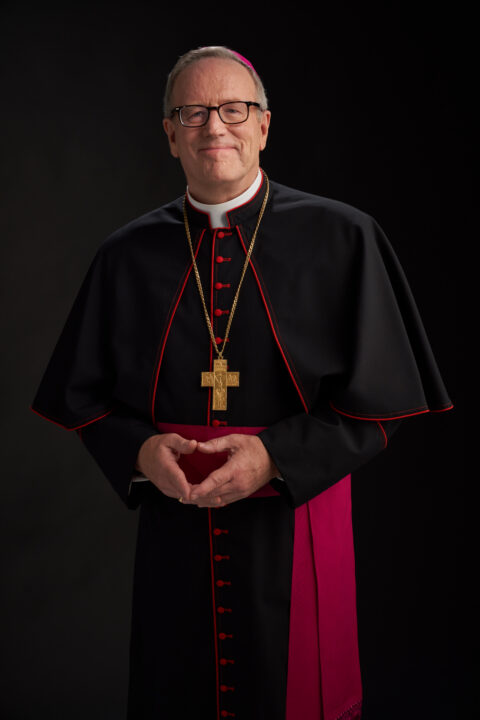
As the Christmas season approaches, a prominent religious leader has issued a powerful ethical challenge to prevailing commercial practices, framing economic fairness as a core tenet of the celebration. Most Rev. Paulinus Ezeokafor, the Catholic Bishop of Awka Diocese, has decried the widespread practice of profiteering during the Yuletide, labeling it as both exploitative and fundamentally at odds with Christian teachings.
In his annual Christmas message delivered in Awka, Bishop Ezeokafor went beyond a simple admonition, providing a theological and social framework for his critique. He anchored his argument in scripture, specifically citing Luke 3:13, where John the Baptist instructs tax collectors, “Collect no more than what you have been ordered to.” This reference is profound; it applies a principle meant for public officials—restraint and integrity in transactions—directly to contemporary market behavior, suggesting that all economic activity falls under a moral lens.
The bishop’s warning highlights a critical tension between the spirit of Christmas and its modern economic reality. While the season is meant to celebrate generosity, peace, and familial love, it often triggers a cycle of inflated demand and opportunistic price hikes. Ezeokafor argues that this transforms a time of communal joy into one of financial stress and exclusion, particularly for the most vulnerable.
He provided concrete, relatable examples to illustrate the human cost of this profiteering. “The high cost of transportation during the Christmas season is not fair,” he stated, noting the heartbreaking stories of individuals unable to afford travel to reunite with their families. He pointed to the specific, prohibitive cost of travel from major hubs like Abuja or Lagos to southeastern Nigeria, a journey essential for many to partake in the core Christmas tradition of family gathering.
Expanding his critique, Bishop Ezeokafor introduced a compelling comparative perspective. He observed that in many developed nations, governments and businesses often implement measures—such as price caps on essential travel, subsidies, or promotional discounts—specifically during holidays to ensure broader participation. This contrast underscores that the Nigerian trend of festive price escalation is not an inevitable market force but a choice, one that prioritizes short-term gain over social cohesion and shared celebration.
The core of his message is a call to embody the true “spirit of moderation, fairness and love that Christmas represents.” This is not merely a plea for charity but a challenge for justice in exchange. It suggests that fair pricing is an act of love, and that consideration for a neighbor’s well-being should directly influence one’s business practices. He implicitly calls on both sellers—from large transporters to local market traders—and consumers to foster an economy of solidarity, where the joy of the season is not commodified into an opportunity for exploitation.
Ultimately, Bishop Ezeokafor’s caution reframes the Christmas season as a test of societal values. It asks a fundamental question: Will our celebrations be marked by compassion and mutual consideration, or will they be undermined by greed and exclusion? His message serves as a timely reminder that the Christmas story itself is one of humility and sharing, principles that demand expression not just in gift-giving, but in the very fabric of our economic interactions during this holy time.
Edited for depth and context.