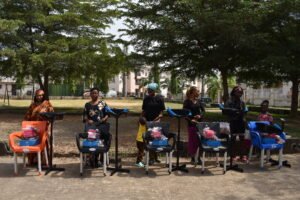
Uyo, Akwa Ibom – In a significant gesture of social investment and national gratitude, the First Lady of Nigeria, Senator Oluremi Tinubu, has extended direct financial support to 250 elderly citizens in Akwa Ibom State. Each beneficiary received a grant of N200,000 as part of the Renewed Hope Initiative (RHI) Social Investment Programme, a flagship project championed by the First Lady’s office.
The event, held in Uyo on Tuesday, underscores a growing national focus on the welfare of senior citizens, a demographic often vulnerable to economic hardship and social neglect. Represented by Mrs. Helen Obareki, Senator Tinubu framed the initiative not merely as charity, but as a moral imperative and a form of national reciprocity.
“Since the inception of this administration, the Renewed Hope Initiative has made it a tradition to celebrate our senior citizens,” the First Lady’s statement read. “This gesture is a recognition of their invaluable, foundational contributions to nation-building. Through this scheme, we express our gratitude to the men and women who laboured to build this country.”
Beyond the Cash Grant: The Philosophy of ‘Renewed Hope’ for the Elderly
The distribution of funds is the most visible component of a broader philosophy articulated by the First Lady. She emphasized that support for the elderly must be holistic, aiming for more than just material sustenance.
“It is therefore our moral duty to ensure they live their twilight years in comfort, good health, and dignity,” the statement continued. This focus on dignity shifts the narrative from passive welfare to active respect. The First Lady further urged the elderly to “be deliberate about finding joy in old age,” adding a poignant note: “Aging is not just about longevity, but about being happy, loved, supported, and respected.”
This approach acknowledges the psychological and social dimensions of aging, suggesting that initiatives like the RHI aim to combat isolation and foster a sense of continued value within the community.
Context and Impact: The N200,000 Grant in Perspective
While the total disbursement of approximately N50 million represents a substantial commitment, the real-world impact of N200,000 per individual warrants examination. For many elderly Nigerians living on fixed or non-existent incomes, this sum can be transformative. It could cover several months of essential medication, settle outstanding utility bills, provide a buffer for nutritional needs, or fund small-scale entrepreneurial activities that generate sustainable income.
The timing, just before the festive season, is also strategic, as this period often brings increased financial pressure for families.
Community Response and the Path Forward
Speaking on behalf of the 250 beneficiaries, Mr. Abasiama Idiong expressed profound gratitude, describing the grant as “a show of love and honour to old people.” This sentiment highlights a critical outcome of such programmes: the restoration of social dignity and the tangible feeling of being seen and valued by the nation’s leadership.
The Akwa Ibom event serves as a concrete example of the Renewed Hope Initiative’s operationalization. It raises important questions about scalability, sustainability, and the potential for such models to be replicated and integrated with state-level social services to create a more robust safety net for Nigeria’s aging population. As the First Lady noted, giving “priority attention to the elderly” is not a seasonal act, but a crucial component of a compassionate and equitable society.
Report by Isaiah Eka for the News Agency of Nigeria (NAN). Edited by Azubuike Okeh.