By Deji Abdulwahab
Abuja, Dec. 20, 2025
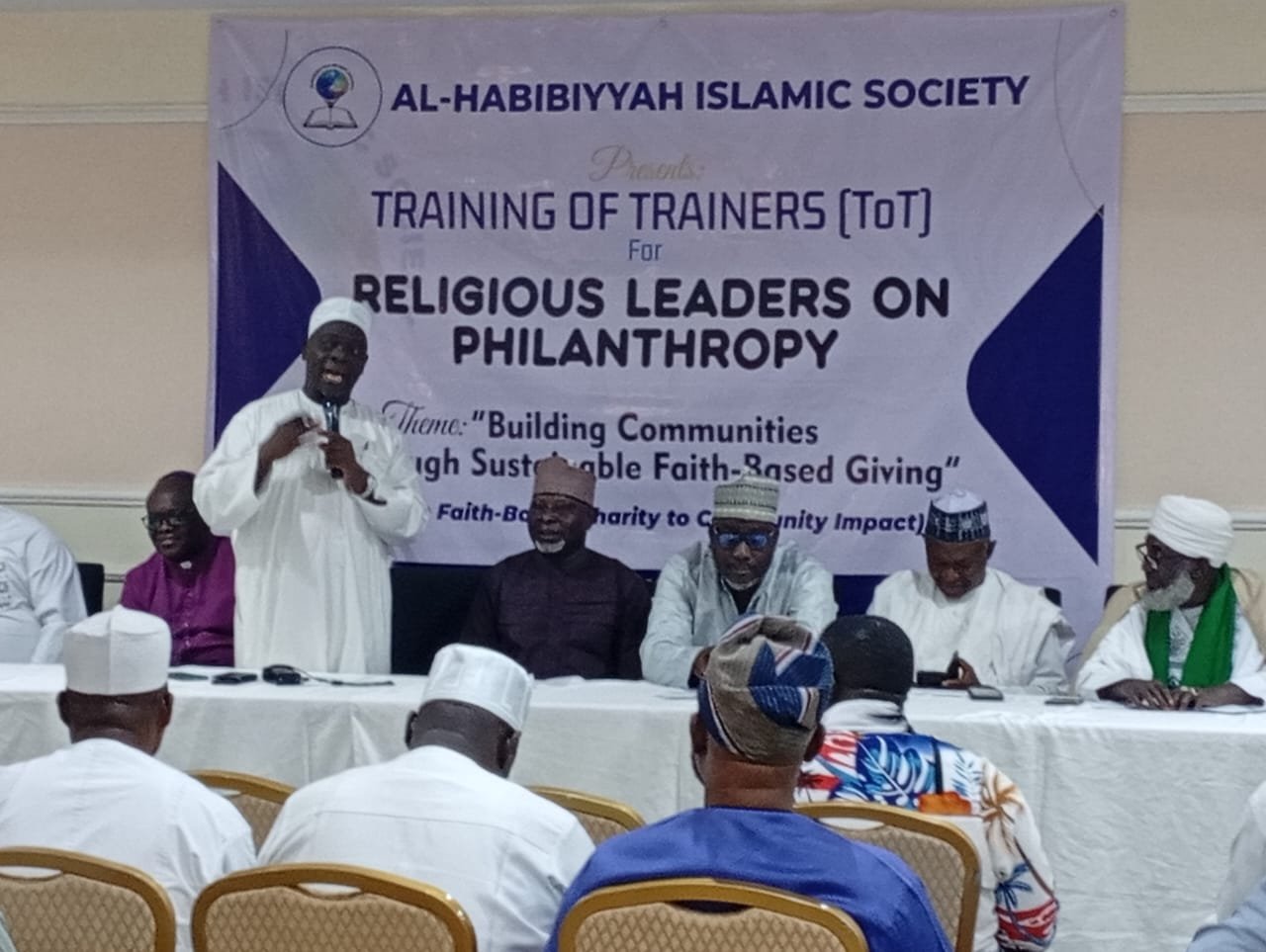
In a landmark initiative to combat poverty through unified action, the Al-Habibiyyah Islamic Society has equipped 60 Muslim and Christian leaders with advanced training on the principles and practice of structured philanthropy. The “Training of Trainers for Religious Leaders on Philanthropy,” held in Abuja, marks a significant step toward building self-reliant communities through faith-based cooperation.
The program, themed “Building Communities through Sustainable Faith-Based Giving,” was founded on a powerful, unifying premise: poverty and hunger do not recognize religious boundaries. By bringing leaders from both major faiths together, Al-Habibiyyah aims to create a scalable model of social welfare that transcends sectarian divides.
Moving Beyond Ad-Hoc Charity to Strategic Impact
Malam Fuad Adeyemi, Executive Director and National Chief Imam of Al-Habibiyyah, articulated the core mission. “The purpose is to promote the prosperity of Nigerians, as government cannot do it alone,” he stated. He emphasized a critical shift in mindset—from sporadic, reactive giving to deliberate, strategic philanthropy.
“We have been doing philanthropy, but it is not structured, and it is not good enough,” Adeyemi explained. “Structured giving is imperative because we have been giving haphazardly.”
He provided a tangible example: “If it is structured giving, we know what you want to use it for. We can continue to pay somebody’s school fees from beginning to end. It should be structured in such a way that the beneficiary does not need to come to you again. You know when payment is due and proactively send it. This dignity and reliability transform aid from a temporary handout into a sustainable pathway out of poverty.”
The training focused on equipping leaders with the “tools and ways” to mobilize and manage resources within their congregations and localities, fostering a culture of systematic community investment.
The Interfaith Imperative: Unity for Universal Well-being
The decision to train interfaith leaders is a strategic recognition of Nigeria’s social fabric. Adeyemi connected communal well-being to personal peace, stating, “If you want to be rich, if you want to be happy, you have to make the people around you happy… When we move together, we will understand ourselves better.” This philosophy positions collaborative philanthropy as both a practical tool for development and a mechanism for social cohesion.
Rev. Peter Ogunmuyiwa, the Archbishop of Abuja, Northern Province, African Church, hailed the initiative as “an eye-opener” and “impactful.” He noted its particular relevance to affluent individuals. “This programme speaks volumes, especially to our philanthropists, who we generally call big men of our time,” Ogunmuyiwa said. “Many people are endowed with wonderful resources, but they do not know how to actually invest them in such a way that it will touch lives.” His remarks highlight a common gap the training seeks to bridge: channeling goodwill and wealth into measurable, life-changing outcomes.
Synergy for a Peaceful and Prosperous Society
The event also underscored the role of women in peacebuilding and development. Mrs. Elizabeth Abuja, General Coordinator of the Women’s Interfaith Council (WIC), connected the philanthropic training to broader national goals. “I am happy that we are thinking alike… struggling to see that Nigeria is one, to see that we talk about humanity before any religion,” she said. This sentiment reflects a growing movement where collaborative social action becomes the foundation for lasting peace.
Other participants, like Rev. Cosmos Asuquo from the Hand of God Church in Mararaba, lauded the program, confirming its value in providing a concrete framework for the “concept of giving philanthropy.”
A Model for the Future
This training represents more than a single workshop; it is the seeding of a multiplier effect. The 60 leaders are now tasked with becoming trainers themselves, disseminating the principles of structured, sustainable, and interfaith philanthropy within their own networks. By framing giving as a technical, learnable skill essential for community prosperity, Al-Habibiyyah is pioneering a replicable model. In a nation rich with religious faith and communal spirit, this approach unlocks a vast, underutilized engine for social development, proving that the most effective solutions arise from unity of purpose. (NAN)
Edited by Kadiri Abdulrahman