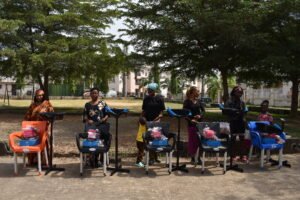
In a significant effort to combat a critical barrier to education and dignity, the African Immigrants Resources Centre has concluded a major initiative providing free sanitary pads to thousands of young students. The “Give A Girl A Pad” (GAGAP) campaign distributed essential menstrual hygiene products to 4,072 schoolgirls across four Nigerian states: Imo, Lagos, Rivers, and the Federal Capital Territory, Abuja.
The campaign’s convener, Mrs. Chimezie Oji-Kalu, framed the distribution as a direct intervention against menstrual poverty—a term describing the inability to afford basic menstrual products and manage menstruation with dignity. This poverty is a profound, yet often overlooked, driver of gender inequality. “Our aim is to boost the confidence of schoolgirls and reduce school absenteeism caused by menstrual challenges,” Oji-Kalu stated at the campaign’s grand finale in Emil, Owerri-North, Imo State. Studies consistently show that a lack of access to pads forces many girls to miss up to a week of school each month, severely impacting their academic performance and long-term prospects.
The distribution was meticulously targeted at underserved communities, with the following breakdown of beneficiaries:
- Abuja: 1,382 girls across City Royal Secondary School, Matar Mecicodia Secondary School, Pilot Science Primary School, Gbagalape Village Square, and Radio Nigeria.
- Lagos: 430 girls from Silver Fountain School, Habitation of His Glory Private School, and Light Academy.
- Rivers: 600 girls from Community Secondary Schools in Woji and Okporo.
- Imo: 1,660 girls from Okpala Secondary School, Avu Secondary School, Egbu Girls Secondary School, and the Girl Child Initiative.
However, the organization’s Southeast Coordinator, Mrs. Winifred Ijeaku, highlighted a sobering reality: “Limited resources prevented the NGO from reaching girls in all states of the federation.” This admission underscores the vast, unmet need across Nigeria. The call for support from government bodies, corporations, and public-spirited individuals was a central theme, emphasizing that sustainable change requires scalable, systemic support beyond one-off donations.
The event also integrated crucial educational components. Mrs. Jovita Ololo of Alvan Ikoku Federal University of Education advised mothers to build close bonds with their daughters to better guide them through puberty. Furthermore, 14-year-old beneficiary Ijeoma Nwoke provided a powerful, on-the-ground perspective, urging her peers to prioritize menstrual hygiene to prevent infections—a reminder that product distribution must be coupled with knowledge to be fully effective.
The day concluded with the Girl Child Initiative Outreach presenting an award of excellence in community service to Mrs. Oji-Kalu, recognizing the tangible impact of the GAGAP initiative. This story is more than a report of charity; it is a case study in addressing a multifaceted issue of health, education, and economic equity. While celebrating the 4,072 girls reached, it powerfully illustrates the millions more who remain in need, framing menstrual health management not as a luxury, but as a fundamental right and a prerequisite for gender parity.