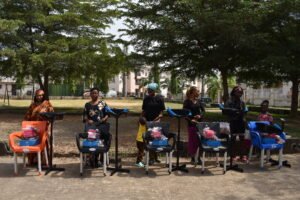
In a strategic move to combat environmental degradation, the Association of Professional Women Engineers of Nigeria (APWEN) has donated 100 tree seedlings to the Hadejia-Jama’are River Basin Development Authority (HJRBDA). This partnership highlights a growing trend of professional organizations stepping beyond their traditional roles to address pressing national challenges like climate change.
The Managing Director of HJRBDA, Rabiu Bichi, received the donation, praising it as a “major boost” to the authority’s ongoing efforts. He emphasized that the initiative aligns perfectly with the agency’s core mandate of promoting sustainable agricultural and environmental development across the region, which includes parts of Kano, Jigawa, and Bauchi States.
Beyond the Gesture: The Deeper Impact of Strategic Tree Planting
While the donation of 100 seedlings is a symbolic start, its true value lies in its strategic implementation and the broader principles it represents. Bichi outlined a clear plan: the seedlings will be distributed to farmers within the authority’s operational areas, with a focus on encouraging them to plant and nurture the trees on their farms.
This approach, known as agroforestry, is far more impactful than ornamental planting. Integrating trees into agricultural landscapes provides multiple, cascading benefits:
- Combating Desertification: Tree roots bind the soil, preventing erosion from wind and water—a critical defense in Nigeria’s vulnerable Sahel region.
- Enhancing Farm Resilience: Trees act as windbreaks, create microclimates that reduce evaporation, and their leaf litter improves soil fertility and water retention, directly boosting crop yields.
- Climate Mitigation: Each tree sequesters carbon dioxide, contributing to the global fight against climate change at a local level.
Bichi stressed that this initiative would be coupled with intensified sensitization programs to educate farmers on sustainable land use, turning a one-time donation into a catalyst for long-term behavioral change.
Professional Bodies as Agents of Sustainable Development
APWEN Chairperson, Safiyya Aliyu Mahmud, framed the donation as part of the association’s corporate social responsibility, but also as a fulfillment of a deeper duty. Her statement underscores a vital shift: professional expertise is not confined to industry but must be leveraged for societal good.
“Women engineers were committed to using their expertise and platforms to contribute to national development,” she said. This reflects APWEN’s unique position—applying engineering principles of problem-solving, systems thinking, and project management to environmental stewardship. Their involvement lends technical credibility and inspires other specialized groups to identify how their skills can address climate-related challenges.
Mahmud expressed confidence in the collaboration, citing HJRBDA’s extensive reach into farming communities as key to the project’s success. Her call for farmers and communities to “take ownership” is the critical linchpin. For reforestation to be sustainable, local populations must see the trees as valuable assets, not just government property.
A Model for Collaborative Environmental Action
This partnership between a professional women’s association and a government river basin authority serves as a potent model. It demonstrates how:
- Targeted Action can address specific vulnerabilities (river basin degradation).
- Local Partnerships are essential for implementation and monitoring.
- Knowledge Transfer (from engineers and agricultural extension workers to farmers) ensures the initiative’s longevity.
As Bichi noted, collective action is crucial. The 100 seedlings are a seed in themselves—planting the idea that solving climate change requires everyone’s toolkit, whether it’s an engineer’s design mind, a farmer’s practical knowledge, or a government agency’s logistical network. The success of this pilot will be measured not just in sapling survival rates, but in its ability to be replicated and scaled across other regions and by other professional bodies, investing in a more resilient future for generations to come.
Edited by Bashir Rabe Mani
Source: NAN