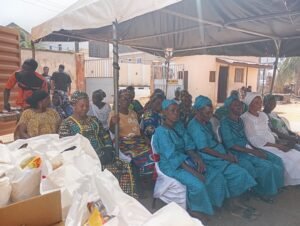
In a powerful call to action, a non-governmental organization has highlighted a critical and growing national challenge: the alarming decline in focus on educating the Nigerian girl-child. The Chianyiamanda Foundation, during its New Year Outreach in Okija Community, Anambra State, urged governments, stakeholders, and the public to revive and intensify efforts to ensure every girl has access to quality education.
The Foundation’s National Vice-President, Uche Ndukwu, presented a sobering assessment. While acknowledging past initiatives, she warned that momentum is “dwindling at an alarming rate.” This backsliding threatens to erase hard-won gains and consign millions more girls to a future without opportunity.
The Triple Threat: Poverty, Religion, and Customs
Ndukwu identified the persistent, intertwined barriers that keep girls out of school. Poverty forces families to make impossible choices, often prioritizing boys’ education when resources are scarce. Religious interpretations and deep-seated customs, such as early marriage and the prioritization of domestic duties over schooling, continue to truncate girls’ academic journeys. These are not isolated issues but a systemic web that requires a coordinated, culturally sensitive dismantling.
The Stark Reality of the Numbers
The Foundation’s appeal is grounded in disturbing statistics. Ndukwu revealed that a staggering number of Nigerian girls are lost to the educational system between primary and junior secondary school, with over 66% failing to complete junior secondary education. This mass dropout represents a catastrophic waste of human potential and a direct threat to national development. Each girl who leaves school is more vulnerable to poverty, early marriage, and limited economic participation, perpetuating a cycle of disadvantage.
A Call for Concrete, Legislative Action
Moving beyond advocacy, the Foundation called for tangible governmental commitment. Ndukwu emphasized the need to strengthen and enforce legislation that guarantees basic education as an irrevocable right for every girl-child. This means not just having laws on paper but ensuring adequate funding, infrastructure, security, and policy frameworks that make schooling accessible, safe, and relevant for girls in every community.
From Advocacy to Direct Intervention
Aligning its words with action, the Chianyiamanda Foundation’s outreach program provided immediate relief and long-term investment. Hundreds of women and girls benefited from donated food items and crucial scholarship awards. The impact of such direct support was poignantly illustrated by beneficiary Miss Chioma Orabuigwe. She explained that the scholarship solved fundamental, daily obstacles: “the challenges of transport fare to school each morning and buying of sanitary pad is solved permanently.” This highlights how seemingly small, practical barriers—menstrual hygiene management and transportation costs—can be the definitive hurdle between a girl and her education.
The event in Okija serves as both a model and a warning. It demonstrates the powerful synergy of community outreach, material support, and advocacy. However, it underscores a pressing truth: the efforts of NGOs alone are insufficient. A renewed, collective national drive—led by government policy, supported by communities, and funded by stakeholders—is urgently required to turn the tide and secure a literate, empowered future for Nigeria’s girls. The time to rally round, as Ndukwu urged, is now.