By Tiamiyu Prudence Arobani
Washington DC, Dec. 15, 2025
In a powerful call for national solidarity, former Nigerian Minister of Finance, Budget and National Planning, Mrs. Zainab Ahmed, has urged citizens to consciously reject attempts by external actors to exploit the nation’s ethnic and religious diversity as a tool for division. Her remarks, made at the Nigeria Day celebration at the Nigerian Embassy in Washington, D.C., come at a critical juncture for Nigeria’s international relations and internal cohesion.
Ahmed, who currently serves as the World Bank Executive Director for Angola, Nigeria, and South Africa, framed unity not as the absence of difference, but as a strategic imperative. “We need to tell the world that we are actually one,” she told the News Agency of Nigeria (NAN). “We may have our differences, but we are a delight in the differences that we have. We don’t need any external person, external body or external country to come and sort things out for us. We have the full capacity to sort ourselves out.”
This statement carries significant weight, hinting at the complex geopolitical landscape where foreign interests can sometimes amplify internal fissures for strategic or economic gain. Ahmed’s call is a reminder that national sovereignty includes the sovereign right to manage internal dialogue without outside interference.
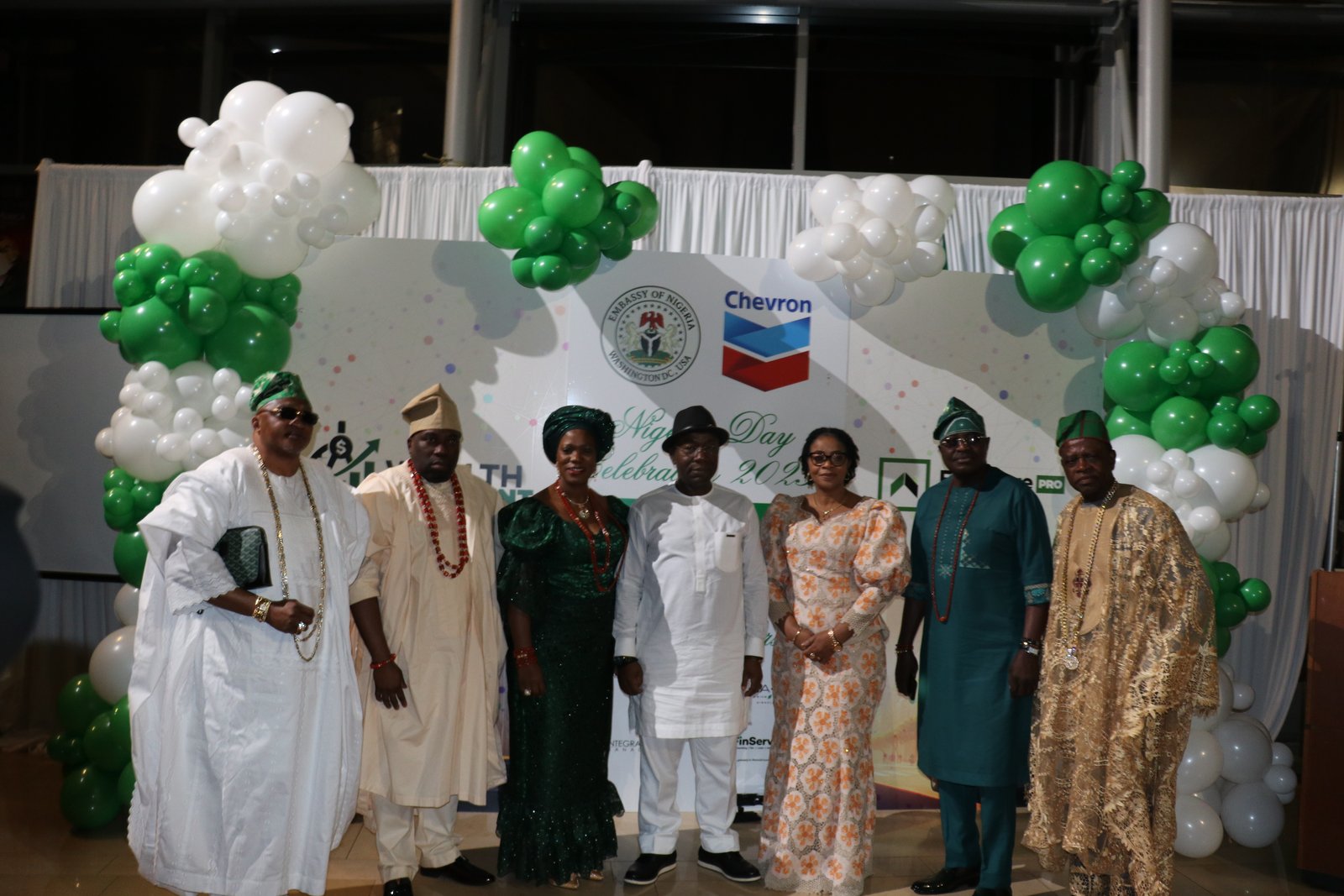
Her message was notably delivered against the backdrop of the recent U.S. designation of Nigeria as a “Country of Particular Concern (CPC)” regarding religious freedom—a move that has introduced diplomatic tension. Ahmed commended the embassy for proceeding with the celebration despite this, seeing the event itself as an act of resilience. “What I see tonight is unity in our diversity… There is no country we can call home but Nigeria,” she stressed, advocating for more such displays of solidarity to shape the global narrative about the nation.
The former minister also spotlighted the diaspora’s role as a unifying asset, praising Nigerians abroad for “flying the country’s flag high.” This sentiment was powerfully echoed by the acting Ambassador of Nigeria to the U.S., Amb. Samson Itegboje, who provided concrete data underscoring the community’s excellence. “Nigerian-Americans are the most educated immigrant group in the U.S.,” he stated, noting that their rate of Ph.D. holders is triple that of any other group. He highlighted that approximately 77% of all Black doctors in the U.S. are of Nigerian descent, and cited pioneers like Prof. Margaret Itua, the first woman globally to earn a Ph.D. in Cybernetics.
These achievements, Itegboje implied, are a product of the same resilient and unifying Nigerian spirit that must be harnessed at home. The diaspora’s success story becomes a compelling counter-narrative to stories of division.
On the diplomatic front, Mr. Paul Alabi of the Embassy’s Political and Economic Section addressed the ongoing efforts to mend relations with the U.S. “Nigerian officers are working round the clock to navigate through the diplomatic turbulence,” he explained, detailing engagements through bilateral working groups focused on security collaboration. This practical diplomacy, he suggested, is how trust is rebuilt and shared objectives are advanced—a process that requires a stable, unified Nigeria as a partner.
The community leaders present, like Mr. Ayodele Ibrahim, unanimously pledged support to the government and emphasized that Nigerians worldwide are “united in their resolve” to tackle the nation’s challenges. The collective takeaway from the event was clear: Nigeria’s greatest strength against external pressures or internal challenges is its own united will. The celebration transcended mere festivity, becoming a strategic declaration of identity and capability.
Edited by Ismail Abdulaziz