By Muhammad Nasir
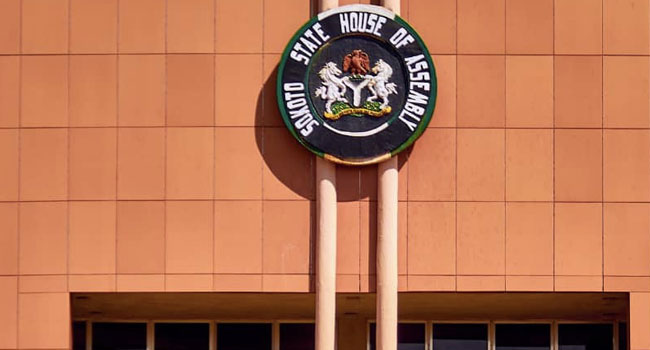
Sokoto, Dec. 16, 2025 – In a decisive move underscoring the principle of legislative oversight, the Sokoto State House of Assembly has formally summoned and reprimanded the state’s Commissioner for Energy and Petroleum Resources, Alhaji Sanusi Dan-Fulani. The action was taken due to the commissioner’s repeated failure to honour invitations from the Assembly’s committees during their constitutionally mandated oversight functions.
The summons was issued following deliberations at the Committee of the Whole House, presided over by the Speaker, Alhaji Tukur Bala. This procedural step is a critical tool for legislatures to hold the executive branch accountable, ensuring transparency and proper implementation of government policies and budgets.
Appearing before the lawmakers, Commissioner Dan-Fulani was granted a fair hearing, where he reportedly pleaded for forgiveness for his actions. After extensive deliberations, the Assembly resolved to serve the commissioner with a formal warning letter and directed him to submit a written apology for his conduct. This outcome highlights a middle ground between legislative authority and executive cooperation, serving as a public censure intended to rectify the breach of protocol without escalating to more severe sanctions like impeachment proceedings.
Legislative Business: Approving Fiscal Adjustments and Addressing Education
In separate but significant legislative business, the Assembly also reconsidered and approved an amendment to the Sokoto State Medium Term Expenditure Framework (MTEF) for the 2026–2028 fiscal years. The MTEF is a crucial planning document that outlines the government’s multi-year budget strategy, linking policy priorities to resource allocation.
The amendment was presented by the Majority Leader, Alhaji Bello Idris (APC–Gwadabawa North), following a request by Governor Ahmed Aliyu in line with the Sokoto State Fiscal Responsibility Law of 2019. Idris explained that the amendment was necessitated by the emergence of new, unexpected revenue inflows, which increased the state’s projected revenue from N702.6 billion to N765.1 billion. Such revisions are not uncommon but are vital for maintaining fiscal realism and enabling responsive governance to changing economic circumstances.
Furthermore, demonstrating its focus on grassroots development, the Assembly unanimously adopted a motion calling for the renovation and construction of additional classrooms, and the provision of furniture and instructional materials at Gomara Primary School in Yabo Local Government Area.
The motion’s presenter, Alhaji Abubakar Shehu (APC–Yabo), argued that the dilapidated condition of the school’s facilities had created a poor learning environment, adversely affecting pupils’ concentration and overall academic performance. This motion exemplifies the representative role of legislators in channeling constituency needs into actionable government directives. Following contributions from members, the motion was approved by a unanimous voice vote.
Analysis: A Day of Accountability, Planning, and Representation
The day’s proceedings in the Sokoto Assembly illustrate the multifaceted role of a state legislature. First, it firmly exercised its oversight function by holding a cabinet member accountable, reinforcing the checks and balances essential in a democracy. Second, it performed its law-making and budgetary function by adapting the state’s fiscal framework to new realities. Third, it acted on its representative function by addressing a specific infrastructural deficit affecting its citizens. Together, these actions paint a picture of a legislature actively engaged in governance, from high-level fiscal management to direct community intervention.
(Report by NAN; Edited by Bashir Rabe Mani)