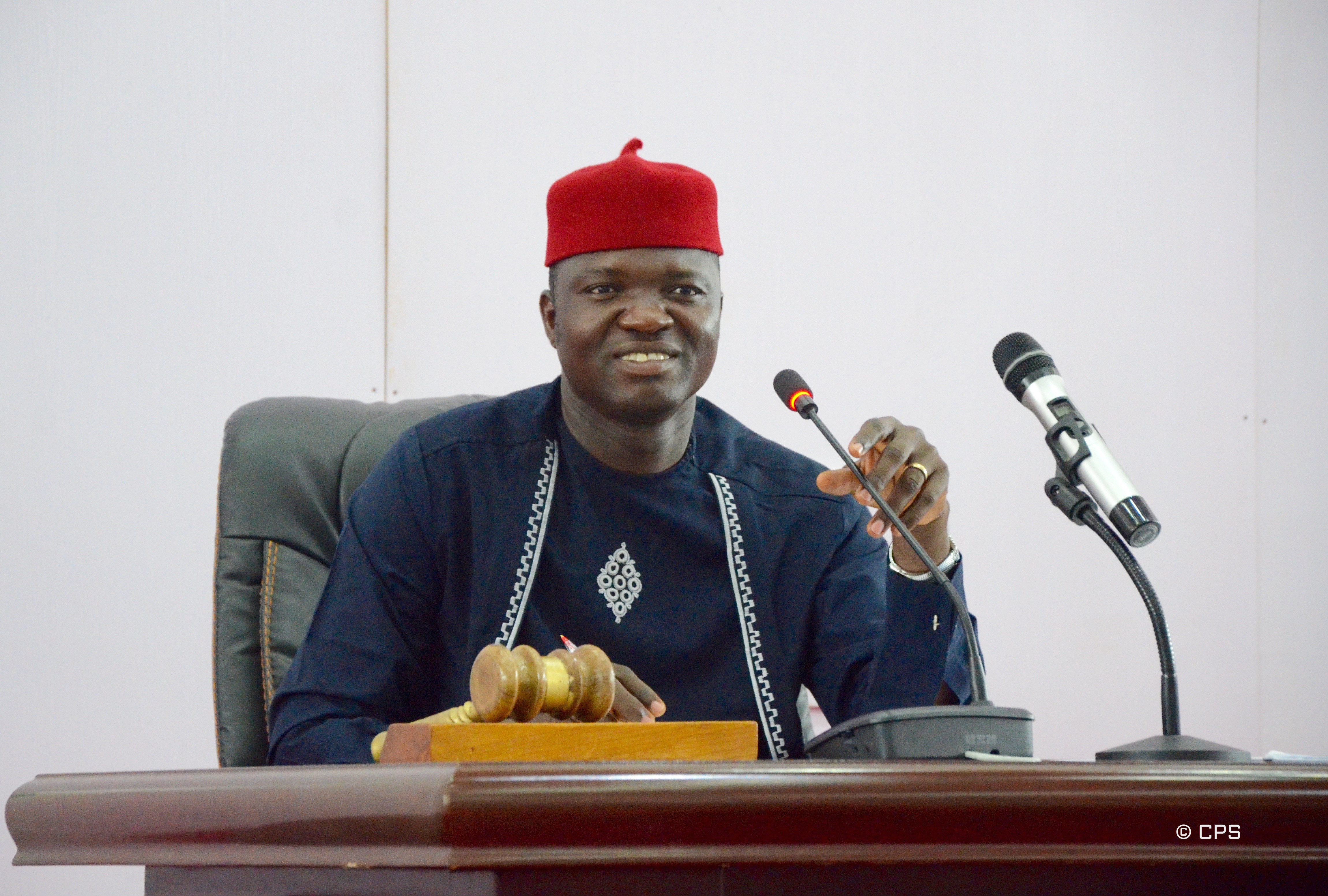
By Ehigimetor Igbaugba
CALABAR – The deepening crisis within Nigeria’s main opposition party, the Peoples Democratic Party (PDP), has been directly attributed to its departure from the core principles established by its founders. This diagnosis was offered by former Senator Gershom Bassey, who represented Cross River South in the 9th National Assembly, during an interactive session with journalists in Calabar.
Bassey’s critique provides a rare, insider perspective on the party’s internal decay, framing it not merely as a power struggle but as a fundamental ideological and operational failure.
The Core Breach: From Listening to Imposing
According to Bassey, the PDP’s historical strength was rooted in its responsiveness. “The key to our success has been that the PDP always listened to the people,” he stated. However, he identified a critical shift in the approach to the 2023 elections, describing it as a “fatal error” born of “arrogance.”
He elaborated using the Cross River State gubernatorial election as a case study. “The people were saying that there should be rotation and that it was the turn of the south… but the party said it could be anywhere.” This top-down imposition, ignoring a widely understood and accepted zoning arrangement—a key mechanism for managing Nigeria’s complex ethnic and regional diversity—led to what he called the “virtual collapse of the party” in the state.
Founding Principles vs. Contemporary Expediency
Bassey anchored his argument in historical precedent, specifically referencing the “Calabar-Ogoja Accord.” This was a foundational political understanding in the old Cross River region aimed at ensuring equity and stability by rotating power among constituent zones. By disregarding this principle, the party not only lost an election but also betrayed a social contract that had maintained peace and cohesion.
“The sweet part,” Bassey noted, “is that we kept faith with the founders of our state… And as a state, we must be very proud of ourselves that we kept faith with those founding principles.” This statement underscores a painful dichotomy: the state’s electorate upheld the founding values, while the political party created to channel those values abandoned them.
The Aftermath: A Cycle of Self-Destruction
The post-2023 period, Bassey revealed, plunged the PDP into a “cycle of self-destruction.” He pointedly located the source of this destructive cycle in “Abuja, with support from some elements in the state,” suggesting that national party leadership, in collusion with local allies, drove a process that has left the party “a shadow of its former self.” This highlights a central problem in Nigerian politics: the over-concentration of power in national party headquarters, often at the expense of local sensibilities and agreements.
Broader Implications and a Glimmer of Hope
Bassey’s analysis transcends the PDP’s immediate troubles. It serves as a cautionary tale for any political institution that prioritizes short-term electoral calculations over long-standing, trust-building principles. When parties break internal pacts on rotation or power-sharing, they erode the trust of their base and the broader electorate, leading to fragmentation and loss of legitimacy.
Despite the grim assessment, the former senator expressed optimism: “There is a future for PDP.” This future, however, is implicitly conditioned on a return to its foundational ethos of listening, equity, and internal democracy.
When asked to assess the ruling All Progressives Congress (APC), Bassey declined to give a definitive verdict, stating, “It’s still halftime, and we cannot say what will happen at the end of the term.” This remark subtly shifts focus from mere partisan criticism to a broader commentary on performance-based governance, suggesting the ultimate judgment on any party lies with the electorate at the end of its tenure.
Edited by ‘Wale Sadeeq. Source: NAN News.