
By Hussaina Yakubu
Kaduna, Dec. 28, 2025
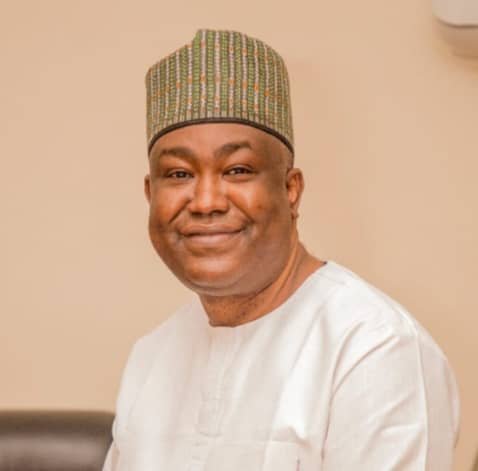
Gbenga Hashim, a former presidential candidate and political analyst, has issued a stark warning that Nigeria’s escalating security crisis requires fundamentally indigenous solutions, framing recent foreign military intervention as a symptom of profound systemic failure.
In a detailed statement to the News Agency of Nigeria (NAN), Hashim described the recent United States airstrikes against Islamic State (IS) elements within Nigerian territory as a “damning indictment of the country’s security architecture.” He argued that this external action, while tactically significant, underscores a dangerous vacuum of sovereignty and capability that Nigeria must urgently address from within.
The Core Argument: Why Home-Grown Solutions Are Non-Negotiable
Hashim’s central thesis is that sustainable security cannot be outsourced. While international airstrikes may temporarily degrade terrorist capabilities, he stresses they are palliative, not curative. “Lasting solutions can only come from within,” he asserted, pointing to three foundational pillars that must be rebuilt by Nigerians for Nigeria:
- Governance & Political Will: Hashim attributes the crisis to “prolonged governance failure and weakened institutions.” He explains that this creates a fertile ground for extremism by eroding public trust, crippling service delivery, and silencing moderate community voices. A home-grown solution, therefore, starts with accountable leadership and a functional social contract between the state and its citizens.
- Contextual Intelligence & Strategy: Foreign forces operate with external intelligence priorities and timelines. Hashim contends that only a Nigerian-led strategy, built on deep, granular understanding of local socio-economic dynamics, clan structures, and the drivers of radicalization in regions like the North-West, can craft effective, long-term counter-insurgency and peace-building models.
- Legitimacy & Sovereignty: Relying on foreign military intervention cedes control and can fuel narratives of foreign occupation exploited by terrorist groups. A sovereign nation must ultimately be the guarantor of its own security to maintain legitimacy in the eyes of its people and the international community.
The North-West: A Case Study in Predictive Failure
Hashim revealed that his policy team had, since 2021, warned of the dangerous trajectory in the North-West, where banditry was morphing into a proto-insurgency with clear potential for alignment with global jihadist networks like IS. “The mechanisms guiding [external interventions] must be carefully negotiated within the framework of security cooperation between sovereign nations,” he stated, advocating for clear accountability and transparency to prevent mission creep or abuse.

A Challenge to the Political Establishment
Moving beyond diagnosis, Hashim directly questioned the readiness of the ruling government to undertake the “critical internal reforms” necessary. He argued Nigeria is grappling with “fundamental governance and security deficits that threaten its democratic future,” and that the nation is “too large, too strategic, and too important to be allowed to fail.”
His call to action is unambiguous: Nigeria requires “urgent, courageous leadership” to implement a dual-track approach. First, immediate security sector reform and community-led policing initiatives. Second, and more critically, a long-term national project to tackle the root causes—”deepening poverty,” unemployment, educational collapse, and social alienation—that embolden extremist groups.
Conclusion: Hashim frames the moment as an existential crossroads. The reliance on foreign airstrikes is a wake-up call, not a strategy. The path forward, he concludes, demands a rejection of denial and half-measures in favor of a comprehensive, Nigerian-owned, and Nigerian-executed plan to reclaim security and stability. The alternative is continued deterioration and the permanent erosion of national sovereignty.
Edited by Bashir Rabe Mani. Source: NAN