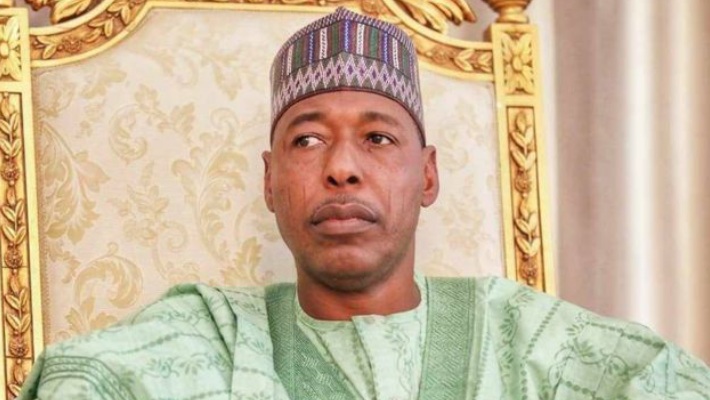
In a significant move to chart the state’s post-conflict future, Borno State Governor, Prof. Babagana Zulum, has presented a landmark budget proposal of N890.33 billion for the 2026 fiscal year to the State House of Assembly. Dubbed the “Budget of Sustained Recovery and Growth,” this financial blueprint represents a bold, 44.6% increase over the 2025 budget and is deeply aligned with the state’s long-term 25-Year Development Plan and 10-Year Strategic Transformation Initiative.
The proposed allocation starkly prioritizes long-term investment, with N536.56 billion (60.3%) earmarked for capital expenditure, dwarfing the N353.77 billion (39.7%) set aside for recurrent costs. This capital-heavy structure signals a deliberate shift from stabilization to ambitious reconstruction and growth.
Funding the Vision: A Reliance on External Support
A closer look at the revenue projections reveals a critical dependency on external inflows. The budget anticipates:
– N317.68 billion from Federal Account Allocation Committee (FAAC) – highlighting continued reliance on federal resources.
– N44.30 billion from Internally Generated Revenue (IGR) – a modest figure that underscores the challenge of rebuilding a local tax base in a recovering economy.
– N417.23 billion in “Capital Receipts” from grants and aid – this massive component, nearly half the total budget, illustrates the state’s crucial partnership with international donors and development agencies for large-scale projects. The sustainability of this funding stream is a key factor for the plan’s success.
The budget is built on ambitious macroeconomic assumptions, including an oil price benchmark of $64 per barrel, an exchange rate of N1,512/$, and an 18% inflation rate. These figures will be tested against Nigeria’s volatile economic landscape.
Core Priorities: From Security to Sustainable Resettlement
Governor Zulum placed security and “durable solutions” for Internally Displaced Persons (IDPs) at the core of the appropriation. This goes beyond mere humanitarian aid, aiming for a permanent transition:
– Enhanced Security Funding: Increased allocations for security agencies to consolidate peace through improved welfare, modern equipment, and intelligence. This is the foundational requirement for all other development.
– Closing IDP Camps: Significant resources are dedicated to constructing resilient housing, allocating land, and revitalizing livelihoods in recovered communities. The goal is to move from camp-based dependency to integrated, self-reliant communities where citizens can live with dignity.
Other prioritized sectors include human capital development (education, healthcare), critical infrastructure, social welfare, economic revitalization, and specific initiatives in land administration, rural electrification, and arts & culture.
Learning from 2025: Navigating Economic Headwinds
In his review of the 2025 fiscal year (budget: N615.85bn), Zulum acknowledged severe macroeconomic challenges—including exchange rate volatility and inflation—that disrupted initial assumptions under the Federal Government’s Medium-Term Expenditure Framework. Despite these headwinds, the administration cited proactive fiscal measures that allowed for continued service delivery and infrastructure development. This context makes the ambitious growth of the 2026 budget even more notable.
In response, the Speaker of the Assembly, Rt. Hon. Abdulkarim Lawan, commended the governor’s achievements and assured of the assembly’s commitment to expedient passage of the appropriation bill.
This 2026 budget proposal is more than a financial document; it is a statement of intent for Borno State. It seeks to leverage a window of relative peace to transition from a humanitarian crisis zone to a hub of sustainable development in Nigeria’s Northeast. Its success will hinge on prudent implementation, sustained security, and the continued flow of critical partnership funds.