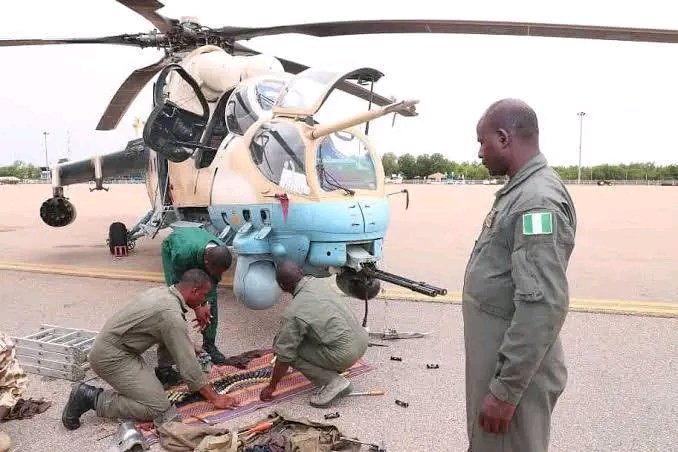
In the complex and evolving security landscape of 2025, Nigeria’s air power has transitioned from a supporting element to a decisive strategic instrument. The Nigerian Air Force (NAF), through a combination of technological adoption, doctrinal evolution, and joint-force integration, has fundamentally reshaped the nation’s counter-terrorism and counter-insurgency campaigns. This analysis delves beyond operational summaries to explore the *how* and *why* behind air power’s pivotal role, examining its capabilities, limitations, and future trajectory in safeguarding national security.
The Strategic Imperative: Why Air Power is Indispensable in Asymmetric Warfare
Nigeria’s security threats—from Boko Haram and ISWAP in the North-East to predatory bandit groups in the North-West—exploit vast, difficult terrain and operate within civilian populations. Traditional ground-centric operations face immense challenges of speed, reach, and situational awareness in these environments. Air power provides the critical asymmetric advantage to offset these adversary tactics. It offers three core strategic benefits:
- Persistent Intelligence, Surveillance, and Reconnaissance (ISR): The “eyes in the sky” function is arguably the most transformative. Unmanned Aerial Vehicles (UAVs) and manned ISR platforms can maintain constant watch over forest hideouts and migration routes, generating the actionable intelligence that drives targeted operations. This shifts the military from a reactive to a proactive posture.
- Precision Strike and Interdiction: Modern munitions and targeting systems allow for the precise neutralization of high-value targets, command nodes, and logistics dumps with reduced collateral damage. This capability, as seen in the December strikes in Zamfara and Sokoto, degrades enemy cohesion and morale directly.
- Tactical Mobility and Rapid Response: In theaters where roads are ambush-prone or non-existent, air mobility via transport aircraft and helicopters is irreplaceable. It enables rapid troop insertion/extraction, casualty evacuation, and logistical resupply, granting ground forces unprecedented flexibility and reducing their vulnerability.
The 2025 Operational Paradigm: Integration and Intelligence-Led Warfare
The operational successes of 2025, within Operations HADIN KAI, WHIRL STROKE, and others, were not merely a result of more sorties flown. They represented a maturation of a joint warfare doctrine. As highlighted by both the Chief of Air Staff, Air Marshal Sunday Aneke, and the Minister of Defence, Gen. Christopher Musa (rtd), synergy is the force multiplier. Close Air Support (CAS) missions are now tightly coordinated with ground troop movements, creating a seamless kill chain where air assets can be called in to break enemy resistance or cover a withdrawal.
This integration is powered by an intelligence fusion. The “find, fix, track, target, engage, assess” (F2T2EA) cycle has been shortened significantly. ISR platforms identify a target, the data is fused with human intelligence, and strike assets are vectored to the location—sometimes within hours. This was evident in the late December operations in Borno, where coordinated ground-to-air assaults eliminated over 80 terrorists. The enemy’s traditional sanctuary in terrain has been systematically contested.
Beyond Kinetic Strikes: The Non-Kinetic Roles of Air Power
A comprehensive view of air power’s value must extend beyond bombing sorties. In 2025, the NAF’s role in humanitarian and civil-military operations was crucial for strategic legitimacy. Air lifts of relief materials to Internally Displaced Persons (IDPs), medical evacuation flights, and disaster response missions build public trust and address the root causes of instability by demonstrating state capacity and care. This “hearts and minds” dimension is a critical, yet often understated, component of counter-insurgency.
Furthermore, air power projects national sovereignty. The persistent presence of aircraft in contested airspace denies freedom of movement to non-state actors and asserts government control, a psychological signal to both adversaries and affected communities.
Capability Sustainment: The Backbone of Operational Tempo
The sustained high tempo of 2025 was underpinned by critical investments in capacity. These include:
- Fleet Modernization and Diversity: Operating a mix of fighter jets, attack helicopters, heavy transports, and a growing fleet of indigenous and acquired UAVs provides operational flexibility for different mission sets.
- Human Capital Development: As Air Marshal Aneke emphasized, technology is useless without skilled personnel. Advanced training in precision weaponry, ISR data analysis, and joint operations is essential. Partnerships for training with allied nations help maintain high standards.
- Maintenance and Logistics: Ensuring aircraft availability is a perpetual challenge. Improved maintenance practices and supply chains are the unsung heroes that keep aircraft mission-ready.
Challenges and the Path Forward: Air Power is Necessary, But Not Sufficient
Despite its efficacy, air power confronts inherent limitations. Security experts rightly caution that it cannot, alone, resolve Nigeria’s security crisis. Adversaries adapt through dispersion, hiding in civilian areas, and using simpler technologies. The strain on platforms and personnel from constant operations is real.
The future, therefore, lies in a fully integrated, whole-of-government approach. Air power must remain the sharp tip of the spear within a broader strategy that includes:
- Enhanced Ground Force Holding Capacity: Air strikes can clear an area, but capable police and ground forces are needed to hold and rebuild it.
- Intelligence Fusion with Civil Agencies: Deeper integration with national intelligence agencies and even local vigilance groups for finer-grained intelligence.
- Investment in Next-Generation Capabilities: Continued focus on advanced ISR (like satellite data), cyber-electronic warfare capabilities to disrupt enemy communications, and potentially armed drones for persistent loitering strikes.
- Governance and Development: Ultimately, lasting peace requires addressing the governance deficits and economic despair that fuel recruitment into criminal and terrorist groups.
Conclusion: The Nigerian Air Force’s performance in 2025 demonstrates a professional force that has effectively leveraged its unique advantages to become a cornerstone of national defense. It has moved from a supporting player to a central driver of operational outcomes. However, the ultimate lesson is one of interdependence. The decisive impact of air power is only fully realized when it is seamlessly woven into a tapestry of joint military action, intelligent governance, and societal resilience. As Nigeria looks beyond 2025, sustaining and advancing this integrated model will be the true key to restoring lasting peace and security.
Analysis built upon reporting by Sumaila Ogbaje, News Agency of Nigeria (NAN).