
By Ahmed Kaigama
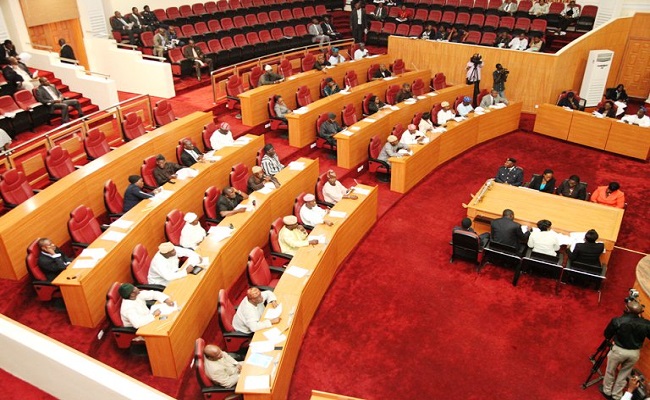
Bauchi, Dec. 30, 2025 – In a significant legislative session, the Bauchi State House of Assembly has given its final approval to the state’s 2026 budget, a substantial N877 billion spending plan. Concurrently, the Assembly passed a transformative Persons with Disabilities Bill, marking a major day for fiscal policy and social inclusion in the state.
Presided over by the Speaker, Rt. Hon. Abubakar Sulaiman, the Assembly adopted the report from the House Committee on Appropriation, chaired by Hon. Wanzam Mohammed, to formalize the budget’s passage.
Decoding the N877 Billion 2026 Budget
The approved budget, titled the “2026 Appropriation Bill,” reveals a clear strategic emphasis on development. It is structured with N308.7 billion (approximately 35%) allocated for Recurrent Expenditure—covering costs like salaries, overheads, and debt servicing—and a more substantial N568.3 billion (roughly 65%) dedicated to Capital Expenditure.
This nearly 2:1 ratio in favor of capital spending is a critical indicator. It signals the state government’s intent to prioritize long-term investments over day-to-day operations. As Chairman Mohammed outlined, this capital component is designed to be the engine for infrastructure development, enhanced social services, and broader economic stimulation. In practical terms, this could translate to new roads, upgraded water systems, investments in healthcare facilities, and support for agricultural and entrepreneurial schemes aimed at job creation.
Foundations for Fiscal Responsibility
Beyond the headline figures, the Committee report commended the state government for implementing key fiscal reforms intended to ensure the budget’s effective execution. These include:
- Establishment of a Fiscal Service Commission: A body typically tasked with enhancing transparency and accountability in public financial management.
- Capacity Building on New Budget Framework: Training for officials to improve planning, implementation, and monitoring.
- Enforcement Against Extra-Budgetary Spending: A crucial measure to prevent unauthorized expenditures and maintain budget discipline.
- Timely Fund Release to MDAs: Addressing a common bottleneck that delays project execution and service delivery.
- Strengthened Audit & Procurement Processes: Essential for combating waste, ensuring value for money, and reducing corruption risks.
These reforms, if robustly implemented, are foundational to transforming the budget from a mere document into a tool for tangible development.
A Landmark for Inclusion: The Persons with Disabilities Bill
In a parallel move with profound social implications, the Assembly passed the long-awaited Persons with Disabilities (PWD) Bill. This legislation moves far beyond symbolism, establishing concrete legal protections and mandates.
Core Provisions and Impact:
- Anti-Discrimination & Penalties: The bill prohibits all forms of discrimination against PWDs, prescribing penalties including fines and imprisonment for violators. This creates a legal recourse previously absent for many.
- Mandatory Accessibility: It requires public buildings, facilities, and transportation systems to be accessible, mandating features like ramps, lifts, and auditory guides. This provision aims to dismantle physical barriers to participation.
- Establishment of a PWD Commission: A dedicated commission will be formed to oversee the law’s implementation, handle complaints, and support victims of rights violations, ensuring there is an institutional driver for change.
- Comprehensive Social Integration: The law guarantees access to inclusive education, subsidized healthcare, and political participation. A standout clause requires public institutions to reserve at least 10% of their social programmes for PWDs, directly targeting poverty reduction and inclusion in public housing and social protection schemes.
This legislation aligns Bauchi State with its obligations under the United Nations Convention on the Rights of Persons with Disabilities (UNCRPD), which Nigeria has ratified. It represents a significant step toward moving from charity-based approaches to a rights-based framework for disability inclusion.
Conclusion: A Dual Commitment to Growth and Equity
The December 30th legislative session underscores a dual commitment from Bauchi State’s government and legislature. The 2026 budget presents an ambitious blueprint for economic and infrastructural growth, while the PWD Bill establishes a necessary framework for equitable social development. The true test, however, will lie in the rigorous implementation of both the fiscal reforms supporting the budget and the sweeping mandates of the new disability law. Citizens and observers will now watch closely as these plans transition from paper to practice.
Edited by Rabiu Sani-Ali
Source: NAN


