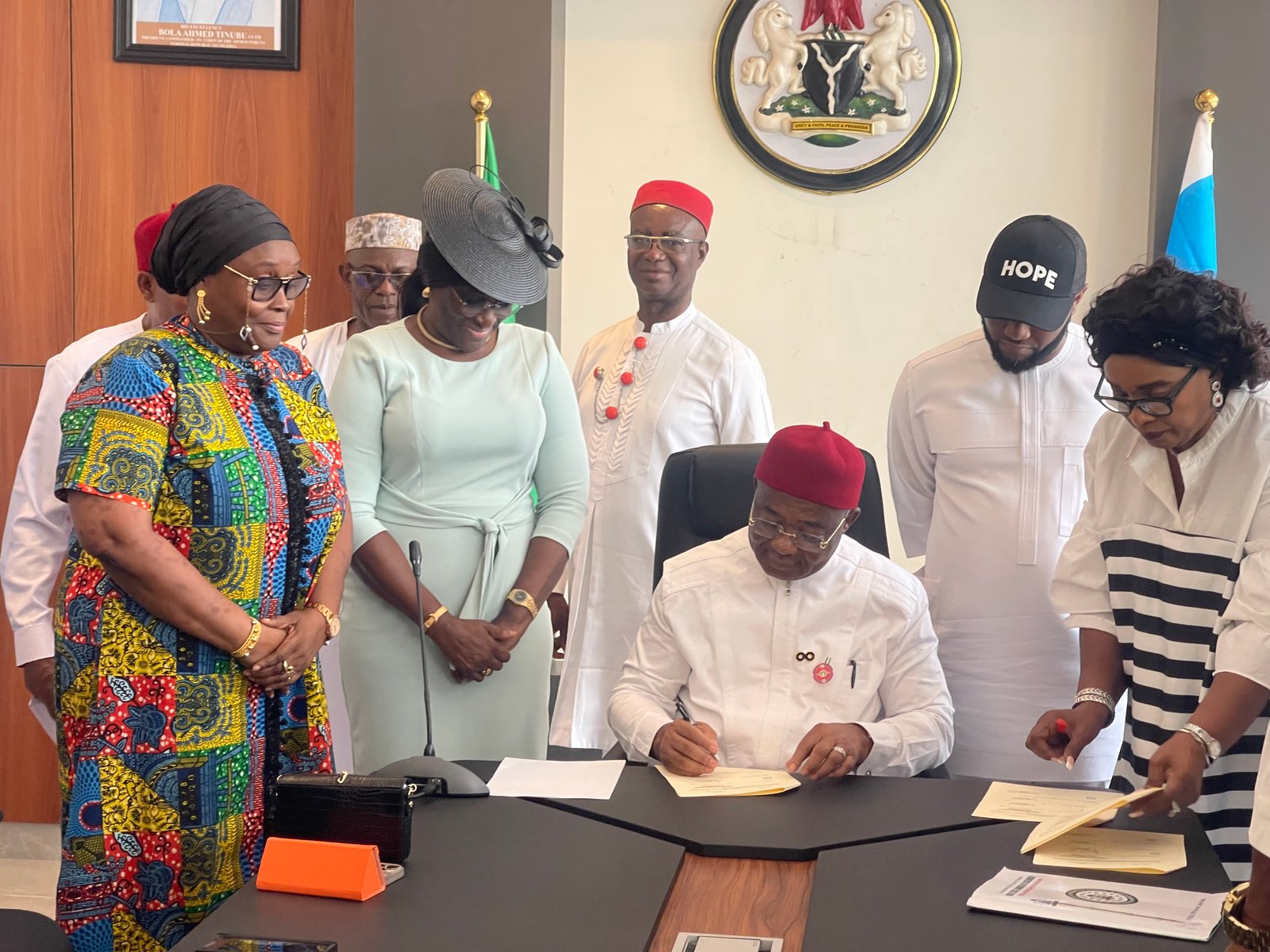
In a significant year-end legislative action, Governor Hope Uzodinma of Imo State has formally enacted the state’s 2026 Appropriation Bill, valued at a substantial N1.43 trillion. The signing ceremony, held at the new Government House Annex in Orlu on December 31, 2025, marks the final step in the budget process, setting the financial agenda for the upcoming fiscal year.
From Proposal to Law: A Swift Legislative Journey
The budget, christened the “Budget of Economic Breakthrough,” follows a remarkably expedited legislative timeline. Governor Uzodinma presented the N1.43 trillion estimate to the Imo State House of Assembly on December 23. The lawmakers, after scrutiny, approved the budget without altering the figures on December 24, leading to the governor’s assent just one week later. This rapid passage is notable, as it deviates from the more common practice of legislative adjustments and indicates a high degree of alignment between the executive and legislative arms on the state’s fiscal priorities for 2026.
Strategic Focus: Completion Over Commencement
A key revelation from the governor’s remarks is a strategic pivot in project execution. Governor Uzodinma assured citizens that the administration would not initiate new major projects. Instead, the focus for the remainder of his term will be on completing all ongoing projects across the state. This “completion agenda” suggests the 2026 budget is heavily weighted towards capital expenditure for existing infrastructure and development initiatives, aiming to deliver tangible results before the end of the administration’s tenure.
Governor’s Remarks: Revenue Generation and Fiscal Responsibility
While signing the bill, Governor Uzodinma highlighted the constitutional importance of the checks and balances between government branches. He then issued a pragmatic challenge, stating, “We must now go to work and make this money before we can spend it for our people.” This underscores a critical reality of state budgets: the approved figures are spending authorizations, not guaranteed revenue. The statement points to an anticipated reliance on internally generated revenue (IGR), federal allocations, and possibly borrowing to fund the ambitious budget.
The governor also acknowledged the role of the President Bola Tinubu-led Federal Government in creating an “enabling environment” for states to improve their revenue, a likely reference to national economic policies and reforms. He pledged the judicious use of all resources available to the state.
Legislative Oversight Promise
In his address, Deputy Speaker of the House, Mr. Amara Iwuanyanwu, provided the legislative perspective, assuring robust monitoring of the budget’s implementation. “We promise a more robust monitoring of the implementation of the budget,” he stated. This promise of oversight is crucial for public accountability, as it moves beyond the approval of spending to ensuring funds are used as appropriated for the optimal benefit of Imo citizens.
Context and Implications
The N1.43 trillion budget represents a significant financial plan for Imo State. For context, it is essential to compare it to the state’s previous budgets and its actual revenue performance. The success of this “Budget of Economic Breakthrough” will hinge on several factors: the state’s ability to meet its aggressive revenue targets, the efficiency and transparency in executing capital projects, and the effectiveness of the promised legislative oversight. The administration’s shift to a completion-focused strategy will be closely watched by residents expecting to see long-promised projects finalized.
The ceremony was attended by key state officials, including Deputy Governor Mrs. Chinyere Ekomaru, Acting Chief Judge Justice Ijeoma Agugua, members of the State Assembly, and the State Executive Council, underscoring the budget’s importance as a whole-of-government framework.
Report by Victor Nwachukwu for the News Agency of Nigeria (NAN). Edited by Maureen Atuonwu.