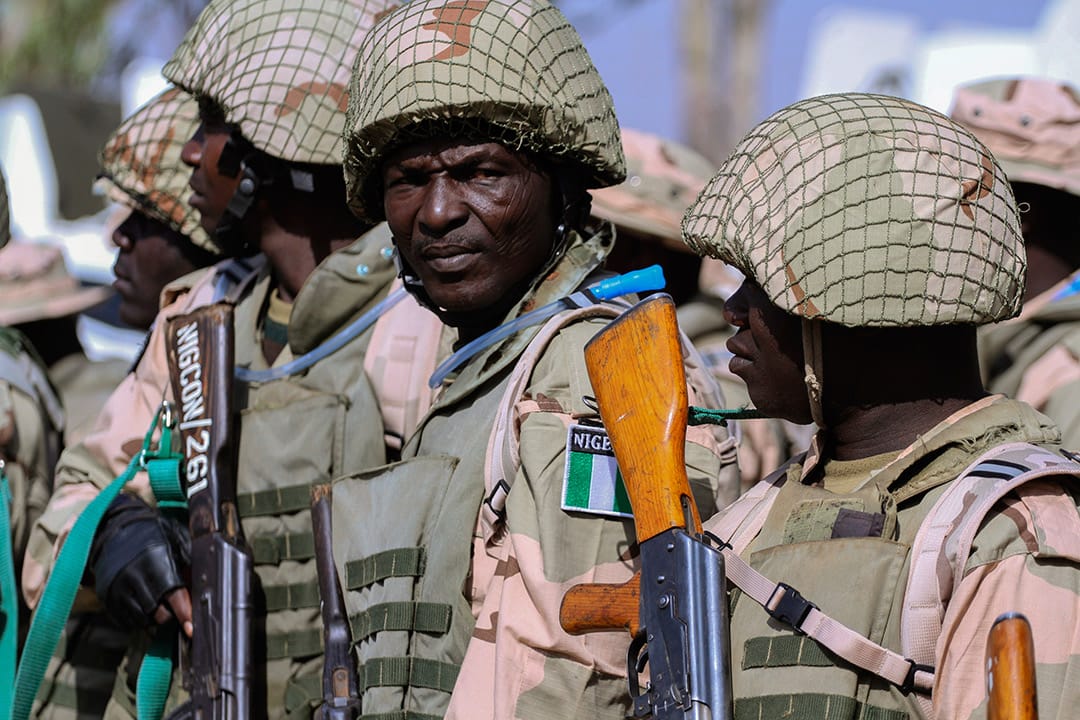
The Nigerian Defence Headquarters has announced a significant, yet partial, victory in the protracted battle against oil theft in the Niger Delta. In a year-end briefing, Major-General Michael Onoja revealed that Operation Delta Safe (OPDS) discovered and destroyed 503 illegal refining sites and apprehended 778 suspected oil thieves in 2025. While these figures represent a major operational tempo, they also underscore the immense scale and entrenched nature of the criminal enterprise draining the nation’s economic lifeblood.
The Director of Defence Media Operations presented these statistics not merely as a scorecard, but within the context of a “fluid” security situation still plagued by cultism, kidnapping, and robbery. He explicitly linked oil theft to the funding of these broader criminal operations, creating a vicious cycle of violence and economic sabotage.
Decoding the Numbers: The Economic and Environmental Toll
The raw data from the briefing is staggering. Beyond the sites and suspects, the military foiled thefts valued at N8.91 billion and intercepted vast quantities of stolen products: 16.6 million litres of crude oil, 1.2 million litres of Automotive Gas Oil (diesel), 407,734 litres of Dual Purpose Kerosene, and 1.5 million litres of Premium Motor Spirit (petrol). To put this in perspective, 16.6 million litres of crude oil is equivalent to roughly 104,000 barrels. Given Nigeria’s daily production challenges, this prevented loss represents a non-trivial amount of national revenue.
More critically, General Onoja highlighted the often-overlooked consequence: environmental catastrophe. Each illegal refinery, often a crude setup of metal drums and pipes known as “kpo-fire,” causes massive pollution. The process releases toxic fumes and leads to constant oil spills that poison farmland, destroy aquatic life, and render water sources undrinkable for communities. This “socio-economic” damage, as noted in the briefing, creates long-term public health crises and undermines livelihoods, fueling the very discontent that can feed into criminality.
The Tactical and Strategic Challenge
The destruction of 503 sites in one year reveals a fundamental challenge: this is a whack-a-mole insurgency. The low cost of setting up a basic refining camp means that for every one destroyed, others can quickly emerge elsewhere. The military’s success hinges on persistent, intelligence-driven patrols and the collaboration mentioned with other agencies, likely including the Nigerian National Petroleum Company Limited (NNPCL) and the Nigeria Security and Civil Defence Corps (NSCDC).
The recovery of “assorted weapons and ammunition” from these sites confirms that oil theft is a heavily militarized criminal industry. The vast profits fund arsenals that protect operations and intimidate communities, explaining the direct link to the region’s high levels of violence and insecurity.
Broader Security Theater: The Southeast and the Impact of Leadership Decapitation
The briefing notably connected the Niger Delta operations to the situation in the Southeast, governed by Operation UDO KA. General Onoja hailed the jailing of separatist leaders Simon Ekpa in Finland and Nnamdi Kanu in Abuja as developments that “substantially degraded the groups’ capabilities.” This suggests a strategic view that neutralizing ideological and logistical leadership can cripple militant networks. The reported results—324 suspects arrested and 64 kidnapped persons rescued—indicate that while the threat persists, focused military pressure can contain it.
Beyond the Headlines: The Unanswered Questions
While the military’s operational gains are clear, the announcement invites deeper questions:
- Prosecution & Convictions: What percentage of the 778 apprehended suspects will face successful prosecution and conviction? Apprehension is only the first step; a weak judicial process can undermine deterrence.
- Supply Chain Disruption: Who are the financiers, international buyers, and logistics coordinators? Destroying bush refineries addresses the symptom, not the sophisticated network that moves stolen crude and refined products.
- Alternative Livelihoods: What comprehensive, region-wide programs are running parallel to military action to provide legitimate economic alternatives for the thousands involved in this illicit trade?
Conclusion: A Battle in a Longer War
The figures presented by the Defence Headquarters for 2025 are a testament to the increased dedication and capability of the armed forces in the Niger Delta. They have prevented billions in losses and disrupted countless criminal operations. However, the very scale of the discovered sites—more than one per day on average—serves as a sobering reminder of the challenge’s magnitude. True victory will require a sustained, multi-pronged strategy that seamlessly integrates relentless military and security operations, an unwavering judicial process, and, most importantly, a transformative economic and social investment in the Niger Delta region to remove the fertile ground in which oil theft grows.
Source: NAN News. Edited for context and analysis.