
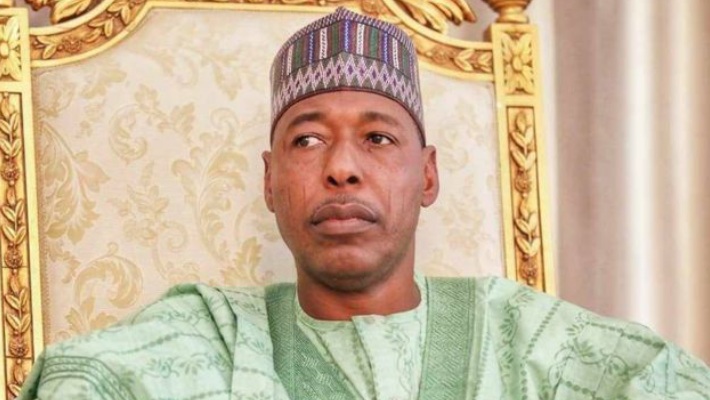
In a landmark event that transcended modern borders to reconnect a historic diaspora, Borno State Governor, Professor Babagana Umara Zulum, hosted the Kanem-Borno Cultural Summit in Maiduguri. The gathering brought together Kanuri kinsmen from no fewer than ten countries, signaling a powerful revival of transnational kinship networks rooted in one of Africa’s most illustrious empires.
The summit, attended by thousands of delegates, royal fathers, and high-profile officials, represented a deliberate and strategic effort to leverage shared cultural identity for contemporary socio-economic progress. Governor Zulum, addressing the assembly in the Kanuri language, set a forward-looking agenda. He urged participants to move beyond ceremonial fellowship and focus on concrete, collaborative initiatives: educational exchange programs, entrepreneurial partnerships, and targeted socio-economic projects designed to uplift Kanuri communities globally.
To immediately catalyze this vision, Governor Zulum announced scholarships for 150 students from across the nations that once comprised the ancient Kanem-Borno Empire. This initiative is more than educational aid; it is a strategic investment in a pan-African intellectual network, fostering a generation of leaders who share a common heritage and can collaborate on future regional challenges.
The high-level representation underscored the event’s geopolitical significance. The President of Chad, Mahamat Idriss Déby Itno, was represented by the Governor of Lac Province, Maj.-Gen. Saleh Tidjani. The summit also hosted a who’s who of Northern Nigerian leadership, including Yobe State Governor Mai Mala Buni, former Secretary to the Government of the Federation Ambassador Babagana Kingibe, the Sultan of Sokoto, Alhaji Muhammadu Sa’ad Abubakar III, and Senators Mohammed Tahir Monguno, Ali Ndume, and Kaka Shehu. The presence of 161 Emirs and Chiefs provided deep cultural legitimacy to the proceedings.
The delegations hailed from the Republics of Niger, Chad, Cameroon, Libya, Sudan, Central African Republic, Senegal, Gabon, Benin, and Ghana—a testament to the vast migratory and cultural footprint of the Kanem-Borno civilization. This diaspora, scattered across West and Central Africa, often faces similar challenges related to economic development, climate vulnerability in the Sahel region, and preserving cultural heritage amidst modernization.
The summit’s core mission was to transform this shared historical identity into a supportive, functional global community. By rebuilding these kinship networks, the Kanuri people aim to create a platform for knowledge sharing, crisis support, and joint advocacy. The goal is to ensure the empire’s legacy—known for its administrative sophistication, scholarly traditions at centers like Timbuktu, and trans-Saharan trade networks—continues to inspire not just as history, but as a living framework for cooperation.
The occasion was also a vibrant celebration of living culture, featuring dance performances and cultural displays by contingents from the different countries, showcasing the diverse yet unified tapestry of Kanuri traditions.
Context: The Legacy of Kanem-Borno
Understanding this summit requires appreciating the empire it seeks to honor. The Kanem-Borno Empire was one of Africa’s longest-lasting and most influential polities, flourishing for over a millennium (circa 700 AD to 1900 AD). Centered around Lake Chad, it controlled trans-Saharan trade routes, was a renowned center of Islamic learning, and maintained a formidable cavalry. Its diplomatic reach extended as far as the Ottoman Empire and Morocco. The modern-day Kanuri diaspora is a direct result of this empire’s historical expanse and influence, making the Maiduguri summit a modern-day reconnection of a once-unified cultural and political sphere.
This gathering, therefore, was more than a cultural festival. It was a strategic convention for a stateless nation, exploring how a glorious past can be harnessed to build a more prosperous, interconnected future for its people across Africa.


