By Chukwuemeka Opara | Ekoli-Edda, Ebonyi | January 1, 2025
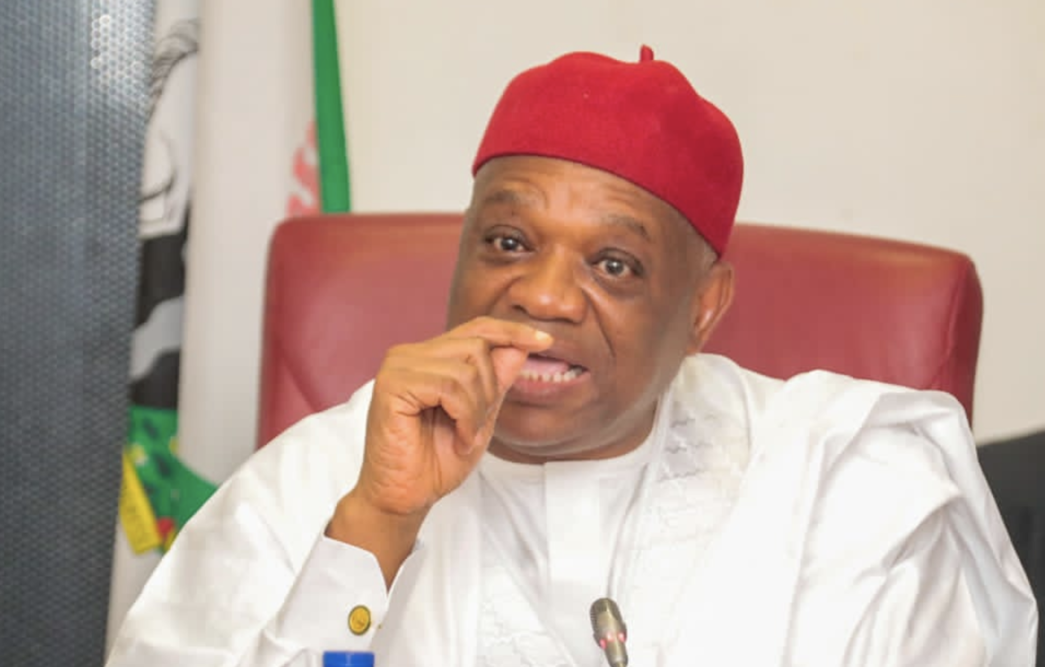
In a bold declaration that sets the stage for the next electoral cycle, Senator Orji Uzor Kalu, the former Governor of Abia State and current Senator representing Abia North, has pledged to leverage his political influence to secure Abia for the All Progressives Congress (APC) in the 2027 general elections. This vow, made during his annual New Year visit to APC Ebonyi State Chairman Chief Stanley Okoro-Emegha, signals a significant escalation in the battle for control of the Southeast’s political landscape.
Kalu’s promise is not merely a routine political statement; it is a direct challenge to the incumbent Labour Party (LP) administration under Governor Alex Otti. The LP’s victory in Abia in the 2023 elections was a major upset, breaking the stronghold of the Peoples Democratic Party (PDP) and demonstrating the volatile nature of the state’s electorate. Kalu’s mission, therefore, is to orchestrate a counter-upset, a task that requires dismantling a sitting governor’s structure—a formidable undertaking in Nigerian politics.
“I will put my heart on the field to ensure that the APC wins landslide in Abia,” Kalu stated, emphasizing his personal commitment. He clarified that while Governor Otti remains a friend, “I am not discussing politics, only the total victory of the APC.” This distinction highlights a core tenet of Nigerian politicking: personal relationships often exist separately from fierce partisan competition.
Beyond the Vow: The Practical Challenges and Kalu’s Arsenal
To understand the weight of Kalu’s pledge, one must consider the assets and obstacles at play. His “arsenal” likely includes:
- Grassroots Network: As a former governor and a political figure with deep business and community ties, Kalu commands significant loyalty across Abia, particularly in the Abia North senatorial district.
- Financial Muscle: Known for his philanthropy and direct engagement with constituents, Kalu possesses the resources to fund a vigorous campaign apparatus.
- National Alignment: By vowing to “support President Bola Tinubu and the APC gubernatorial candidate,” Kalu positions himself as a key bridge between the state and the federal center, potentially unlocking patronage and project support to sway voters.
However, the challenges are steep. Governor Otti, a former bank CEO, has built a reputation on technocratic governance and anti-corruption rhetoric. To succeed, Kalu and the APC must convince the electorate that a return to the APC fold offers a tangibly better future—a task that goes beyond personality politics to substantive policy alternatives.
A Broader Commentary: Security and Gubernatorial Responsibility
Diverging from pure electioneering, Kalu used the platform to issue a pointed critique on national security, urging state governors to take primary responsibility for securing their domains. “When I was Abia governor, I ensured total security… There were no cases of kidnapping,” he claimed, holding up Ebonyi State Governor Francis Nwifuru as a contemporary example.
This commentary taps into a major national anxiety. By framing security as a local, rather than purely federal, imperative, Kalu is speaking to a growing sentiment among citizens frustrated by centralized security failures. This stance allows him to project an image of executive competence from his tenure, indirectly contrasting it with any perceived shortcomings in the current administration—a subtle but powerful campaign narrative.
The Personal Bond: Loyalty as Political Currency
The choice of venue for this major announcement was itself a strategic message. Kalu’s visit to Chief Okoro-Emegha was framed as a reward for “age long loyalty.” He recounted mentoring Okoro-Emegha from childhood and recommending him to former Governor David Umahi. This story is a masterclass in showcasing the personal networks that underpin formal politics in Nigeria. Kalu is not just promising votes; he is demonstrating his ability to command unwavering loyalty—a currency often more valuable than ideology in building winning coalitions.
In conclusion, Orji Kalu’s 2027 vow is the opening salvo in a marathon political battle. It transforms Abia from a concluded electoral story into a premier battleground to watch. His success will depend on his ability to convert personal influence and critique of incumbency into a broad-based coalition that can overcome the LP’s incumbency advantage. The 2027 race in Abia has effectively begun.
Edited by Gabriel Yough | Source: NAN News