
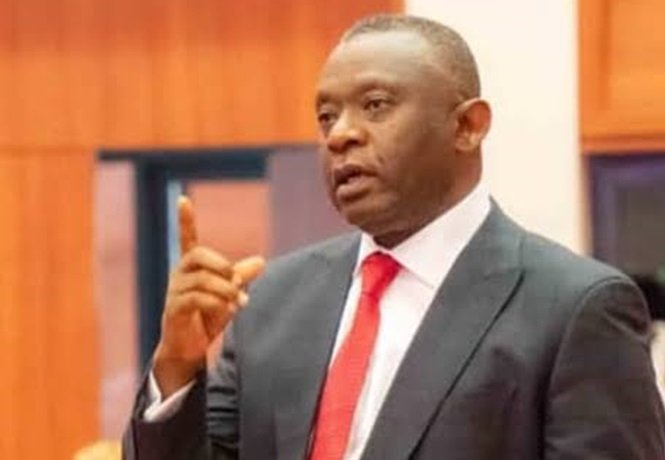
In a decisive move to reshape Nigeria’s governance structure, Senator Sunday Karimi has declared the National Assembly’s commitment to enacting laws that will enforce the landmark Supreme Court ruling on local government financial autonomy. This announcement, made during a yuletide address to his constituents in Kogi West, signals a critical legislative push to back President Bola Tinubu’s stance and finally implement a judgment that has been resisted by many state governors.
The Core of the Judgment and the Stalemate
Senator Karimi, Chairman of the Senate Committee on Services, anchored his remarks on the Supreme Court’s historic judgment delivered on July 25, 2024. The ruling was unequivocal: it mandated the seamless and direct allocation of federal funds to Nigeria’s 774 local government councils, stripping state governors of their long-held control over these finances. Furthermore, it declared the appointment of caretaker committees to run local governments—a common practice across states—as illegal, affirming that only democratically elected officials are constitutionally recognized.
Karimi framed the governors’ continued defiance as more than mere disobedience; he labeled it “unconstitutional” and a direct sabotage of efforts to “strengthen grassroots democracy.” The senator warned that the National Assembly is now prioritizing the creation of an enforcement framework, which will include retroactive laws to compel compliance and establish clear consequences for defaulters.
Beyond Funds: The Broader Implications for Governance and Security
The senator’s argument extended beyond fiscal policy into the realms of national security and democratic integrity. He cited the Chief of Defence Staff, who has publicly linked pervasive insecurity to the existence of “ungoverned spaces”—a vacuum often created by dysfunctional local governments. When councils lack the funds and authority to provide basic services, engage youth, and maintain local infrastructure, they become fertile ground for criminal and insurgent activities.
Karimi painted a stark picture of the consequences of the status quo, accusing some governors of treating local government allocations as a personal “monthly dessert.” This “kleptomania and squandermania,” as he termed it, has rendered many councils moribund, unable to fulfill their constitutional mandates in primary healthcare, basic education, and rural infrastructure. He further alleged sophisticated schemes, such as “voucher racketeering,” where funds are siphoned even after being deposited into council accounts.
The Path Forward: Legislative Action and Executive Backing
The senator revealed a coordinated strategy between the executive and legislative arms. He recalled President Tinubu’s earlier warning to APC governors that he might resort to an executive order to force compliance. While the President has shown restraint, Karimi stated that the National Assembly is prepared to “back the President with laws” to close any legal loopholes and ensure the ruling is operationalized.
This legislative enforcement could involve:
1. Specific Appropriation Mandates: Laws dictating how federal allocations to LGs must be channeled directly.
2. Audit and Transparency Frameworks: Mandating real-time public disclosure of LG finances.
3. Penal Provisions: Establishing clear criminal and civil penalties for state officials who obstruct direct funding or illegally appoint caretaker committees.
4. Citizen Legal Empowerment: Creating mechanisms for citizens or councils to sue for non-compliance.
Karimi vowed that offenders would face prosecution, be compelled to make refunds, and be punished. His message was clear: the era of treating trillions of naira meant for grassroots development as a slush fund is over. The coming legislative action represents not just the enforcement of a court order, but a fundamental battle for the soul of Nigeria’s federalism and the revitalization of democracy at its most critical level.
By Stephen Adeleye
Lokoja, Jan. 3, 2026 (NAN)
ASA/KTO
========
Edited by Kamal Tayo Oropo